
How to make an ethical decision about going to war – or staying out of it
Without a legal basis and a plan for a peaceful transition of power in Iran, it is as foolish today as it was ten years ago to endorse military action, writes Stephen Gethins
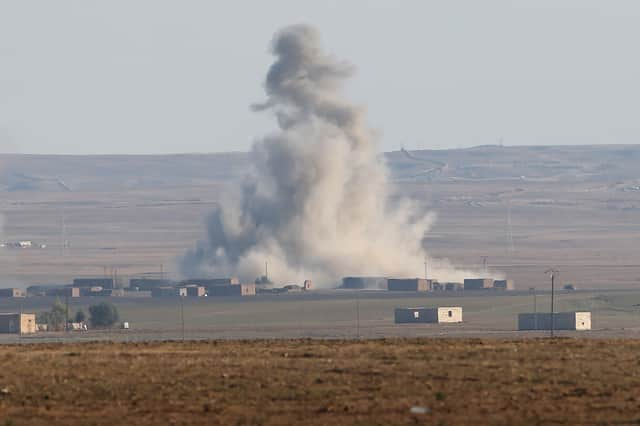
Just over ten years ago, the UK was considering whether to join a multi-national air campaign against Daesh, also known as Isis, in Syria. The UK was already participating in air strikes against the militants just across the porous border in Iraq and this was considered an extension of those efforts, with the United States already carrying out the lion’s share of the attacks.
Daesh had been terrorising people across the region and threatening the UK and other Western powers, with the power vacuum caused by the chaos of the civil wars in Iraq and Syria providing space for this murderous death cult to thrive.
Then, like today, considering whether to participate in military action was a challenging decision. The aftermath of the botched interventions against murderous regimes in Tripoli and Baghdad – with the resulting civil wars causing the loss of hundreds of thousands of lives, the breakdown of stability and the international rules-based system – hung heavy over the Commons as it still does today.
Given that nervousness, whilst MPs considered whether to endorse air strikes, the then Prime Minister, David Cameron, asked the Foreign Affairs Committee to produce a report with recommendations to inform any decision. It was an unusual ask but one that reflected the angst MPs felt.
READ MORE: UK minister tells SNP to 'step up' and back Iran war effort as Scottish defence deal confirmed

A serious, stressful decision
The SNP election tsunami in 2015 meant that for the first time ever, the SNP had a place on the committee, and I was the first SNP MP to sit on it. As a new MP, this particular task was one of the most stressful I have undertaken.
Any decision about military action is among the most serious a policymaker can make and we knew that our recommendation would have weight with colleagues. Approval would mean air strikes and any subsequent unintended consequences on the ground. Undoubtedly innocent lives would be lost, but rejection would also have repercussions. Omitting to act can be more consequential than active participation.
I was fortunate to have a group of excellent colleagues on the committee and we were supported by outstanding officials and experts. The value of Westminster committees is that, regardless of one’s politics, they try, as far as possible, to work in a collegiate manner.
We were helped by our chair, Crispin Blunt, with whom I had debated against ferociously in the Chamber. However, within the committee, he was nothing but helpful and a source of good advice to a brand-new MP facing this daunting task.
READ MORE: Prestwick Airport: John Swinney seeking UK Government meeting over US military use of airport
’Checklist for war’
After gathering evidence and working with clerks and other officials, we were able to pull together a report that to my mind remains critical reading for those considering whether to back military action, be it in Syria in 2015 or Iran today.
The questions posed then that helped us reach a decision remain pertinent, and the ‘checklist for war’ was a helpful tool for my students at the University of St Andrews when I was talking them through areas that policymakers should consider.
The first considerations were about the international strategy around the campaign against Daesh, and international efforts to build a sustainable peace in Syria, the two being inseparable as the civil war had led to an environment in which Daesh could be established.
The first question was whether the UK joining in “would improve the chances of success” of the international efforts to defeat Daesh. Then, and in the same vein, whether that would meaningfully contribute to a transitional plan for Syria – what was even then a complex and bitter conflict with numerous internal factions and plenty of external belligerents.
READ MORE: No one knows how this Gulf War will end – but we should welcome the downfall of the Iranian regime
International law and diplomacy
There was also the matter, as now, of the legal basis. The international situation had changed dramatically and given Russia’s involvement in Syria, a UN Security Council resolution with any meaning was out of the question. There was also the consideration of whether key regional actors, such as Saudi Arabia, Turkey and Iran among others, agreed with the UK’s intervention.
One crucial point was the recognition that air strikes alone could not meet the objectives of defeating Daesh and building a sustainable peace, with no answer to the question about which “ground forces will take, hold, and administer territories captured from Isil [Isis/Daesh]”.
Finally, we look at the military imperative. What was to be considered a ‘war winning’ strategy and who would be providing the ‘war winning’ capabilities? For the UK, there was also the question of what extra capacity the UK would bring to any action.
At the time, we agreed that the UK Government had not yet set that out and that the UK was not in a position to ask the House for a view and I subsequently voted against military action.
Wars are easy to start
The lessons of ten years ago are not an exact fit for today. However, many of the questions above are the kind of pertinent ones that decision-makers should be asking themselves when considering endorsing military action.
Wars are notoriously easy to start and difficult to finish with the victims of poor decision-making being civilians.
Without a legal basis or a long-term plan, it strikes me that it is as foolhardy today as it was ten years ago to endorse military action that could make things worse both for the Iranian people, with no plan for a peaceful transition, and for the prospects of a sustainable future for that country and the wider region.
Stephen Gethins is the MP for Arbroath and Broughty Ferry who served two terms on the House of Commons’ Foreign Affairs Committee and a professor of practice in international relations at the University of St Andrews
Comments
Want to join the conversation? Please or to comment on this article.