
How the humble bus shows why Scotland needs London, and vice versa
The supply chains that link London with Larbert and Falkirk represent just one example of how closely connected our economies have become, write Anas Sarwar and Sadiq Khan
London’s red buses might just be the most famous in the world. Today, their iconic design is an unmistakable symbol of the city. Behind it, though, hides a long history – a history that couldn’t have been written without Scotland.
When the first horse-drawn buses set off down London’s streets almost two centuries ago, they weren’t just carrying tired commuters. They brought with them an idea that was simple, but radical: affordable, accessible public transport for all.
Since then, technology has transformed the way we travel. Horses have given way to hydrogen fuel cells. Contactless payment means that, for many of us, digging into our pockets for a crumpled paper ticket is a thing of the past. But that fundamental promise – of cheap, regular, and reliable transport for everyone – remains just as important as ever.


A lifeline and a livelihood
Buses are still the beating heart of our cities, connecting working people and many of the poorest and most marginalised members of our society with vital opportunities. Whether you are a child travelling to school, a parent commuting to work, or a grandparent going to hospital for a check-up, your local bus can be a lifeline.
For some communities, though, buses are more than a way of getting around. They are a way of getting on and a source of good jobs that put money in working people’s pockets.
READ MORE: Poll reveals 'confidence collapsing' SNP can usher in clean energy jobs as oil and gas declines
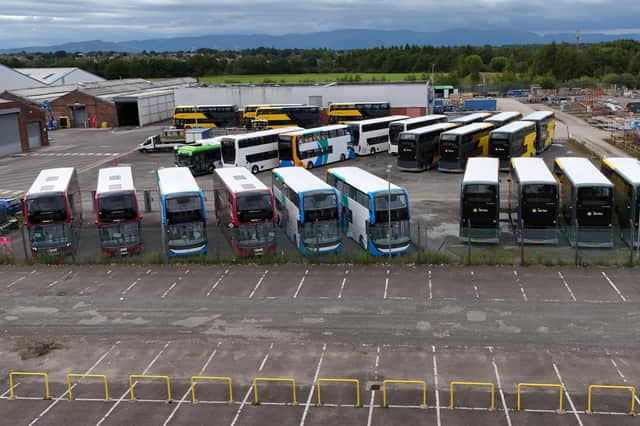
For generations, skilled Scottish workers have built many of London’s buses. But Alexander Dennis’s proposal to close its factories in Falkirk and Larbert means those jobs are now under threat.
For a long time, the Scottish Government claimed it was powerless to prevent this. While the SNP was still trying to wash its hands of responsibility, Labour mayors in England were busy placing orders for buses made north of the border. Backed by a Labour government in Westminster, our partnership could save Scottish jobs.
London helping Scottish bus builders
The Chancellor has already promised a £15.6 billion boost for transport in mayoral authorities, a decision that is expected to deliver a £1.5bn increase in the Scottish Government’s budget. At the same time, the UK Government has agreed a new long-term funding settlement for Transport for London, giving London the certainty and stability it needs to invest and accelerate growth across the UK.
As city after city follows London’s lead, returning control of its buses to public hands to escape the disastrous consequences of privatisation and deregulation, we have a once-in-a-generation opportunity to support one of Britain’s great industries.
That’s why England’s Labour mayors have agreed to put boosting British jobs at the heart of our approach to buying buses. By working together, we will build up a pipeline of orders for bus manufacturers in Scotland and across the UK, creating opportunities for generations of skilled workers to come. London – already responsible for 30 to 50 per cent of all new bus orders in the UK each year – is ready to use its purchasing power to rise to the challenge.
Our agreement is more than just a reflection of the values we share. It is a testament to what we can achieve when we use those values to reimagine the relationship between London and Scotland, investing in our communities and creating good jobs for the people we serve.
Interconnected economies
The passengers on London’s horse-drawn carriages couldn’t have imagined what public transport would look like today. Like them, we cannot know how our cities’ streets will change in the decades to come. But there is one thing we can be sure of: London’s red buses aren’t going anywhere, and nor are the British workers who build them.
The supply chains which link London with Larbert and Falkirk are just one example of how closely connected our economies have become. From transport and tech to clean energy and finance, the industries that bring us together will define the decades ahead. Whether they flourish or fail will depend on the strength our collaboration.
The truth is that when Scotland does well, London does well – and vice versa. When Scotland does badly, when its bus manufacturers get left behind, it’s not just Scottish communities that suffer; Londoners lose out too.
That’s why London, together with Labour-run cities across England, is stepping up. Ignoring our economic ties will make working people poorer on both sides of the Border. It is only by embracing them, in a shared commitment to the common good, that we can build a better future for us both.
Anas Sarwar is a Glasgow MSP and leader of the Scottish Labour party. Sadiq Khan is the Labour mayor of London
Comments
Want to join the conversation? Please or to comment on this article.