
How Scotland’s world-class scientists can catch a disease before you become ill – Professor Andrew Morris
Making greater use of Scotland’s medical researchers is key to improving the country’s shockingly low healthy lifespan
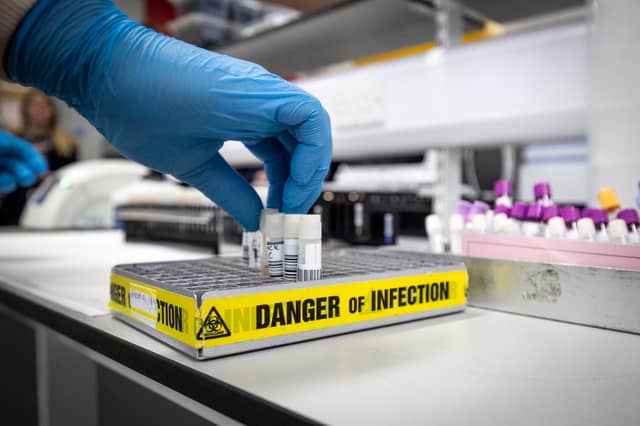

During the pandemic, Scottish researchers linked the health records of 5.4 million people, almost our whole population, to track the virus and test the vaccines in near real time. Some decisions that protected lives across the UK and beyond rested on work done here.
I chaired the Scottish government’s Covid advisory group, and I’ve never been prouder of our science. It wasn’t a one-off.
With 8 per cent of the UK’s population, Scotland produces around 12 per cent of its research. Our universities are amongst the world’s best for medicine. A centralised NHS and some of the most joined-up health data anywhere mean we can answer questions few countries can ask. Health and life sciences is one of the Scottish government’s four innovation priorities.
The power of data
A harder fact is that Scots can now expect around 59 years of life in good health – the lowest figure on record – and the gap between our most and least deprived communities is more than two decades.
As a physician and researcher, I see the distance between what our science makes possible and what reaches patients. The prize lies in getting far more of our research into everyday lives, faster.
What would this look like? When research shows a better way to treat diabetes or detect cancer earlier, it should arrive in a GP surgery in Wester Hailes as quickly as a Glasgow teaching hospital. Clinical trials should reach the communities that carry the heaviest burden of illness, not only those near university campuses.
We know that patients have better outcomes in research-active hospitals. Our health data should be used safely and with the public’s trust to find people at risk before they fall ill, not after.
World-leading medical science
The bridge is people. Clinical academics – the doctors, nurses and health professionals who combine caring for patients with research – are how scientific discoveries reach NHS wards. Their numbers have been in decline for years.
The Academy of Medical Sciences has brought the NHS, universities and industry together in the UK Medical Science Careers Taskforce, with one ambition – to make the UK the best place in the world to build a career in medical science.
The rest of the UK is moving in Scotland’s direction. Ministers have signalled more powers for English mayors, including over innovation funding. Scotland has run its own health and research system since 1999 and people ask what those 27 years have taught us.
Thousands of skilled jobs
Powers are the start, not the finish. The gains come when government, the NHS, universities, charities and industry pull on the same rope, and when every community can benefit.
The prize is economic as well as medical. Life sciences already support thousands of skilled jobs here. A country known for turning discoveries into better health will draw in investment and talent that others are competing for.
None of this asks Scotland to choose between excellence and fairness. We should keep winning the UK-wide research funding our scientists compete for so successfully and use the powers we’ve held since devolution to make ‘translation into impact’ a national mission, taking research from the lab to NHS wards, GP surgeries, school nurses and care homes.
We have the science. Now let’s turn it into more healthy years for everyone.
Professor Sir Andrew Morris is president of the UK's Academy of Medical Sciences
Comments
Want to join the conversation? Please or to comment on this article.