
How Scotland's Land Reform Bill could fatally damage tenant farming
Few agricultural landlords are keen to let land because of proposals to make retrospective changes to contracts that could hamper their ability to get their property back without paying significant compensation
The Scottish Government’s ambition to make Scotland ‘the best that it can be’, as laid out in its Programme for Government, is laudable – but does it really help rural areas thrive?
From the Borders to the Highlands, there are enterprising rural businesses putting their shoulders to the wheel to deliver for people, jobs and nature, but all too often they are left feeling frustrated or forgotten.
There are many causes for their frustration and the current Land Reform Bill proceeding through the Scottish Parliament illustrates perfectly how government policies can end up having the entirely opposite effect to what political leaders envisage.
The Scottish Government is wedded to an ongoing land reform agenda despite the clear evidence the vast majority of the public – according to government research – do not see it as a priority.
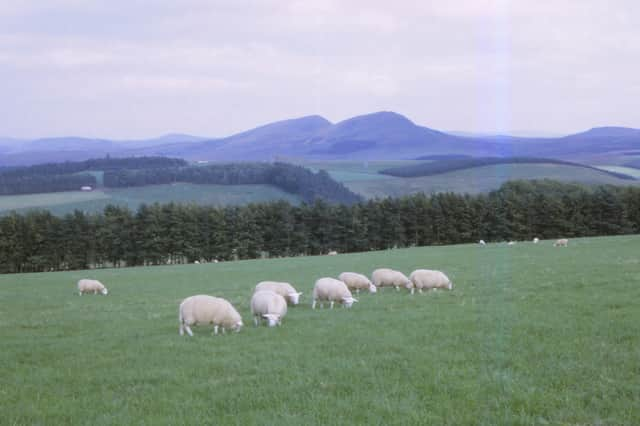

Benefits of large estates
The Cabinet Secretary in charge of the Bill, Mairi Gougeon, knows well the passionate and often polarised positions adopted on this issue, given she serves as MSP for North Angus and Mearns. She will also know, however, from her days as development and enterprise convenor on Angus Council, about the need for and value of investment and economic growth.
And this is where the rub is with this current Land Reform Bill. On one hand, the Scottish Government seems committed to breaking up large rural landholdings in the name of diversity of land ownership but has there really been enough thought given to what the outcome will be? It doesn’t appear so. Again, we are facing a situation where ideology and practical outcomes collide.
Large estates are actively involved in helping to deliver housing, renewable energy, employment and business opportunities, food and drink, whilst tackling climate change through peatland restoration and tree planting as well as improving nature. All of these are government priorities and ministers are aware these activities need investment from sources including private enterprise.
So why pursue and frame legislation that targets the very rural businesses currently delivering those benefits on the ground? The answer for many is the need to rectify perceived historic wrongs. But we are now living in a different time and surely land reform today should be about the future, not the past.
Those of us involved in land management are already hearing noises that the uncertainty created by proposals in the Land Reform Bill is disincentivising both local investment and interest from further afield. The more a business sector is penalised, the less likely people will be willing to invest.
Taxpayers face hefty bills
I don’t believe that this is a desired outcome by the Scottish Government but there is a very real chance of that happening because of proposals like giving ministers the power to interfere with land sales and force estates to be sold off in lots.
Do taxpayers, who may have to foot hefty bills for compensation for the loss of value, really want this? And considering such interference may be fraught with legal difficulty and creates unwarranted problems for those people working on estates, does that make it worthwhile?
A similar situation arises in the part of the Bill which deals with tenant farming. The government is adamant that it wants to see a thriving tenant farming sector.
However, there are very few agricultural landlords who are keen to let land because of the proposed retrospective changes to contracts that have the potential to hamper a landlord’s ability to get his own property back without having to pay even greater compensation. Again, the outcome of a stagnant sector is the exact opposite to what the government say they want to achieve.
All of us who work in the land management sector understand the land reform agenda. While some people claim land managers oppose land reform, that is simply not correct. We have no problem with greater transparency of ownership, opportunities for communities to acquire land where it becomes available, and the need for productive community engagement.
A great many examples already exist where estates are working harmoniously as part of their local community and the continuous implementation of further legislation only serves to jeopardise that.
No shortage of land reform laws
As well as numerous willing sales to communities, extensive legislation is already in place enabling communities to acquire land where it has been abandoned or neglected, or where the landowner is acting as a barrier to sustainable development.
Like many legislative measures already in place in Scotland, their use to date has been limited perhaps due to unawareness. Lack of use doesn’t mean that more legislation is needed.
There has been no shortage of land reform legislation since the Scottish Parliament was established. This is now the third bill to go before the parliament.
As things stand, there is a widespread view beyond the interests of landowners that the Land Reform Bill in its current form is unworkable. We would appeal to the Cabinet Secretary to take heed of these genuine concerns and consider seriously amending the Bill rather than deliver flawed legislation which will risk the delivery of local and national benefits.
The government has already shown its willingness to improve legislation during its passage through Holyrood, as it has done with the Housing Bill and it should act similarly to make the Land Reform Bill work. We all know from experience that leaving so much detail to secondary legislation tends to store up trouble for all in the future.
We understand the SNP, in particular, is committed to a land reform ‘journey’ that is far from ended. However, we fervently hope that, at some stage along the way, there can be some recognition that estates are significant social, economic and environmental contributors to rural Scotland and that politicians will take this seriously before bringing forward policies which discourage investment and fatally damage tenant farming.
Patrick Colquhoun is director at Luss Estates and policy vice-chair of Scottish Land and Estates
Comments
Want to join the conversation? Please or to comment on this article.