
How Edinburgh was saved from skyscrapers – and why the fight continues
If you want to see what Edinburgh could have become without the Cockburn Association, take a trip to Glasgow
What do you want Edinburgh to look like in 2050? That’s the question posed in a new book celebrating this year’s 150th anniversary of the Cockburn Association. Scotland’s oldest conservation charity was established to continue the work of Lord Cockburn, who called for the preservation of the beauties of Edinburgh in the face of those who believe “everything can be valued in money”.
So much changes, yet so much remains the same. When you look around Edinburgh today, the work of the Cockburn Association is in everything you don’t see.
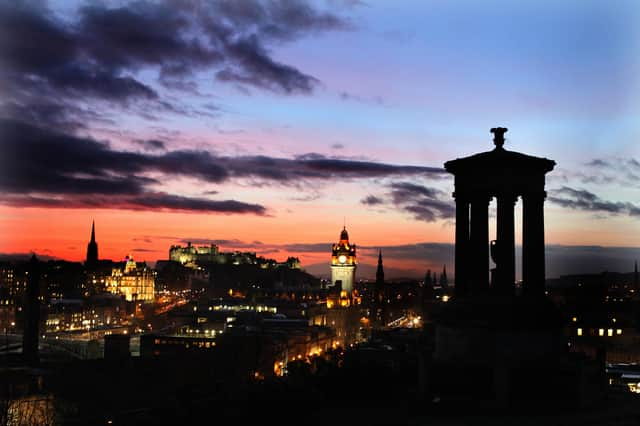
There is no motorway through the Meadows or underground shopping mall the length of Princes Street, no high-rise hotel on George Street or skyscraper towering over Haymarket because of battles that were hard fought and won against developers and planners down the years. If you want to see what Edinburgh might have become, just take a trip to Glasgow.

Preserving the past, looking to the future
“But the past is a foreign country, they do things differently there”, as novelist LP Hartley once said. Preserving what went before is one thing but Edinburgh needs to have a future as well as a past. That’s why I agreed to become the president of the Cockburn Association as it reshapes for the challenges of the future.
In their new book, authors Cliff Hague and Richard Rodger set out two competing visions of what the city might look like. In one, Edinburgh development runs rampant with Chinese and Middle Eastern investors throwing up high-rise buildings wherever they can, as deregulation allows revellers to party non-stop in the city centre.
In the other, an Edinburgh model emerges where decision-making is led by citizens, based on lived experience rather than the view of consultants or investors. VAT is stripped from repairs and maintenance leading to a building conservation boom with empty churches and shopping centres repurposed for housing, community hubs and youth centres, the tram network spreads throughout the city, and local neighbourhoods thrive.
The difference between the two really comes down to intervention. When people do nothing, market forces will always dominate. However if we want the best possible outcome, then we have to roll up our sleeves and help shape our own future.
Every day is a school day
Experience shows us Edinburgh’s future is most likely to be somewhere between the two extremes. Holding back commercial forces is incredibly difficult as the controversial W Hotel project proves.
Built with American pension fund money, it overcame all objections with the architect saying“it is communicative, it is expressive and it is supposed to make people happy”. Instead, it topped a poll as the worst new building in the world.
However, every day is a school day and there are lessons to be learned from that project as well as from all the developments that are turned down and every attempt to commercially exploit what should be free public space in the city centre.
The streets are busier and the shops are very different but Lord Henry Cockburn would still be able to recognise his surroundings and the essential outline of the city he lived in 150 years ago. Taking that fabric and amenity and turning it into a living, breathing, working city fit for the future is now the challenge facing all of us because leaving it to others won’t turn out well.
Comments
Want to join the conversation? Please or to comment on this article.