
How Chancellor Reeves is set to ape the worst errors of the Tories
Labour’s intention to raise taxes beyond what it promised now seems clear
It was on 28 May that Rachel Reeves, the then Shadow Chancellor, told the British public, “We set out the limited tax increases that a Labour government will introduce and people can be confident that we'll not be going further than that and that there are no further increases in tax that we are planning or that we need to fill any black holes.”
To emphasise the point Reeves said, “There is nothing in our plans that requires any further increases in taxes, I have confidence in that. Voters can have confidence.”
Not any more. Everything is about to change. Reeves is now the Chancellor and, if media briefings are to be believed, she is about to tell us a different story of having “found” a £20bn shortfall in the public finances. What then should we make of this astonishing about turn?
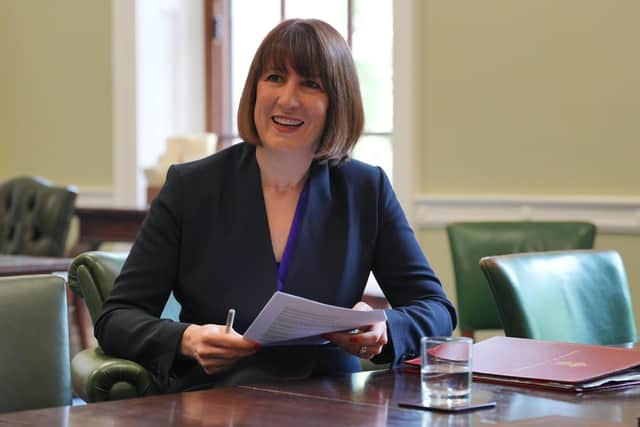

Was Reeves lying through her teeth because she did have plans that would require additional tax rises, or was she just plain ignorant of the published and widely reported evidence of the constraints required on future public spending?
Neither is a good look. Whatever the reason, the intention of the Labour Government to raise taxes beyond what it promised would be sufficient to meet its plans now seems clear.
As Paul Johnson, director of the independent Institute for Fiscal Studies said before the general election, “the books are wide open and fully transparent”.
Is Reeves saying the books are wrong because there are spending commitments that have not been included in official estimates? That’s not how government works. There is a spending envelope built into future estimates and these were available to Reeves (and anyone else who wanted to look).
In fact after Rachel Reeves gave an interview to the Financial Times the paper reported “that unlike previous incoming Chancellors she would be unable to arrive at the Treasury and claim she had looked inside the books and realised things were even worse than they looked from the outside, giving a flimsy excuse for immediate tax rises or spending cuts.”
Her own words were, “We’ve got the OBR now. We know things are in a pretty bad state. You don’t need to win an election to find that out.”
Does it mean the OBR (Office for Budget Responsibility) is not up to the job – just when Reeves is proposing to give it more powers to restrain governments from spending? That’s highly unlikely.
Is Reeves saying the economy is about to take a turn for the worst, just when many forecasters are uprating their predictions for UK economic growth and inflation is back on track at 2%? That’s even more unlikely.
The only credible reason for higher taxes is Reeves wants higher spending than she was willing to publicly admit to – evidenced by the Labour Government signalling it is now prepared to throw money at teachers’ and nurses’ salaries without negotiating productivity improvements.
There are ambitious green infrastructure schemes driving Labour’s spending plans that will be funded by a vast expansion of PFI – future taxation commitments our children and grandchildren will be on the hook for – but for Labour’s immediate spending growth coming our way taxes will have to be raised. In today’s world where social media records for posterity what policy geeks that are now embedded as Labour Government advisors have said about raising taxes, we can easily find out what to expect.
Demands for raising Capital Gains Tax levels to match those of Income Tax – and expanding Inheritance tax to cover pensions and private shareholdings in family firms are some of the most common demands.
When we consider that 90% of all 4.8m private firms in the UK are family businesses – employing millions of people and contributing more than £200bn every year in taxes – then any policy that changes business behaviour has to be taken seriously. Family businesses that were consulted have already warned “any policy decision that restricts the [Inheritance Tax] reliefs would likely result in family businesses being broken up, offshoring, or — in the worst-case scenario — closing”.
Bringing about the break-up of family firms by applying the death tax to family shareholdings is nothing other than economic madness. Examples of such a policy approach applied in Sweden was devastating.
In 1984, Sally Kistner, owner of pharmaceutical company Astra, was worth £30m when she died, but almost all of her wealth was tied up in shares of the company. The value of the shares was appraised by the Swedish Tax Office at the market value on the date of her death – but the shares then sank like a stone, because the market realised the heirs would have to sell most of the shares to pay the death tax, flooding the market.
The tax bill ended up exceeding the value of the total assets of the estate. The estate was declared insolvent and the heirs were left without a penny.
It was not a solitary example of economic damage, but typical of the calamitous impacts that taxing wealth can have when politicians prevent proper debate by not being honest about their real intentions. Reeves is in real danger of starting her Chancellorship by breaking the promises she gave during the election campaign.
The lesson everybody will learn is whatever Rachel Reeves says cannot be taken at face value. Her grand speeches, her media interviews – and whatever comes down the tracks in her September Budget – simply cannot be trusted to reflect the truth.
From 2015 successive Conservative Governments hollowed themselves out and trashed the party’s reputation by repeatedly doing the opposite of what they said they would do. Rachel Reeves has obviously learned nothing from that seminal lesson in how not to govern. She is, however, exceptional in one respect, she’s managing to repeat the trick in the space in a matter of weeks, not nine years.
Comments
Want to join the conversation? Please or to comment on this article.