
From shipping lanes to supermarket shelves: the hidden fragility of Scottish food security


Fertiliser is not just another input cost. It is foundational.
Half the world’s food depends on fertiliser. That blunt assessment from the UN World Food Programme rarely cuts through in public debate, but it should. Because it explains, more clearly than most headlines, why distant geopolitical shocks are now landing so heavily on Scottish farms and crofts - and why their consequences will soon reach every supermarket shelf.
We are used to thinking of disruption as something temporary. Markets spike, attention shifts, the story moves on. But agriculture doesn’t move on. It absorbs shock slowly, cumulatively - season by season, decision by decision - until the effects surface where they cannot be ignored: in the food we produce, and the prices we pay.
The latest strain on global shipping routes illustrates this perfectly. Much of the focus has settled, understandably, on energy markets. Yet beneath that sits a quieter, more consequential pressure: fertiliser supply. It is here, not in the daily churn of commodity prices, that the longer-term risks to food production are taking shape.
Fertiliser is not just another input cost. It is foundational. It determines yield, influences land use, and ultimately governs how much food reaches the supply chain. When fertiliser becomes volatile, so too does the system that depends on it.
Events in the Middle East, particularly around the Strait of Hormuz, underline how exposed that system has become. Oil at $110 a barrel is not simply an energy story. It is a fertiliser story, and therefore a food story. Nitrogen fertiliser production is closely tied to natural gas, meaning shifts in energy markets feed rapidly into farm-level costs. For a country like the UK, reliant on imported inputs, that volatility is transmitted almost immediately.
The result is what farmers increasingly recognise as “agflation”: rising costs coupled with weakening returns. The consequence is not simply pressure on margins. It is the risk of contraction - reduced domestic output, businesses pushed beyond viability, and a gradual tightening of supply that feeds directly into food prices. When costs rise and returns fall simultaneously, farmers do what any rational business would do: they reduce risk. And this is where the real story begins. Not in dramatic moments, but in thousands of incremental decisions. Slightly less fertiliser applied. A marginal shift in cropping plans. A move towards lower-risk enterprises.
Each decision, taken in isolation, is logical. Together, they reshape output. This is the defining challenge of modern food systems: cause and effect are separated by time. Fertiliser prices respond to global events in days. Food production responds in months. By the time the impact is visible, the trigger has long since faded from view. We have seen this pattern before; Covid-19 and the war in Ukraine. What has changed is not the mechanism, but the frequency. Volatility is no longer episodic. It is becoming structural.
For Scotland, that reality collides with an already stretched system. Farmers are navigating persistent cost pressures, labour constraints and policy uncertainty.
Additional instability in fertiliser and energy markets does not arrive in isolation; it compounds an existing fragility.
This is not, yet, a crisis of empty shelves, it’s something more subtle, and arguably more important: a test of resilience. That is why the policy response now matters, not as short-term fixes, but as part of a broader effort to stabilise the foundations of domestic food production. The priorities are clear: a targeted input support package to offset exceptional fuel and fertiliser costs, including enhanced red diesel rebates and direct fertiliser support; the extension of energy cost relief to agriculture, particularly for horticulture and intensive livestock sectors; improved market oversight and transparency in fertiliser and fuel pricing; and practical supply assurance measures to safeguard continuity and ensure agriculture is prioritised in the event of shortages. Crucially, it also means recognising agriculture as a priority sector in any future fuel rationing scenario.
At its core, this points to a broader question about how food production is valued. If it is treated purely as a market outcome, it will remain exposed to precisely these kinds of shocks. If it is recognised as a strategic national asset, critical to economic stability as well as public welfare, then the case for proactive support becomes harder to ignore.
The reality of that exposure is already being felt on the ground. One large-scale cereals, potatoes and vegetable grower described how, before the current disruption, red diesel cost 67p per litre. By early April, that had risen to £1.26 - an increase of 88 per cent. With a tractor fleet operating at full capacity and consuming around 12,000 litres per week, that translates into an additional £7,000 in weekly fuel costs alone.
As he put it plainly: “It will be disastrous if these costs continue.”
This is how global volatility translates into domestic pressure - not in abstract terms, but in immediate, measurable impacts on farm businesses. And it is precisely these kinds of sustained cost increases that begin to influence production decisions.
Other European governments have already moved to shield their agricultural sectors from similar shocks, deploying fuel subsidies, fertiliser support and tax relief. The contrast is notable - and raises questions about the UK’s current level of preparedness. We have written to the Prime Minister setting out these concerns, and while a formal response is still awaited, the Union understands that Defra has been asked to respond on behalf of No.10. We will travel to Westminster next week to make these points in person and further underline the urgency of the situation.
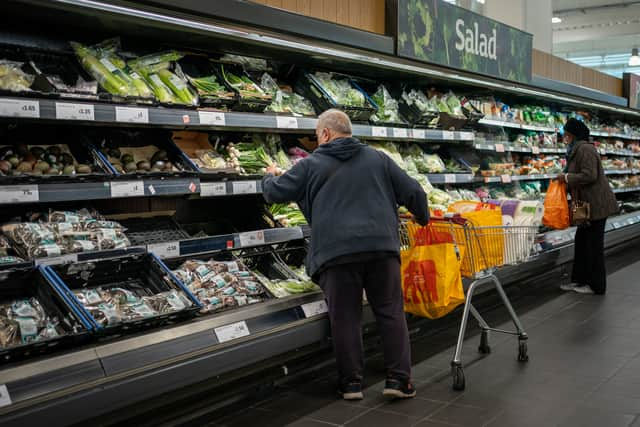
For consumers, the link is direct. Fertiliser, fuel and feed sit behind every loaf of bread, every litre of milk, every bag of vegetables. When confidence in those inputs weakens, production follows. Not immediately. Not dramatically. But inevitably.
And by the time it reaches the supermarket shelf, the outcome is already locked in - shaped by decisions taken months earlier on Scottish fields, in response to pressures that began far beyond them. The cost of intervention today is far lower than the economic and political cost of inaction tomorrow.
Comments
Want to join the conversation? Please or to comment on this article.