
Frederick Douglass, Abraham Lincoln and Scotland's role in slavery abolition
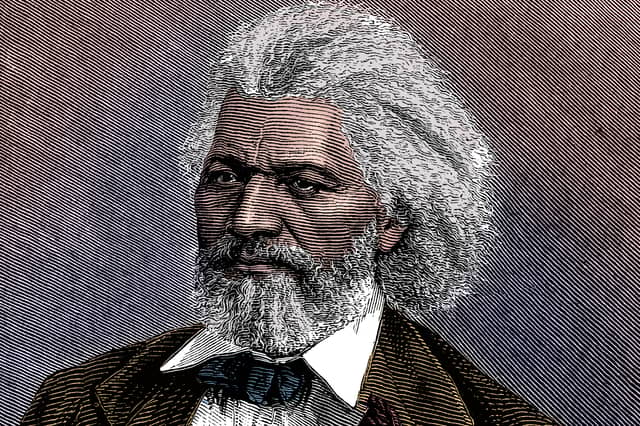

Stewart McLaurin describes a historic event in Edinburgh in 1846 when US abolitionist Frederick Douglass, a former slave, addressed a public breakfast in his honour
Earlier this month, I was honoured to join Scottish Government Cabinet Secretary Angus Robertson and Lisa Williams, of Black History Walking Tours, to commemorate an event that took place on May 1, 1846, at what was then the Calton Convening Rooms in Edinburgh.
On that date in Scottish and American history, those rooms rang with the voice of Frederick Douglass. Fresh from the horrors of American slavery, he addressed a public breakfast in his honour, attended by Edinburgh’s leading abolitionists. With power and passion he told the stories of the enslaved and helped ignite the great Scottish cry: “Send back the money!” – the demand that the Free Church of Scotland return blood- stained donations from American slaveholders. Across the street, in the Old Calton Burial Ground, stands Scotland’s only statue of Abraham Lincoln – the Scottish-American Soldiers Monument, erected in 1893. It shows the Great Emancipator with a freed man rising at his feet, honouring the Scots who crossed an ocean to fight and die under Lincoln’s banner so that freedom might become reality.
In my remarks, I paid tribute to two towering figures – Douglass and Lincoln – and to the White House history and Edinburgh chapters that bind their legacies together.
Frederick Douglass first set foot in Edinburgh in 1846 as a fugitive, still legally the property of a Maryland slaveholder. Yet here, in this city of enlightenment, on Calton Hill and Salisbury Crags, he found not pity, but partnership. He called Edinburgh’s vistas “advantages over any city I have ever visited.”
Scottish friends raised the funds that purchased his legal freedom in 1846, allowing him to return to America not as a fugitive, but as a free man. From this very platform, he helped make Scotland one of the moral engines of the transatlantic abolition movement.
Abraham Lincoln, the rail-splitter from Illinois, never visited these shores. Yet his shadow falls across this city. Hundreds of Scots fought in the Union armies; many rest in American soil because of the cause Lincoln came to embody. It is at this Lincoln monument that in 2022 The White House Historical Association began what has become an annual tradition, now worldwide, to place wreaths at the statues of American presidents every Presidents’ Day. And after the program, I placed one at the feet of the Lincoln statue.
As for the connection of Lincoln and Douglass, it was in the White House itself that their lives most powerfully converged.
In August 1863, Douglass walked into the Executive Mansion – a Black man, formerly enslaved, entering the seat of American power as an equal. He came to demand that Black soldiers fighting for the Union receive the same pay as white soldiers. Lincoln listened, explained the political realities, and promised progress. A year later, in August 1864, Lincoln summoned Douglass back to the White House to ask how best to bring more enslaved people within Union lines if the coming election were lost. And on March 4, 1865, after Lincoln’s second inauguration, the President said to Douglass at a White House reception: “Douglass, there is no man in the country whose opinion I value more than yours.”
Think of that moment. The White House – once a house built in part by enslaved labour – had become, under Lincoln, a place where the voice of the enslaved was not only heard but sought. Douglass would later serve as U.S. Marshal for the District of Columbia under President Hayes, the first Black man to hold that office, walking the same corridors he had once entered as a petitioner.
The new plaque in honour of Douglass that will be located outside of Howies Waterloo Place mirrors another Douglass knew well: the Freedmen’s Memorial in Washington, D.C., at whose unveiling in 1876 he delivered the oration. He reminded the world that Lincoln was, in interests and associations, “a white man’s President,” yet still “the Black man’s President,” because he struck the chains from four million souls. Here in Edinburgh that same truth will now be memorialized in the statue of Lincoln and in direct eye view, this new marker honouring Frederick Douglass.
This programme honouring Douglass reminds us that freedom is never given; it is won through courage, alliance, and moral clarity. In the room where I stood today, Frederick Douglass stood and demanded freedom. Abraham Lincoln stood in the White House and delivered it. Scottish hearts and American arms joined across the ocean to defend it.
May we never forget that the distance between a slaveholder’s claim and a free man’s rights was bridged right here – in Edinburgh – and in the rooms of power in Washington.
Stewart McLaurin is president of the White House Historical Association
Comments
Want to join the conversation? Please or to comment on this article.