
Euan McColm: Looming fight between SNP and Reform will see Scotland even further divided
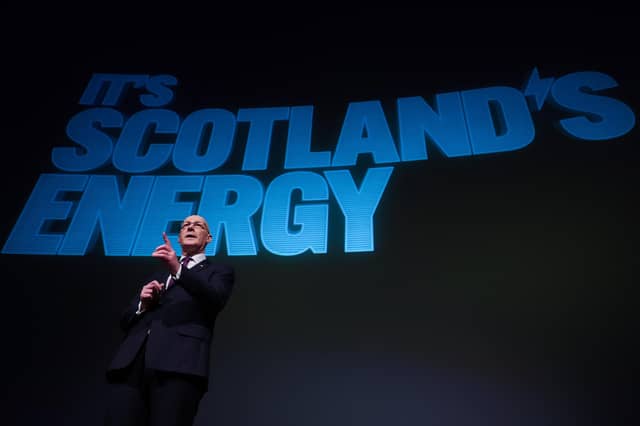

Swinney facing Farage head on in Holyrood vote will make constitutional matters the battleground, rather than the public’s real concerns such as the NHS
Right now, John Swinney was supposed to be preparing for retirement from frontline politics. Having been elected to Holyrood in 1999, the MSP for Perthshire North was ready to pack it all in. His eight year tenure as deputy First Minister under Nicola Sturgeon was to have been his career high. Enough was to have been enough for him. And for the rest of us.
Instead, Swinney is preparing to lead the SNP into this May’s Scottish Parliamentary election. And all the signs are that his party will record its fifth consecutive win.
Interviewed last weekend, Swinney said that, not only was he ready for this year’s election, but that he expected to lead his party into the next one, in 2031, too.
We have the resignation of Humza Yousaf in May 2024, after a chaotic 13 month First Ministership, to thank for the fact Swinney now heads the Scottish Government. A party loyalist since his teens, Swinney stepped up to steady the ship when Yousaf quit.
And he did just that.
The SNP may not be the force it was under Sturgeon or Alex Salmond but it is in a far healthier state than it was when Swinney took control.
But, while the First Minister deserves credit for restoring a degree of calm to government, his political opponents have played their part in putting the SNP back into pole position for the coming election.
Of course, our dog-that-caught-the-car Prime Minister Sir Keir Starmer has helped. His faltering premiership, lacking in vision and characterised by deeply unpopular decisions such as restrictions on winter fuel payments, has damaged Labour’s standing in Scotland.
Also hugely consequential for the nationalists has been the rise in support for Nigel Farage’s Reform UK.
Polling conducted by Find Out Now at the end of December showed the SNP on course for victory in May, with Reform in second, the Greens in third, and Scottish Labour and the Conservatives sharing fourth place.
In many ways, Nigel Farage is John Swinney's dream opponent. The SNP’s hyperactive spin operation could not have imagined a better bogeyman than a brash, little Englander, whose Euroscepticism sets him against the two thirds of Scots who voted, in 2016, to remain in the EU.
We should expect Farage and his politics to be held up by the SNP, during the coming months, as a compelling reason for Scottish independence. It’s time, the nationalists will say, for Scotland to go its own way.
But while there is, undoubtedly, mileage in being the anti-Farage party, the SNP remains a long way from achieving its objective of secession.
A poll conducted by Ipsos last month revealed that the another independence referendum is sixth on Scottish voters’ to-do list, with just 22 per cent saying it was a priority for them.
The NHS was, entirely unsurprisingly, the most important issue for Scots, with 57 per cent saying the state of healthcare would influence their vote. The cost-of-living came second with 41 per cent saying it would impact their decision.
But it when we come to Scots’ third priority that we see a particular problem for the SNP. For 30 per cent of Scots, immigration is a concern that will affect how they vote in May.
So much for the idea that Scots are fundamentally different to the English
Swinney could, of course, ignore that fact and double down on the idea that Scots are more open-minded and welcoming than our neighbours but the problem with that is that it’s not just Labour and the Conservatives that are vulnerable to Reform.
In last June’s Hamilton, Larkhall and Stonehouse by-election, caused by the death of sitting SNP MSP Christina McKelvie and won by Labour’s Davy Russell, Reform came a very close third with 26 per cent of the vote.
The result showed the Tories vote had collapsed, dropping by 11.5 per cent since 2021.
But it would appear that SNP voters also switched. If we wish to account for the rest of Reform’s showing last June, then the fall of almost 17 per cent in support for the nationalists provides a compelling explanation.
If Swinney decides to go in hard against Reform’s anti-immigration rhetoric, he will also be attacking the beliefs of a number of pro-independence Scots.
In the aftermath of the 2014 referendum, Scotland felt tribally divided as never before in living memory. As First Minister, Nicola Sturgeon characterised support for independence as the morally pure position to take. Those who remained unpersuaded of the merits of breaking up the UK were, at best, dupes.
A great political firestarter, Sturgeon spoke of how she detested the Tories, knowing full well that hundreds of thousands of Scots had voted for them.
It’s not in John Swinney’s nature for him to talk publicly about detesting his political opponents. He prefers to present as a more emollient figure.
However, I believe we will see political division become more intractable and bitter in the months ahead. The rise of Reform in Scotland is set to make the May election a battle between two populist visions (or fantasies depending on your tolerance for the easy solutions promised boy nationalists) of Scotland’s future.
The SNP will tell us that breaking the Union will cure all ills while Reform will insist that further isolation from Europe and abolition of the Human Rights Act will bring about positive transformation.
The priorities of voters – the NHS and the cost-of-living crisis – are of secondary importance to the constitution to nationalists, whether they be Scottish or British.
As we ease into 2026, our politics is dominated by leaders who see further division as the answer to the problems facing our country.
Happy new year, everyone…
Comments
Want to join the conversation? Please or to comment on this article.