
Why BBC drama SAS Rogue Heroes' 'immoral' portrayal of real hero plays well with a sinister modern audience

The shocking number of young men who idolise self-proclaimed misogynist Andrew Tate and have contempt for democracy will be lapping up the central character in BBC series SAS Rogue Heroes
In the Golden Age of Hollywood, if a character in a film shot at the feet of an unarmed, elderly priest in a church, it was a sure sign that the person in question was a baddie who would most likely be killed by the goodie in the end.
In the BBC’s SAS Rogue Heroes series, the gunman who torments a priest in this way is one of the ‘heroes’ – a highly fictionalised version of Lieutenant Colonel Blair Mayne, a much-decorated SAS officer and an extremely brave man. Most of the criticisms of his portrayal have, rightly, focussed on the difference between the TV character and the real person.
Damien Lewis, who has written extensively about the SAS’s history, told MailOnline that Mayne’s depiction “as a drunken, ill-disciplined, irreverent, uncouth, misfit who would never have fitted in to normal civilian life is plain wrong and a travesty”. He added that suggesting the SAS were “vagabonds and lawless neo-gangsters” was “simply unacceptable”. I personally also found their antics increasingly tedious.
Another SAS historian, Gavin Mortimer, wrote on social media that the show was “frivolous entertainment and shouldn't be taken seriously. But the distortion of Blair ‘Paddy’ Mayne is immoral and not surprisingly has upset his family.”
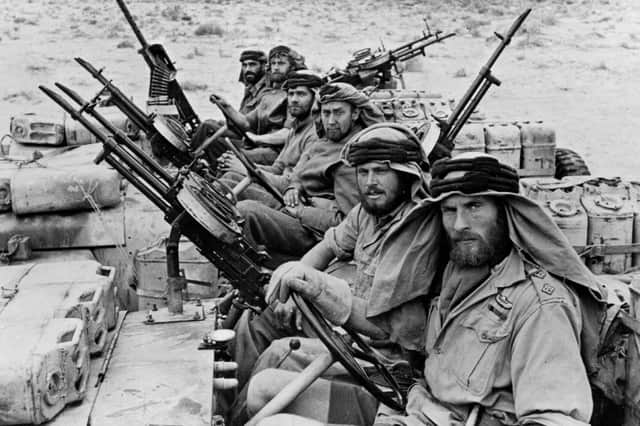

‘A very caring, loving man’
Fans of the show will probably be jumping up and down at this point, stressing that each episode starts with a caveat. The drama, we are told, is “inspired by true events... but be aware... this is NOT a history lesson”, with the “NOT” highlighted in red and playfully left out, then inserted into the line. Or, in other words, we may have used real people’s names and some real events, but we’ve also made a lot of this up, we don’t care and neither should you. It’s almost a celebration of the gross distortions of what actually happened and what the real people were truly like.
However, the justified criticisms of Rogue Heroes’ historical inaccuracies should be accompanied by some questions: why is Mayne being traduced in this way? Why is the baddie of the olden days now somehow the goodie?
According to his niece, Fiona Ferguson, Mayne, who studied law before the war, was “a very caring, loving man” who was fond of literature. Unlike in Rogue Heroes, “Blair was never in prison. Him fighting three military policemen never happened,” Ferguson told Historynet.com. This fictional fight with the military police also owed more to martial arts or superhero films than any actual physical confrontation.
Misogynistic and anti-democratic
However, just as the show’s unapologetic blend of fantasy with reality jars strongly with historians and others who know what really happened, it clearly chimes with a certain audience. Whether inadvertently or not, Rogue Heroes plays well with a modern-day audience of young men who idolise strength and the abuse of power.
According to a poll of 3,000 people of all ages by Craft for a Channel 4 study called Gen Z: Trends, Truth and Trust, due to be published later this week, 52 per cent of respondents aged 13 to 27 think the UK would be “a better place if a strong leader was in charge who does not have to bother with parliament or elections” – ie, half of young people today think a dictatorship sounds like a good idea.
Some 45 per cent of men thought that “we have gone so far in promoting women’s equality that we are discriminating against men”. And almost as many said they regarded the pronouncements of the hideous, self-proclaimed “misogynist” Andrew Tate, a former kickboxer who made a brief appearance on reality TV show Big Brother, as being as trustworthy as mainstream media reports.
Weak, spineless cowards
Tate has claimed that women are "intrinsically lazy", there is "no such thing as an independent female", and that “when you're a realist, you're sexist”. In July last year, as police published a report on violence against women and girls, Deputy Chief Constable Maggie Blyth said: "We know that some of this is also linked to radicalisation of young people online, we know the influencers, Andrew Tate, the element of influencing of particularly boys, is quite terrifying..."
The extreme antipathy towards women felt by such men is based on the same stupid, hateful and lazy thinking as prejudice against migrants: my life is bad, therefore it must be someone else’s fault. And after successfully scapegoating one group of people or another, anyone who defends them – such as the apparatus of a liberal democracy that treats people as individuals with equal rights – must also be the enemy.
There is an absence of personal accountability that betrays these people for what they are: weak, spineless cowards. For all that some of them may have bulging muscles, they refuse to accept that their problems are theirs to solve because it is so much easier to blame someone else instead.
Useless in battle
A character like Rogue Heroes’ distortion of Mayne is appealing because his rage against authority knows few boundaries, much like theirs. At times, the fictional character, who comes with Tate’s kickboxer appeal, almost seems to hate people on his own side as much as the Nazis.
He wants to smash things up and tear the house down; they want to destroy the liberal democracy that is responsible for many positive aspects of life in the UK which they take for granted.
For all their self-declared hardman image, I suspect such men would be useless in a real battle where there is no escape from the fact that your problems are your own and childishly blaming someone else won’t save your life.
The motto of the real SAS is “Who Dares Wins”. I hope the motto of this burgeoning army of anti-democratic, misogynistic cowards, who love a ‘Rogue Hero’ more than a real one, turns out to be “Who Moans Loses”. Unfortunately, however, there is always strength in numbers...
Comments
Want to join the conversation? Please or to comment on this article.