
As cost of bad weather hits £1.2 billion, expect massive disputes over insurance – Jacqui Bickerton
Jacqui Bickerton explains why insurance premiums, the time taken to pay out and arguments about coverage are all likely to increase as our climate changes
This year was perhaps the clarion call, as if we needed one, to the notion that extreme weather is here to stay. With three heatwaves under Scotland’s belt so far this year, it’s hard not to worry that we are ill-prepared for the consequences.
Fire and rescue services are struggling to cope with the increasing frequency of weather-related chaos, and this summer’s fire in Stourbridge in the West Midland hit home the message that such challenges are not reserved to rural areas and farmers, with our urban centres just as likely to be hit by the white heat of change.
For insurers, 2026 may prove to be a turning point in the UK's wildfire risk profile. Record fire activity, unprecedented heat events and a growing concern that wildfires expose the industry to spiralling risk, each complicate the picture.
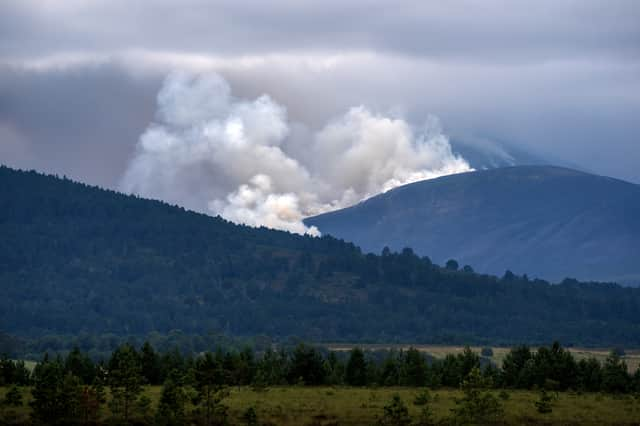
In Scotland, the Scottish Fire and Rescue Service recorded a total of 241 wildfire incidents throughout last year, with 109 wildfires in April alone. Last year also brought the largest wildfire ever recorded in the United Kingdom around Carrbridge and Dava Moor. And this year saw the cherished Cairngorms National Park in flames, with more than 1,500 acres of heather and ancient woodland burning over 12 brutal days. The damage could take years to put right, if not decades.

Cost of policies is rising
For farmers and those in rural communities, the promise that insurers will battle to keep premiums down is cold comfort when our traditional infrastructure is simply not prepared to deal with soaring temperatures and frequent fires. UK household insurers have already seen weather-related losses contribute to increased policy pricing, and without changes to our response infrastructure, this may only get worse.
As wildfires become a more significant climate-related risk across the UK and Europe, the same insurers face an ever-growing range of legal and operational challenges. The most immediate exposure lies in coverage disputes, particularly around smoke contamination, evacuation costs, and business interruption claims where there is no direct physical damage.
Another recurring issue will be persistent under-insurance as reconstruction costs rise, creating potential complaints and disputes over the sums insured, valuation methods and policyholder expectations. Consumers, businesses and insurers will each have to adapt to this turbulent extreme weather and its devastating consequences becoming the dreaded new normal.
More complex cases will raise questions around the insurer’s capacity to address them, particularly when more and more claimants will be waiting longer periods as scrutiny slows down decisions, in what could very well be the worst moment of their lives. As we know all too well, fire is rarely forgiving, and when it strikes it does so unrelentingly.
READ MORE: Why 'very vulnerable' Scotland faces 'managed retreat' as storms of climate change worsen

Floods to follow fires
But as summer draws to a close, we can look forward to only the briefest respite. Autumn will bring flooding in fire’s stead, and the growing frequency and damage caused by flooding is difficult to ignore. The average flood claim reached £30,000 last year, highlighting the significant financial burden that severe weather events can place on property owners.
The Association of British Insurers’ latest figures provide a stark reminder of the growing impact of extreme weather on UK homes and businesses. Insurers paid a record £6.1 billion in property claims during 2025, with weather-related property losses reaching £1.2bn, up 14 per cent on the previous year. Storms, flooding and extreme heat all contributed to the increase, with domestic flood claims rising by 38 per cent to £312 million and storm damage claims increasing by 32 per cent to £244m.
These figures underline the critical role that insurers play in helping communities recover from these increasingly frequent and severe weather events. However, they also reinforce the need for that greater investment in climate resilience, and flood prevention measures that go further than before. With subsidence claims climbing to a record £307m, the insurance industry continues to measure the formidable cost of a changing climate first hand.
And the Scottish Wildlife Trust has estimated that annual flooding damage alone within Scotland has risen to roughly £500 million a year. Are we really prepared for the dogged aftermath of extreme weather all year round?
Future-proofing the country
Flooding and wildfires are no longer isolated or exceptional events. They represent a structural challenge for insurers operating in a changing climate. Loss trends indicate that extreme weather is becoming a core driver of insurance claims, capital deployment and pricing decisions.
The challenge for lawmakers in the Scottish Parliament will be to future-proof against these events. This is more complicated in Scotland, where plummeting winter temperatures present questions about retrofitting properties the length and breadth of the country – and on whom this financial burden might fall.
The key issue for insurers is no longer whether extreme weather will affect their portfolios and their customers – fire after fire this summer made that burning question redundant – but how quickly they can adapt to a future in which these wildfire and flooding losses are expected to become an increasingly regular feature of the claims landscape.
Of course, this is a question that looms large for all of us: how can we adapt to a changing world? It’s one we’ve asked ourselves forever and a day, throughout each of the changing seasons. But it appears the seasons are bringing much more change than they used to – and despite our sunnier summers, not all of it is good.
Jacqui Bickerton is a market affairs lawyer at law firm Weightmans
Comments
Want to join the conversation? Please or to comment on this article.