
CBAM: How the government's war on carbon and prosperity is about to enter a new phase


Plans for a punitive new tax on imports could backfire on the whole net zero agenda
At this point, it must take Nicola Sturgeon-grade levels of delusion not to notice there is much that is badly wrong with the entire net zero misadventure and the assumptions and premises on which it is based.
Yet just two short years ago, dissenting views were widely regarded as beyond the pale. The blithe assertion that there was a rock solid “consensus” on the subject was seen by all right-thinking people as unquestionable.
This was despite the fact that there was then, as there is now, no credible plan to eliminate carbon emissions by 2050 without destroying the economy.
The main difference between now and then is that the consequences of kamikaze net zero-inspired government policy have become impossible for people to miss.
While politicians burble on about “leading the world” on a “just transition” away from affordable and reliable energy, communities are witnessing more and more industries atrophy and die.
Last week another steelworks, the UK’s third largest, collapsed into government control, putting at risk the jobs of nearly 1,500 workers in Rotherham and Sheffield.
The steelworks is one of the supposedly environmentally friendly ones, where an electric arc furnace is used to repurpose scrap metal. But the UK’s exorbitant and ever growing energy costs are a leveller, condemning the plant to the same fate as virgin steel producers.
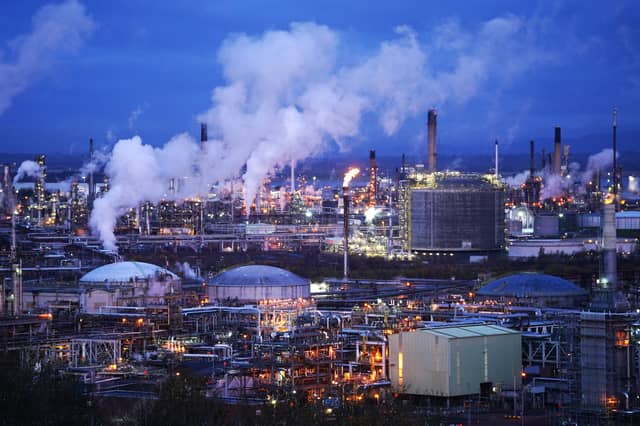
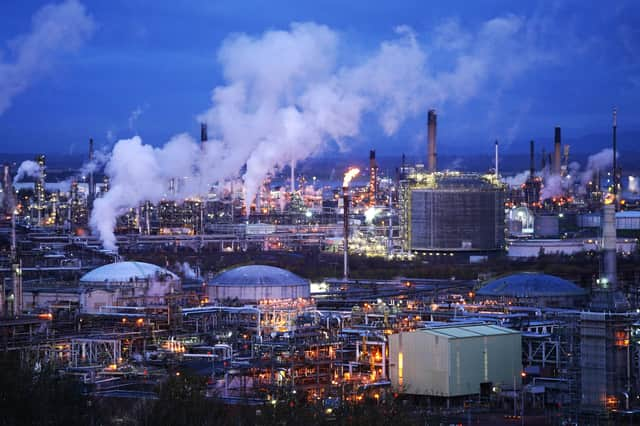
North of the Border, recent deindustrialisation has included an end to production at Scotland’s last oil refinery at Grangemouth, with the loss of more than 400 jobs and many more in the supply chain. The site is now moving towards becoming an import hub for finished fuels.
Dysfunctional policies of successive governments have led to the UK being lumbered with among the highest, if not the highest, energy prices in the world.
‘Replacing what worked with what sounded good’
The US economist and political commentator Thomas Sowell said: “Much of the social history of the Western world over the past three decades has involved replacing what worked with what sounded good.” Hydrocarbons work, “renewables” sound good.
For many years, the inexorable drive towards net zero was fuelled by polling that suggested it enjoyed broad popular support - because it sounded good. Of course everyone is in favour of protecting the environment.
But that support is falling fast as the implications become clearer. Asked whether they are willing to ration their energy consumption depending on the weather, or whether they are willing to give up foreign holidays, or buy a heat pump or an electric car, people are far less enthusiastic.
Public opinion has switched decisively and it seems unlikely to switch back.
On the contrary, as the government strives to decarbonise the British electricity system over the next five years, the economic outlook will only become more grim as the war on carbon and prosperity enters a new phase.
Most voters will not yet have heard of the Carbon Border Adjustment Mechanism, or CBAM to give it its slightly snappier acronym.
This is a carbon tax based on similar EU rules that is set to be introduced via a statutory instrument at Westminster - without a vote by MPs - in January 2027.
The levy, essentially a tariff, will be applied initially to imports of the raw materials that form the backbone of British industry - steel, iron, aluminium, fertilisers, cement and hydrogen - based on the amount of carbon emissions supposedly associated with their production. It is then expected to be rolled out to other materials such as glass, ceramics and so on.
Nothing for protectionism to protect
There is a protectionist argument to be made in favour of this, but protectionism only works where there are industries to protect. The UK is already so heavily reliant on imports that businesses will be forced to absorb the extra costs.
The government itself is the biggest customer for materials such as steel and cement. The cost of infrastructure projects will rise as the government effectively taxes itself while it tries to build roads, hospitals and schools.
The UK ammonia industry has already shut down due to high energy costs, leaving farmers reliant on imports for fertilisers. Many are already struggling to survive and the extra cost of fertiliser, compounded by other factors such as changes to inheritance tax, could see more farmers forced to sell up.
This in turn would lead to more farmland being given over to solar farms and rewilding projects, damaging the UK’s food security and making the country more reliant on imports.
Ministers hope CBAM will generate billions of pounds worth of extra revenue for the Treasury each year. In reality, as the impact begins to be felt, business profits and household spending will take a hit, lowering receipts from corporation tax and VAT.
But would it even matter if CBAM inadvertently sent tax receipts in the wrong direction? After all, the purpose of the policy is not to make money but to cut carbon emissions, both at home and abroad.

Perhaps it would matter less to the likes of Energy Security and Net Zero Minister Ed Miliband than it would to the thousands of ordinary people whose livelihoods may be put at risk.
Politicians now find themselves performing an ever more difficult balancing act, setting their commitment to the net zero agenda against its increasingly obvious adverse ramifications for voters.
On CBAM, as in other areas of climate policy such as the roll out of heat pumps and the Zero Emission Vehicles mandate, ministers may feel the need to backtrack.
If they carry on regardless by pursuing increasingly unpopular climate policies, they may find themselves in opposition before too long.
Within another short few years, they could be replaced by a government elected on a mandate of undoing the damage they have done in the name of net zero.
Comments
Want to join the conversation? Please or to comment on this article.