
'National tragedy' as over 800 patients die amid 'extreme' A&E wait times

Estimated death toll surges by a third year on year
More than 800 patients died while enduring lengthy waits for admission to accident and emergency departments across Scotland last year, with the leading body of emergency medicine professionals warning of a “system in crisis.”
In what it described as a “national tragedy,” the Royal College of Emergency Medicine (RCEM) said there were an estimated 818 associated excess deaths related to stays of 12 hours or longer before being admitted to A&E departments.
The death toll - the equivalent of 16 people losing their lives every week - is up by almost a third compared to the 616 estimated deaths in 2023, a trend the RCEM said was “shocking.”
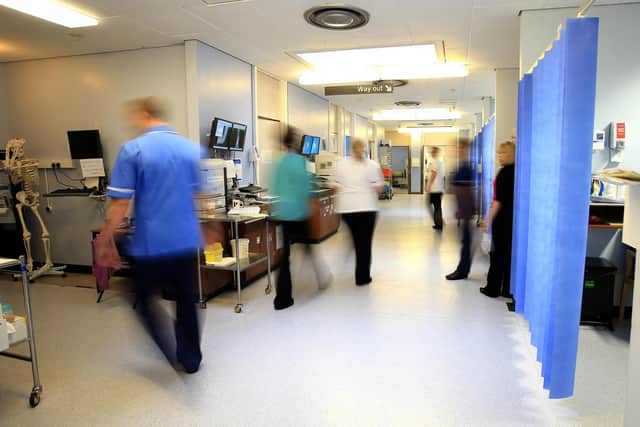

The new analysis by the college found that a record 76,510 patients waited 12 hours or more to be admitted, discharged, or transferred from A&E last year, some 20,432 higher than the figure in 2023. Of those patients, the majority - some 58,906 - were waiting to be admitted to a ward for further care.
The RCEM said that using the standard mortality ratio - a method which calculates that there will be one additional death for every 72 patients that experience an eight to 12-hour wait prior to their admission - it estimated that there were 818 associated excess deaths related to stays of 12 hours or longer before being admitted in 2024.
Dr Fiona Hunter, vice president of RCEM Scotland, said: “The fact that the deaths of more than 800 patients have been lost due to a system in crisis is a national tragedy. Behind this statistic are stories of heartbreak. Because these are people. Mums, dads, brothers, sisters, grandparents - their deaths shattering the lives of families and friends.
“These are patients who are sick and need further care on a ward. So they are forced to endure extreme wait times for an inpatient bed to become available for them. Often, they will be experiencing this, counting the hours they have been in emergency departments, on a trolley in a corridor, cupboard, or simply any available floor space.”
The RCEM analysis also found that emergency departments throughout the country have endured a summer of “unrelenting pressure” this year, with an “unacceptable” number of people experiencing long and dangerous waits.
Even during the warmer months of June and July, some 9,881 people endured a stay of 12 hours or more from their time of arrival at A&E - that is some 7,003 more patients than the entire year of 2018. In July alone, meanwhile, some 4,686 endured the extreme wait, some 2,400 more than the number of patients forced to wait 12 hours or more in January 2022.
Dr Iain Kennedy, chair of BMA Scotland, said the figures showing an increase in deaths associated with long A&E waits before admission were “extremely concerning” but not surprising.
“It is a tragic but entirely predictable outcome of a system in crisis, which leaves doctors facing challenges every single day in providing timely care and patients finding the NHS is not able to provide the care they need, when they need it,” he said.
“The delays in our A&Es are a symptom of the huge issues across the entire health and care system. We are in a workforce crisis and simply do not have the resources or healthcare workers – including doctors, nurses and allied health professionals – to cope with the levels of demand. The most recent figures obtained by BMA Scotland found there were more than 1,000 consultant vacancies across health boards in Scotland and we estimated it would take more than 13 years to fill all those vacancies at the current rate of progress.”
Dr Hunter will be attending an RCEM event in Edinburgh today, alongside clinicians, healthcare leaders, and politicians scrutinising the future of emergency care and the pressures it is facing
She warned that without government action the cost will “continue to be measured in lives” and has called on parties at Holyrood to commit to ending overcrowding in emergency departments, and provide enough emergency medicine staff to deliver safe and sustainable care.
She added: “It doesn’t have to be this way - the crisis is fixable and it comes down to patient flow in hospitals - getting people out of emergency departments and into a ward bed and getting them out of hospital when they are well enough to go home.”

Scottish Conservative shadow health secretary Dr Sandesh Gulhane said: “SNP ministers should hang their heads in shame at these heartbreaking figures, which lay bare the human toll of the SNP’s chronic mismanagement of emergency care.
“These completely avoidable deaths are the direct result of the nationalists’ abject failure to meet their own A&E targets. Frontline staff are working flat out for their patients, but they’ve been failed by successive SNP health secretaries who still haven’t come up with a credible plan to address this national emergency.”
Scottish Labour health spokesperson Jackie Baillie said “This damning analysis lays bare the true cost of SNP failure. For years Scots have been dying as a result of dangerously long waits in A&E, but the SNP has stood idly by while this crisis ran riot.
“The SNP has no idea how to fix this crisis and our NHS cannot afford a third decade of this incompetence.”
Alex Cole-Hamilton, leader of the Scottish Liberal Democrats, said: “People are waiting excruciatingly long at A&E or even dying before they get treatment because the SNP have failed to fix the crisis. Staff and patients are trapped in pressure cooker conditions.
“Since the target was last met, there has been a merry-go-round of four SNP health secretaries, but not a single one has ever made a dent.
“Unlike the SNP, my party is full of ideas for getting our NHS back on its feet, and you can vote for those plans by backing the Scottish Liberal Democrats on the peach regional ballot paper at next May’s election.”
Health Secretary Neil Gray said: “My sympathies go to anyone bereaved after loved ones endured long A&E waits. We’ve always recognised the relationship between long A&E waits and increased risk of harm, which is why we remain committed to delivering improved performance and shifting the focus of care from acute to community where better for patients.
“We are seeing progress with the latest monthly A&E figures showing July 2025 had the lowest number of 8 and 12 hour waits for any month since September 2023. Scotland’s core A&E departments have also consistently outperformed those in England and Wales for the last decade.
“Our additional investment of £200 million is further reducing waiting times and will see us have specialist Frailty teams in every core A&E. We’ve also seen the number of Emergency Medicine Consultants in NHS Scotland increasing by 21 per cent in the last four years.”
Comments
Want to join the conversation? Please or to comment on this article.