
Minehunting drones from Scots base could be deployed to Middle East
Concerns growing over blockage of key route

Minehunting drones from a specialised Royal Naval unit based at Faslane could be deployed to the Middle East to help secure key oil shipping routes through the Strait of Hormuz.
Iran’s effective blockage of the key marine route has had a devastating impact on energy prices and global supply chains, with the country’s new supreme leader, Mojtaba Khamenei, vowing to continue to cut off the channel.
The US president Donald Trump has called on countries including the UK, France, China, and Japan to send warships to the waterway, where a number of tankers have been targeted since the US and Israel began launching strikes against Iran a fortnight ago.


A defence source told The Sunday Times that one option under consideration is the use of autonomous minehunting drones operated by the Royal Navy’s Mine and Threat Exploitation Group (MTXG) which are currently in the region. It is unclear how many of the drones are in service and which systems could be deployed.
Speaking on Sunday, the UK energy secretary, Ed Miliband, said the UK government was “intensively” looking at what steps it could take to help reopen the key marine route.
Asked on Sky News whether Britain was looking at sending minesweepers or minehunting drones to the area, Mr Miliband said: “We are talking to our allies. There’s different ways in which we can make maritime shipping possible. We are intensively looking with our allies at what can be done, because it’s so important that we get the strait reopened.”
Mr Miliband had earlier said there are “a range of things that we can do, including autonomous minehunting equipment.”
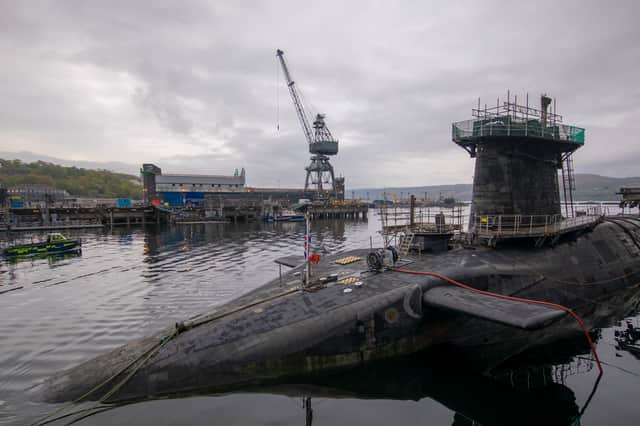
The MTXG group, a multidisciplinary team made up of experts including mine warfare specialists, weapon engineers, marine engineers, and logisticians, is based at HMNB Clyde in Faslane.
With an accompanying training unit operating out of Portsmouth, and some vessels based in Plymouth, the UK currently has four drone systems in operation or development, codenamed Wilton, Sweep, SeaCat and MMCM respectively.
The Wilton project, which consists of uncrewed surface vessels, mine detection equipment and remote command centres, has previously been rolled out in the Clyde as well as in the Gulf. Its submersibles and boats are designed to hunt down mines but also analyse the oceans and sea floor.
Some units in MTXG are set up to respond to incidents and flashpoints around the world; its X-Ray squadron has three globally deployable units, and has operated across the Arctic, Mediterranean, and the Middle East.
The MTXG group also protects Britain’s Trident fleet; one such unit, known as Zulu squadron, is equipped and ready to deploy at short notice around the Clyde estuary and west coast of Scotland.
The capabilities of the UK’s mine countermeasures operations would be of immense use in the Strait of Hormuz, amid growing concerns that Iran has laid mines to prevent tankers and warships from passing through the strait. Estimates by the US Defence Intelligence Agency indicate that Tehran has upwards of 5,000 naval mines in its arsenal.
Comments
Want to join the conversation? Please or to comment on this article.