
Miriam Margolyes: “There will be humour and political content and quite shocking language”
Miriam Margolyes heads back to Edinburgh with her love letter to Dickens
‘I’m no deid yet!’ says Miriam Margolyes, channeling her dad’s Glasgow accent as she points out that she’s still alive and kicking and will be at this year’s Edinburgh Fringe with her show about Charles Dickens.
Zooming from Australia where she lives with her life-long partner Heather Sutherland, the 84-year-old is outraged about the misinformation spread about her health and recent stories that she wouldn’t be attending the Fringe, and the expletives are out.
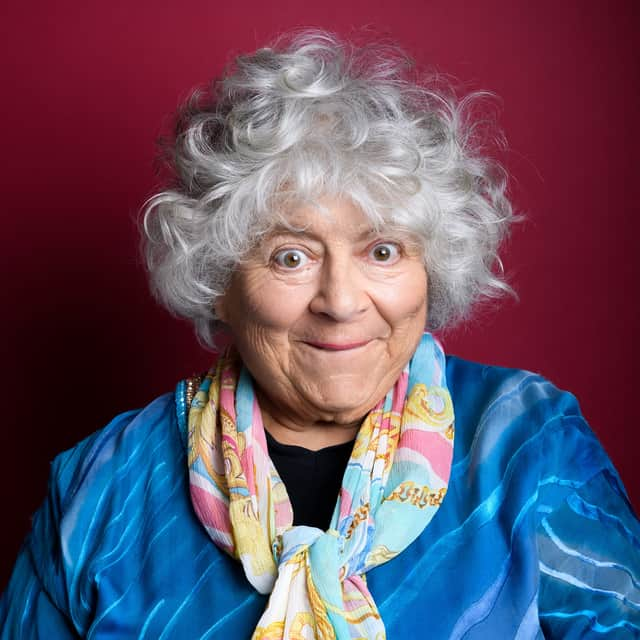

“Yeah, I'm no deid yet. I'm not even sure I'm gonna die, but I'm bloody sure I'm gonna be there at The Fringe.”
The award-winning actress, TV personality and author returns with the show that is testament to her lifelong love of all things Dickens and she promises more characters and stories about the famous writer, as well as a Q&A session in which she takes questions from the audience which she will answer in her usual unfiltered frank and funny way.
“There were articles saying I was dying and I wouldn't be coming to the Fringe this year. I believe that there was some kind of a conspiracy against me to stop me from being a success at the Fringe,” she says.
“It came from an article from two years ago when I had a heart operation and was given a cow’s aortic valve. I put a photograph on Facebook saying I'm in hospital but I'm coming out soon and I'm fine. Somebody took that and made an article of it and sent it round the newspapers and they printed it again.
“I was very angry. It’s the most utter rubbish. It’s like Mark Twain who said ‘reports of my death have been greatly exaggerated’. It's extraordinary, but I do think it was a kind of conspiracy. I never will get to the bottom of it. But I’m here!”
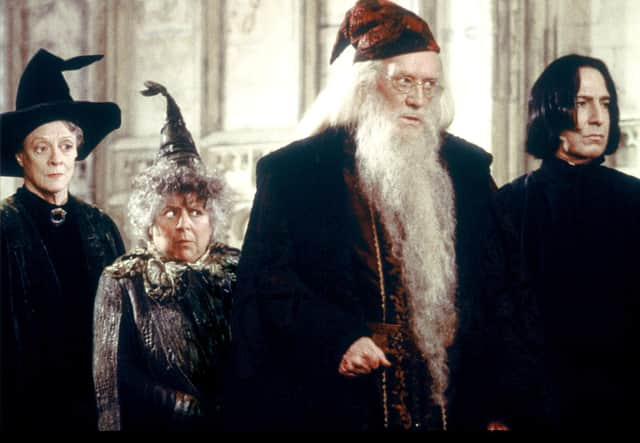
Raised in Oxford in a middle-class Jewish household, Margolyes is known for a long career on stage and screen in which she has appeared in the Harry Potter films, Scorsese’s The Age of Innocence (which earned her a BAFTA for Best Supporting Actress), James and the Giant Peach, Mulan, and on TV more recently for Call the Midwife and the Voice of Meep in last year’s Dr Who, she has also explored her adopted homeland with the Almost Australian and Australia Unmasked Documentaries and BBC travelogue Miriam Margolyes: Impossibly Australian. On stage she has performed in WICKED, The Vagina Monologues and Blithe Spirit, as well as writing two bestselling memoirs, This Much is True and Oh Miriam.
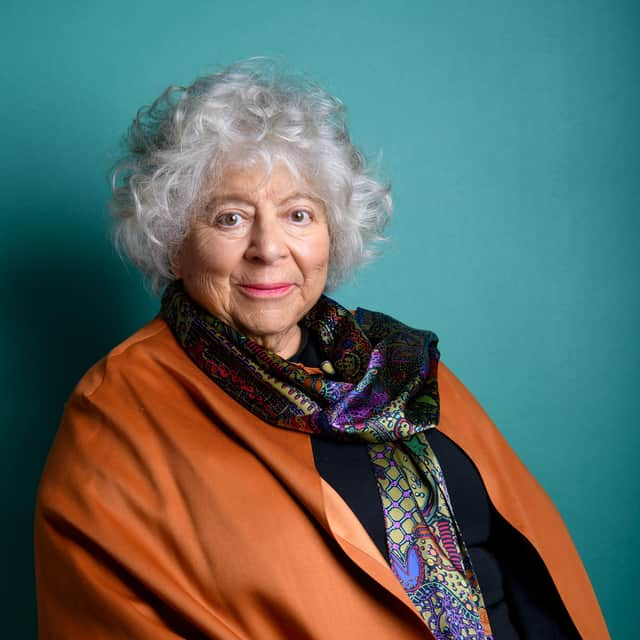
Having put the record straight about her health, her indignation subsides and our attention turns to what we can expect in her Fringe show, Margolyes & Dickens: More Best Bits.
“There will be humor and tenderness and political comment and there will be quite shocking language. There will be sexual innuendo and there will be wonderful characters.
“It's a development of what I did last year. People enjoyed it and I enjoyed doing it. So it's talking about Dickens and acting some of the characters. Because he created 2,000 characters, and they weren't just out of his head. They were out of his life, people he met, that he knew, that fascinated him. He was a journalist, that's what fired him, a fascination with people, wanting to know why they were like they were and how they expressed themselves. And he was utterly brilliant.
“For me, he's the greatest prose writer who ever lived. A genius. He was an observer and a moralist and someone who created a world. It's brighter and sharper and crueler and busier and more dangerous even than ours. He takes you in, and that's what I want to do with the audience, bring them into the Dickens world through the characters.”
“I want to share the thrill I get when I become Mr Bumble or the lesbian, Miss Wade. Share that enthusiasm. It's a gleeful experience for me. The variety of characters from very august, top drawer, upper class to the evil and comic and desperate, that he was able to create because of his curious background. He experienced poverty and the imprisonment of his parents, then later success so he could cross class boundaries, which most writers couldn't do,” she says of the writer who loved and was inspired by Edinburgh, visiting many times and being given the freedom of the city in 1841.
“People know Christmas Carol, Great Expectations, the ones that have been on telly. But they don't know the man. They don't know about his life, his problems, his occasional wickedness. He was just boiling with fascination and rage and delight, surprise and humour. And that is in his books. He was an extraordinary man. And we’re losing him.
“And then, when I come to the end of my Dickets bits, the audience can ask me questions and that's always fun because they're cheeky,” she says, eyes twinkling with anticipation.
Does she set out to be cheeky and shock people or does it just happen?
“I think it always has just happened. I mean, I love it when people laugh. And when they're slightly shocked. Whenever you say something like c***sucking to people, they go, gulp, ho ho and I find that hysterically funny. I don't know why. I mean, I always did talk about it.
“But I think it's a bit sort of silly to shock people. I don't totally approve of it. But every now and again, I think it's quite useful to say ‘Farage is a c***. People don't like it, but I think he is.”
What do the audience ask her about most?
“They often ask me about celebrities. They want to know about well known people I worked with and I worked with a great many in my life, in Hollywood and in the theatre and the people I've met on the Graham Norton show. Because everybody's very obsessed with celebrities now.
“And they ask me about my sex life and what do I think about being gay or would I change sex or what do I think about trans? That kind of thing. But I want to talk about Israel and Kier Starmer. I'm very political, but I don’t think they want that.”
Margolyes, has always been political, but finds herself increasingly motivated as she observes the world around her.
“Now because of the terrible things that have been happening in Israel, I've become even more political and I'm shocked by what's happening in the world, how it's allowed to happen. And I see that we have learnt nothing at all from history. Nothing. And that charlatans like Farage and Boris Johnson, and indolent, entitled people, like Rees-Mogg, still hold power, and corrupt, total a***holes, run countries, like Putin and Trump. We are in the grip of very terrible people.”
It’s not just politics that Margolyes finds alarming. Her home in New South Wales was recently without water, electricity and internet after devastating floods ravaged the region and she’s planning to move somewhere less rural.
“We have to sell the house here, it's just too far out. We're too old to make the journey into town and it's too isolated. I need electricity. It's one of the things I need to put down on my rider - must have electricity.”
What else does she have on her rider for Edinburgh?
“Well for everywhere I have spicy tomato juice, a bloody mary mix without the vodka, and I like line caught smoked salmon and cream cheese and capers on sourdough.
Does she like any other Scottish delicacies, haggis or tablet for instance?
Tablet! My God, I mustn't eat tablet, because I never stop. Some people can take one piece,’ and [the Scottish accent is back], ‘forget that! I just scoff the lot!’
“And what's that wonderful fish soup? Cullen skink. I love that. Years ago I was in a play written by a Scottish Jewish writer Jack Ronda, directed by Tom Cotter, called The Lost Tribe. And it was a kind of fiction that there was a lost tribe of the Jews of Scotland and Billy Paterson was in it and Phyllis Logan and we were on location in a sweet wee house near Fordyce and Billy and I bought the location and did it up and it's still there.
“Billy played my father. And you know, I'm older than he is. And Phyllis was wonderful too. We had such fun. And that's where I first came across Cullen skink. And they did high teas.”
Why doesn’t she reconnect with her roots and split her time between Scotland as well as England and Australia?
“Oh, I'd love to live in Scotland. I'd love to live in the sort of house that my father grew up in after his parents made money. I love Glasgow. I think it's a magnificent city. It's got heart and soul. And it's real and I've always loved it.
“And there are terrific people in Scotland. You know, one of my joys last year, when I did the show in Edinburgh, was to meet Janey Godley. I’d admired and loved her for a long time. And I rang her up one day and say ‘can we meet? I just think you're fabulous.’ And said, ‘Oh, God, I'd love to. You know, I've got cancer and I don't know how long I'm going to live’, but she got her husband to drive her to Edinburgh and we spent a magical day together. We talked all day, and a couple of times we both had a nap, because we were exhausted. It was very special for me, to get to know her and she was a great lady. And she was a moralist, you know? I think that the great artists are moralists. She was a great comedian.”
On the agenda for Margolyes after the Fringe is making a podcast and the follow up to her BBC documentary series, Miriam Margolyes: Almost Australian, this time round exploring New Zealand.
“Oh, gosh, it's an extraordinary country. It's actually more impressive than Australia in many ways. It has a strong Scottish influence - I have quite a few relatives there because people emigrated.
“But I think it is the relationship with the Maori people that really impressed me. They've been on a journey together and it's impressive. The Australians are still fractious about the First Nation. And actually, there are elements in New Zealand that are too, that are trying to overturn the Treaty of Waitangi, which was the treaty that cemented the respect that the white people must have for the First Nation.”
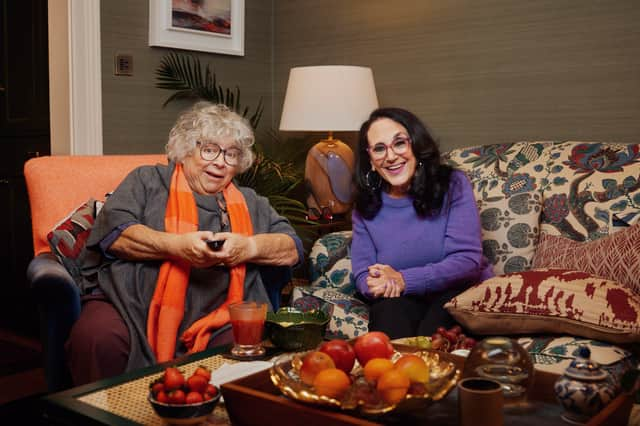
At this point in the interview, which I’m conducting from home, I realise my daughter has been perched on a chair listening, drawn like a moth to a flame from another room by the sound of Margolyes’ hilarity and profanity, the voices of the stream of characters she inhabits and the tales of people she has met in the places she’s visited.
“Oh, can I have a look at her?’ says Margolyes, more curious about other people than talking about herself, but worried about how she sounds (not the swearing of course, but the voice).
“What do I sound like? Very posh, I suppose. I think my voice puts people off, that's the trouble. You know, if I want to talk to somebody I don't know, I put on Scottish, like this [and we’re back to her Glasgow accent]. ’Because I think my own voice is a bit too English and I want to try to reach people.
“My dad was from The Gorbals in Glasgow so the accent is part of the world that I grew up in. I didn't grow up in the Gorbals, but my father did. And it was a very nice place in some ways but it was the worst slums of Europe. The people were friendly. And his family went from the Gorbals, first to Govan, then Pollockshields when they made a bit of money and bought a lovely sandstone house and he became a doctor. I went and called once. I rang the bell and the lady opened the door and looked at me and said, ‘what are you doing here?’ And I said, "Well, I'm in Vagina Monologues, and as soon as I said the word ‘vagina’, she looked round to see if anyone had heard. She was sweet and invited me in.”
For the rest of the interview and chat with my daughter [who tells Margolyes she finds her ‘refreshing’], the actor keeps up the accent seamlessly. Will she use it when she’s in Scotland to avoid being recognised, which is unlikely but she hopes won’t happen.
“I hope people won't recognise me because they get overexcited when they see me.”
What do they say to her?
“Harry Potter, that kind of stuff, you know.”
Do they ask her about JK Rowling?
“Yeah, all the time. I've never met JK Rowling. I mean, I like her detective stories, but I've never read The Harry Potter books. Because science fiction, I go to sleep because it's all about gadgets and stuff like that.”
“And in the show if people ask me what I think about things, I will absolutely say. And I will certainly make a comment about Gaza. Because it's not acceptable. I reject it completely. That the Jewish people can do what they're doing, it's wrong. No question about it. I do think what Hamas did was terrible. I don't support that. But my God, the retaliation. It’s really shocking.
“And people ask about the trans issue so I will say things about that. I just want people to be a bit kinder. People should be able to be what they want to be. I think it's awfully sad to find that you're in the wrong body. So I'm very sympathetic to trans people. But if somebody was trying to rape me and were pretending they were changing sex and still had a p**** and were doing damage, well, I'd f***ing kill them. But let's get realistic. The number of people who cause trouble is very, very small. Violence is a crime. If trans people commit crime, they're to be treated like anybody else. But because you want to change your sex, that's not a crime. It's not a crime to want to be called ‘them’. It's ungrammatical, but it's not a crime.”
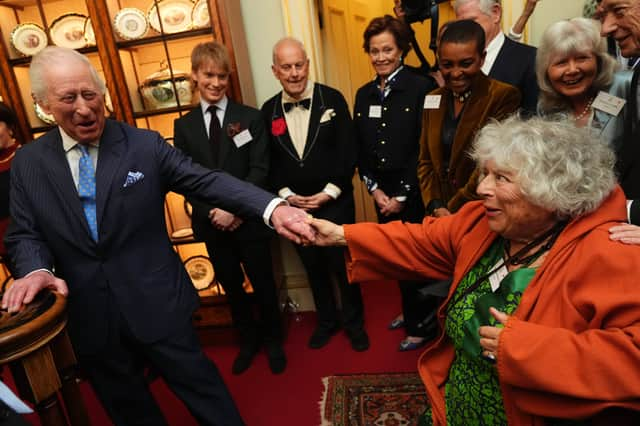
Margolyes has plenty to say and will continue to do so as long as she’s alive and kicking, which we’ve established that she is. Is it true that Queen Elizabeth II once told her to be quiet?
“Oh, yes. It was a rather uncomfortable moment because when you meet the royals, you slightly lose your marbles. Anyway, I met her at this British Book Week event and she came over and she said, ‘what do you do?’ And instead of saying, ‘I'm an actress’ or ‘I record books’, I said, ‘Your Majesty, I am the best reader of stories in the world’. She looked at me, rolled her eyes and sighed, and obviously thought this woman is barking mad. And then she turned to the next person and said, 'what do you do?’ and ignored me. He said, ‘Mam, I published books for children and we've discovered that if the pages and the ink for the various letters is different colours it helps children absorb the information more quickly and easily,’ and I said, ‘good heavens, that's extraordinary. I didn't know that. What an amazing thing.’ And Her Majesty turned to me and said, "Be quiet." With a very crisp tea on the end of ‘quiet’. Never to be forgotten.”
Never to be forgotten, but heeded and obeyed? Nae chance. Her audience will expect nothing less.
Margolyes & Dickens: More Best Bits, Pleasance @ The EICC – Pentland Theatre, 9-24 Aug (except 18th & 21st), 6pm (show runs for 70 minutes). 16+ (Guideline), from £26.50 Tickets here (www.pleasance.co.uk/event/margolyes-dickens-more-best-bits).
Miriam Margolyes is guest presenter at The Scotsman Fringe First Awards, Friday 22 August, at the Pleasance Grand. Reserve your free place to be in the room with the stars of the future as we honour the best new theatre shows here
Comments
Want to join the conversation? Please or to comment on this article.