
'I feel gratitude because I was convinced I would be dead at the age of 25.' Author Matt Haig celebrates life
Suicidal depression, ADHD and autism have given the best-selling author an appreciation of life that fuels his writing. His latest book, The Midnight Train, is a time-travelling love story that sprinkles realism with magic.
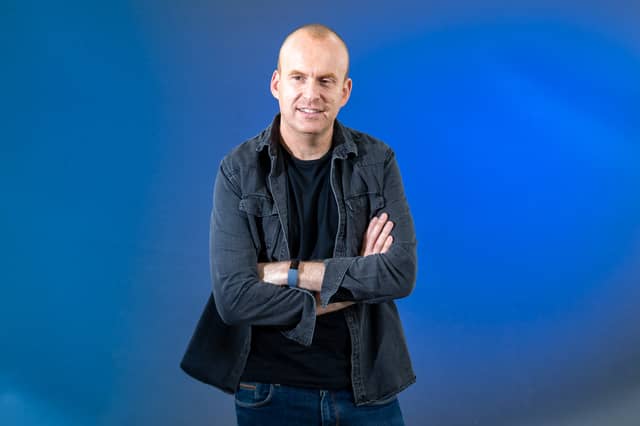

Matt Haig is tired but upbeat. He’s been up in the night several times with the family’s golden retriever, Bruce, who has retrieved and eaten something he shouldn’t have and as the dog now dozes peaceful, Haig says he may struggle to be coherent as we discuss his latest book, the time-travelling love story, The Midnight Train.
He’s doing himself down as he doesn’t struggle at all, mulling questions over and coming back with new thoughts and perspectives on his writing. He also gifts the vivid image, courtesy of his vet, that sometimes you can pick up a golden retriever, shake them and they rattle because of all the things they’ve ingested. This makes me wonder if you picked up Matt Haig and shook him, would all of the stories he has in his head rattle, such is his prolificity.

The author and journalist has multiple bestselling titles to his name, encompassing fiction, non-fiction and children’s books. There are nine novels, including The Midnight Library, The Humans, How to Stop Time and The Radleys, which was made into a 2024 British comedy horror film starring Damian Lewis and Kelly Macdonald, four non-fiction and nine children’s titles, of which A Boy Called Christmas became a major feature film in 2021 with Maggie Smith, Jim Broadbent, Sally Hawkins and Toby Jones. There are film options on How to Stop Time, with Benedict Cumberbatch tipped to star, also The Humans and The Midnight Library.
Want the latest Scottish headlines sent directly to your phone? Sign up to our WhatsApp Channel
It’s 11 years since his non-fiction work, Reasons to Stay Alive, brought him plaudits for writing openly about his mental illness and experience with suicidal depression and anxiety which he explored further in The Comfort Book in 2021, and four years since he was diagnosed with ADHD and autism. Today at 50, with a home in Brighton that he shares with wife Andrea, an 18-year old son and 17-year old daughter, and a successful writing career that sees his work published in more than 50 languages, he describes his life as ‘somehow just about sorted’.

Haig fans’ ears will prick up at the word ‘Midnight’ as 2020’s The Midnight Library is one of his most popular books but he didn’t set out to write a sequel.
“I see it as like a sibling and it’s related in terms of themes of regret and time and is existential,” he says, “but where The Midnight Library was going sideways because it was about parallel lives, this one is going forward and back because it's one life through time. It’s intersecting.
“Also, I say sibling, because it's having a bit of an argument with The Midnight Library in the sense that that’s ultimately about accepting your own life and it's a passive message. This is more active about how you would live differently if you had the perspective of your final days.”
The Midnight Train is also a departure because it’s the first time Haig has written a romance.
“I've never written a proper love story before so it fits that, and I've never written a proper time travel before and that was fun. Compared to The Midnight Library, this is more of a character based book.”
The characters in question include Wilbur, who as he is about to leave his life is given the chance to revisit the moments that meant most before he threw it away, such as his honeymoon in Venice with love of his life Maggie. There’s his troubled brother Dougie and Agnes, a bookseller, who becomes Wilbur’s guide to the past.
“It's kind of updating Christmas Carol themes. I wanted a Scrooge who wasn't a villain but someone caught up in capitalism and the realistic way that happens. Getting Wilbur right, a multimillionaire book chain owner, Dragon’s Den kind of person, and making him this vulnerable, lost soul, was a risk I liked.”

The Midnight Train is set in 1960s Sheffield, where Haig’s parents' own love story happened and he was born, and viewed “through my mum and my dad's nostalgic eyes,” he says.
“They always wax lyrical about it. The narrative of the 1960s in the UK is that London was swinging and everywhere else was grim and northern and nothing much was happening. The way mum and dad talk about it, it was vibrant, quite multicultural for the time with a big Caribbean population, an art school, Malcolm X was there on tour, there were live bands, clubs, bookshops, political scenes and protests. So it was very much a swinging 60s narrative about a place that you don't see represented. I love social history, researching that stuff. Sheffield is one of those northern towns that always punched above its weight culturally. A lot of music, from Arctic Monkeys, to Def Leppard, Pulp and Human League has come from there and I think it’s always overshadowed.”
What about the themes he often returns to in his books - loss, regret, the passage of time?
“A lot of it was tied to my own mental health struggles. I feel like not only did I lose my 20s, but also to some degree my partner lost her 20s looking after and dealing with me. So I have guilt tied to that and regret attached to my younger years. I was a very difficult teenager, arrested at 16 for shoplifting, drinking, taking drugs and had difficulty fitting in. I was told I had special needs at school in some subjects. Not for bad behavior but for not being able to concentrate, never remembering anything, so I had this sense of not fitting in and that feeling is also in my books. I think guilt has imprinted. I've always been neurodiverse, but didn't realise it until a few years ago.”
He has a strong sense of time passing, which surfaced particularly with this latest book.
“I was just about to hit 50 as I was writing, my dad was going through cancer and my father-in-law was diagnosed with Alzheimer's so I had a lot of mortality and existential stuff going on. Also you get to midlife and beyond and start to think about it in good and bad ways in a way you don't even at 40.
“So there were things in my mind but also, ever since my recovery from depression, I've had that sense of lost time. Not in a totally sad way, but in a ‘you've really got to make most of it' way.

Haig also talks of his sense of gratitude that he recovered from depression and has learned to handle his neurodivergence.
“I feel gratitude because I was convinced as a young man that I would be dead at the age of 25. I was deeply suicidal at 24, was hospitalised and prescribed very strong pills that did not work for me and didn't get therapy when I should have, so I really felt I was in a dead end. So anything beyond 25, I've had this sense of, right, life is fragile, I'm here, and I'm lucky to be here, so make the most of it.”
Four years on from his ADHD and later autism diagnosis, did that help?
“Yeah. It made me a bit more self-compassionate, more mindful, helped me stop drinking. When I had the ADHD diagnosis I realised those impulses were the justifications you do as an addict and that ties in with ADHD in that lack of impulse control. So it's been easier knowing that.
“The great thing about ADHD medication is it works on the day you take it so if I've got a stressful event or meeting where I'm going to need to focus, I can take it. But I don't have it every day.
“And autism, obviously there's no magic pill but it is useful to know because it's explained things, like sensory overwhelm. I used to think I was rude when, if I was at a gathering I'd have to disappear into a room for five minutes then come out again. It helps understand why I'm so weird about textures like woolly jumpers, sand, various things I can't stand.”
“It's good to know. And my son's autistic as well so we can relate to each other, but I don't think I'll ever become like a spokesman for it or write a book on it.

What about ADHD, would he write a book with a character who was ADHD, or maybe he already has?
“It's interesting, because The Humans is a book about an alien who comes to earth and takes human form and can't understand the rules and how to fit in, and lots of autistic people contact me and say ‘thank you for writing a fable about autism’, and I never had. I think I was writing about that feeling I've always had about being a bit of an alien in my body sometimes. So I think I've written an autism book in The Humans. And I feel like Wilbur [in The Midnight Train] might be autistic as well. He's definitely something, but it's subtle.”
Haig’s books have been classified as ‘speculative fiction’ but he himself bypasses categorisation.
“I’m not really a specific genre person. I suppose my book's a blur of realism, science fiction and fantasy so you'd put it under the speculative bracket. I always like one foot in reality, rarely go full hog. I like to have a world you recognise then just add something to it.
“I have tried writing realistic books but get about three chapters in and feel if you're making something up, you might as well properly make something up and add a bit of magic.”
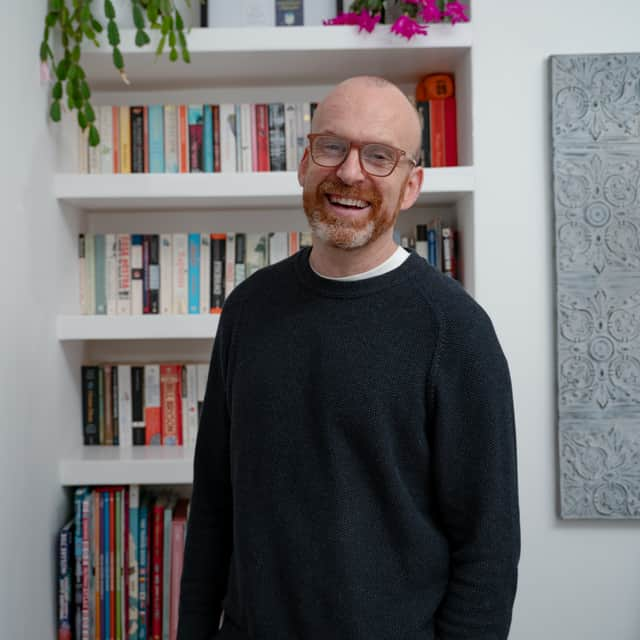
Haig’s books are often personal in the sense they are inspired by his life but this latest one seems closer to home. Are any of the characters based on people he has known?
“I suppose Maggie and Wilbur have aspects of my mum and dad in terms of their context and Agnes the bookseller and guide is an amalgam of my grandma and an English teacher called Mrs Kerswell, who was the one teacher at my secondary school that saw any kind of potential in me and gave me some confidence when I had very low self-esteem.
“And Dougie, the brother, I think it's very interesting, no wait, that's a spoiler…”
Let’s just say Dougie is troubled.
“He’s the age I was when I was suicidal,” says Haig. ”So I feel Dougie and Wilbur are two sides of me. Wilbur's the side that was saved by books and Dougie is the side who went off the rails. So I feel that's subconsciously writing two aspects of younger me.”
Haig has always straddled genre, writing across fiction and non-fiction, and finds they inspire each other.
“What happens is I get frustrated with nonfiction sometimes. With Reasons To Stay Alive, the reason it burst out from being a memoir into a more generalised philosophical book was because there are limits to memoir - you're writing about your parents, siblings, partner, friends. When I'm writing, I throw myself under the bus, but I don't want to throw anyone else. With fiction, you don't have that.
“Midnight Library was a way to look at therapy and mental health without having to worry. I could write about problematic parents, difficult friends, without any feeling of doing something wrong. Fiction's freer in that sense. You get to the emotional truth of something. Life’s messy and compromised and sometimes a fiction can clean it. So the facts are more of a lie but the actual emotion you're feeling is closer. Sometimes fiction's actually better to get a kind of truth.”

Haig’s books deal with the human instinct to look back at the past and want to change things. Has he ever wished he could fix something from his past?
“Yeah. A big feature of my depression was regret and wishing I hadn’t done some things. And when I was ill I would spend my life wishing I'd never drunk alcohol or taken drugs, wishing I’d been a better partner, better son. At that point in depression, I'd have probably pressed a button to undo that. But now, of course, when you see the bigger picture - and I've got kids now - and I’ve got my life, as imperfect as anyone else's, but I wouldn't press a button because out of the very worst things that I most regretted came some of the best things.
“I think a lot of people who've been through depression would say the same, they wouldn't undo the depression, because I think I've known more happiness this side of it than I did before. That's not to say I’d want to relive it, and it was absolute hell going through depression and agraphobia, not being able to walk to the corner shop without Andrea for two years, which was a nightmare for her, me, everyone. I wouldn’t want to relive it, but I wouldn't want to not have lived through it.”
Haig has overcome regret, but what about guilt, how do we get rid of that?
“I think you get rid of guilt by getting to a point where you realise it's useless. There's a difference between regret and guilt so if you can transfer guilt into regret, regret can be useful. You can be quite clinical about it, I did something wrong, this is not what I want to be, I want to move on. Whereas guilt is very self-absorbed. Guilt doesn't improve behavior. Guilt is what addicts feel all the time. You get into a cycle of doing something that makes you hate yourself therefore you want to escape yourself again. So I think guilt is totally impractical and useless. I feel change happens more through compassion to yourself and others.
“I think to rehabilitate yourself you have to have a degree of forgiveness and belief in change and understand we're all creatures of context and the reason I wrote The Humans is because I feel we don't see ourselves as a species enough.

“If we saw ourselves as animals, we'd see our behavior as a scientist would see the behavior of a dolphin. There’s a John Steinbeck line, I think I put it in the book, about how there's no good or evil, just people doing things. We need a sense of morality, but we don't become more by thinking of our very worst moments and dwelling on them. In fact, it's reverse manifesting. We become what we focus on. So if we have a narrative of ourselves as a bad person, we end up becoming more of a bad person. I think it's about changing that narrative and thinking of other people. The way out of guilt is through actions in the present, not by feeling more guilt.”
Finally, what would he like readers to take away from his writing?
“Oh, I hope they enjoy the story. Also, books are a rare space in our world of destruction where you can have a thought or contemplation to take back into your own life. I think I write books to process where I am in my life. I write to think, to catch up with my own thoughts. So I hope readers get that same sense of catching up to themselves and thinking about their own lives and decisions. Not to regret anything. We all need reminders not to get too consumed with emails that haven't been answered or new goals, that endless cycle of more of everything.
“We need to remember that this is one precious life and we're in it.”
The Midnight Train by Matt Haig is published in hardback by Canongate Books. Matt Haig will be appearing at the Edinburgh International Book Festival on Thursday 27 August at 6:45pm.
Comments
Want to join the conversation? Please or to comment on this article.