
Exclusive:Housebuilders and councils hit out at 'inequitable' cladding levy on new homes
Government says money raised will help make buildings safer

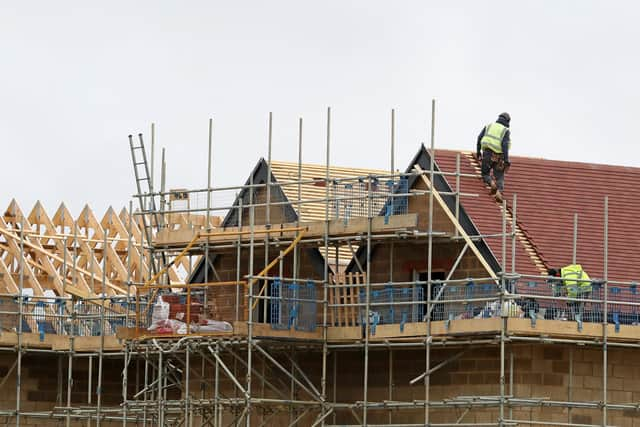
Major housebuilding firms and local authorities across Scotland have hit out at “inequitable” plans for certain new residential properties, warning that it would impede new developments in rural and disadvantaged areas and undermine efforts to tackle the national housing emergency.
The Scottish Government said the new Scottish building safety levy could raise up to £30 million per year to help fund work to fix residential buildings with unsafe cladding, with developers making a “fair contribution” to the costs.
It is estimated that up to 1,450 residential buildings may need remediation work, including about 250 high-rises, with capital spend forecasts issued in June suggesting the endeavour could require between £1.7 billion and £3.1 bn in public funding
The government hopes to have the Building Safety Levy (Scotland) Bill in force by April 2027, with public finance minister, Ivan McKee, stating that it was committed to doing “what is right and necessary” to address the challenge of unsafe cladding. Proposed measures in the bill include exemptions for social and affordable housing, as well as island developments, an annual levy-free allowance to support small developers, and the ability to vary rates according to differences in house prices across geographical areas.

But as part of a consultation into the bill, leading companies and rural councils have hit out that the proposals for the Scottish building safety levy (SBSL)
Warning of negative impact on housing supply
One major housebuilder, Miller Homes, said the SBSL was “counterintuitive” against the backdrop of Scotland’s housing emergency and its net zero ambitions, and warned it could lead to not just fewer new private homes being delivered - with those properties also subject to a hike in market prices - but affordable homes via Section 75 deals.
“In Scotland a significant number of affordable homes are delivered by the private house building sector,” it explained in its submission. “These issues may be more prominent in areas where house prices are lower or where construction costs are higher. A levy would increase construction costs, threaten the viability of the housebuilding sector and our supply chain, and have a negative impact on housing supply.”
Such impacts, it added, could see housebuilders prioritise higher-value sites, and postpone or avoid investment altogether in rural and marginal urban areas. “This could exacerbate inequalities and reduce housing supply in the areas it is most needed,” the firm added.

Another leading housebuilding company, Taylor Wimpey, called for “all responsible stakeholders in the supply chain,” including manufacturers, to be involved in funding remediation efforts, with a need for comprehensive data on cladding remediation costs and accurate market value estimates. Until such guarantees were made, it said, the legislation introducing the levy should be postponed.
It said it was “inequitable” that responsible developers were being asked to pay for the remediation of buildings they had no part in constructing, describing it as a “deeply punitive tax burden” for Scottish housebuilders.
Developments could become ‘uneconomical’ in some areas
The firm also warned that developers may reassess the types of homes offered and be forced to take “difficult decisions” about where is viable to build. “This could have significant unintended consequences for some areas of Scotland where the levy will simply make developments uneconomical,” it said. “If landowners do not see a fair return, some may choose not to sell, again potentially slowing the delivery of much-needed new homes.”
One major industry body, the Scottish Property Federation, argued that the levy would negatively impact the “development viability” of projects and impair the ability of new housing supply to be brought forward.
It criticised the proposal as a “tax on all new developments” rather than a specific measure to target those responsible for past failures, and cautioned that if it was introduced, it would ultimately undermine the Scottish Government’s housing ambitions.
“It has been more than 15 months of nationally declared housing emergency and the government has already acknowledged the seriousness of this situation, and yet the SBSL, as currently proposed, risks undermining the very goal of increasing housing supply,” the federation said in its submission. “By adding thousands of pounds to the cost of new homes and rental properties, it could deter investment and development at a time when Scotland desperately needs more of both.”
It is not just commercial firms and trade bodies that have expressed misgivings about the proposed SBSL, with a number of local authorities also flagging up the potential for a downturn in the housing market.
Council cautions against impact on economic resilience
Dumfries and Galloway Council said the levy could lead to reduced housing supply, increased house prices, and a “disproportionate impact” in rural areas, with mixed tenure developments being scaled back.
It said the cumulative effect of fee increases, inflation, and the proposed levy posed a serious threat to local development viability and economic resilience in one of the most disadvantaged areas of the country. Aberdeenshire Council, meanwhile, said increasing the costs of new homes may reduce the numbers of completions further, increasing pressure on the sector.
Elsewhere, Universities Scotland pointed to the potential impact on the higher education sector and students, stressing that universities cannot afford the tax, given student accommodation they own is not “financially viable,” and is reliant on cross-subsidies from the other income sources, predominantly international student fees, that have become increasingly precarious.
It said the cost of the levy on new build accommodation would be passed onto renters, effectively becoming a tax on them. “This would result in students facing a rent increase which runs counter to wider policy aspirations to address affordability in student housing,” the organisation said.
A Scottish Government spokesman said: “The financial liability can’t just fall on the general taxpayer and the levy ensures developers make a fair contribution to these costs, as they are being asked to do under equivalent legislation in England
“The design of the levy seeks to minimise any negative impacts on housebuilding while also facilitating adequate funding to support Scotland’s cladding remediation programme, which will make buildings safer.”
Comments
Want to join the conversation? Please or to comment on this article.