
Exclusive:The Saltire Society: Fee row sees publisher pull out of flagship Scottish literary prize
Charity behind awards insists charges are ‘reasonable’

One of Scotland’s most prestigious cultural bodies is at the centre of a row over charges for its flagship awards ceremony, with a leading publisher pulling out in protest at what it describes as “unacceptable” levies.
The Saltire Society’s annual national book awards has been a high-profile fixture of the arts calendar for nearly 90 years, and has recognised some of the nation’s foremost writers, including Alasdair Gray, Muriel Spark, George Mackay Brown, and William McIlvanney.
But this year’s iteration of one of the oldest literary prizes in the UK has become embroiled in controversy around fees that publishers are being asked to pay in order to put forward their authors for consideration.
It has led to Birlinn, one of Scotland’s best known independent publishers, pulling out of the awards altogether, amid warnings that the level of fees in question mean it would be forced to pay several thousand pounds.

The company’s managing director, Hugh Andrew, told The Scotsman that while it was “entirely sympathetic” to the costs of staging the awards, the charges had been introduced on an “arbitrary basis” with “no notice.”
However, the director of the Saltire Society said it had attempted to set the fees at a “reasonable” rate, with reduced pricing for small and micro publishers, and pointed out that it invested “significantly” in its awards programme from its own resources.
Birlinn said that in some award categories, the scale of the charges meant that it would risk losing “much if not all” of the profits it makes on some of its books. Mr Andrew said that as a result, the firm could not take part in the awards.
In an email sent to Birlinn’s authors, seen by The Scotsman, Mr Andrew said because of the company’s size, it was being asked to pay £75 per title submitted, with a further charge of £500 applicable for titles making the shortlist.
Mr Andrew claimed that “no reason” was given for the turnover classifications which mean some publishers are being asked to pay more than others, and questioned how those firms which release books across a wide range of categories are being asked to pay significant sums.
“We do not take these awards for granted, however for a publisher such as Birlinn which publishes across all categories and might legitimately expect at least one and possibly two titles on each shortlist, then the charging scenario could readily run beyond £4,000,” he wrote.
“With regard to at least two of the categories - poetry and research book of the year - the scale of the charging has the potential of wiping out much if not all of the profit on titles given the runs involved. Even on trade titles where runs might be 1500 upwards the charging is hugely impactful.
“We do not wish as a company to disadvantage authors by simply submitting to categories where runs are longer. We therefore feel we have little option this year but not to submit.”
Mr Andrew explained that Birlinn had had an email exchange with the Saltire Society, as well as an “informal meeting,” but said it was not possible to reach a satisfactory conclusion. He said the company has made its views known to the society in the “strongest possible terms.”
His email added: “It is unacceptable to impose such a charging structure with no notice whatsoever or any discussion with key stakeholders, and no indication as to how this money would be spent.”
He also said that Scottish and smaller publishers were being “disproportionately penalised” by the “bigger pockets of London corporates,” and described the society’s decision as one which “flies in the face of its stated aims.”
Mr Andrew, who said his email had been met by a “stream of authors writing in support,” added that he hopes to secure a round table discussion regarding the future of the awards and the reason for the charges.
“We fully understand the costs of running an award and are entirely willing to be constructive on understanding the reasons for costs and projected budget,” he explained.
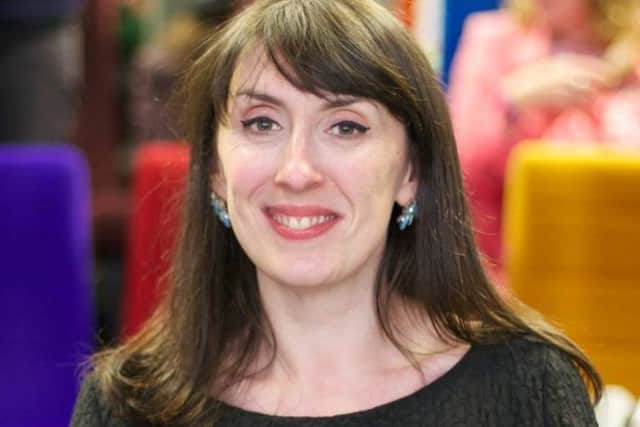
Mairi Kidd, director of the Saltire Society, said its book awards programme was among the widest ranging in the UK in terms of category coverage with attendant costs, noting that the budget for 2026 was in six figures.
She said the society invested significantly in it from its own resources, and it was also grateful for support from third parties and sponsors, with the use of fees for submissions and contributions to awards “common” in the book industry.
“While some of the rationale for this is in terms of income generation, wider considerations also apply, for example ensuring the publisher is willing and able to support in the event of a shortlisting or win,” Ms Kidd explained. “This has analogies elsewhere in third sector book-related activity, for example in book festival contexts where publishers contribute towards costs as standard.
“In introducing charging, we reviewed the broader landscape, drew on our data, discussed with sector colleagues, and benchmarked against comparable awards in Scotland and elsewhere. We have striven to set fees at a reasonable rate and additionally have adopted a tiered charging structure with reduced pricing for small and micro publishers.”
Ms Black pointed out that other major awards impose charges, such as the £1,200 shortlisting contribution for the Walter Scott Prize, and the £500 shortlisting contribution for the McIlvanney Prize, and said that “no charging structure is perfect.”
She added: “We are always open to engaging with potential submitting publishers to find solutions in the event of issues and shared contacts to facilitate this in the normal manner. We will of course evaluate the programme in due course.”
The shortlists for this year’s awards are due to be announced in the autumn. Ms Kidd said the society was “delighted” with the breadth and quality of the entries it has received.
Comments
Want to join the conversation? Please or to comment on this article.