
The creative solution by Isle of Skye fishermen to end deaths of whales, dolphins and sharks
The last thing you want served up with your seafood platter is a side dish of unintended casualties
Fishermen in the north-west Highlands of Scotland have been testing out new gear in a bid to reduce the number of whales and basking sharks which are accidentally killed or injured while fishing for other species.
And the results are encouraging, with potential to have a worldwide impact.
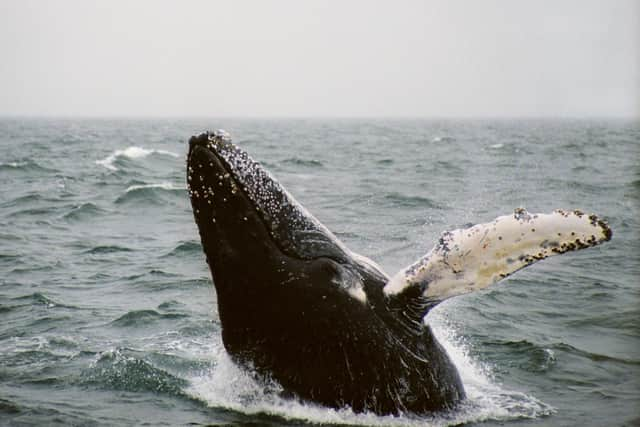
Fishing with creels, known as static gear, is considered one of the lower-impact catch methods, but there is still unintended bycatch. It is estimated that every year an average of six humpback whales, 30 minke whales and 29 basking sharks become snagged in the ropes, which link lines of creels or lobster pots together – and that’s just in Scottish waters.
The main problem stems from the fact the ropes used are very buoyant, and so form large floating loops in the water rather than lying on the seabed. These loops can measure several metres across and have been found to ensnare some of the ocean’s largest creatures, many of which are already facing a struggle for survival.
Previous studies demonstrate these floating ropes are the main culprits for the majority of cases where ocean giants got trapped in static fishing gear – where entanglement type was known, 83 per cent of minke whales, 50 per cent of humpbacks and 76 per cent of basking sharks were caught in groundlines between creels.
So conservationists and fishermen have teamed up to try to solve the problem.

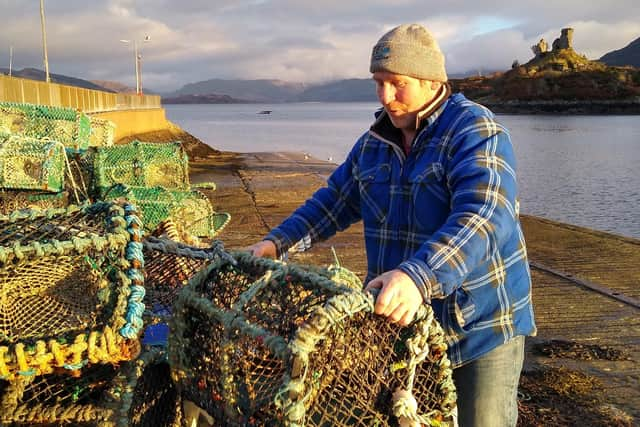
Over a period of 18 months, 15 vessels targeting langoustines and crabs off the Isle of Skye replaced the old floating rope in their creel groundlines with a new sinking version to assess whether there were any practical problems with its deployment.
Crews recorded the results each time they hauled their gear, with details of more than 1,500 hauls logged during the trial. Results show anticipated problems – such as snagging or handling difficulties – were very rare.
The fishers involved in the trial reported positive experiences with using the rope, and there were no impacts on the seabed.
The study concluded that switching to sinking groundline represents a simple, effective and relatively low-cost option to greatly reduce the risk of entanglement in static gear.
Analysis suggests the move could save four out of five minke whales, which might otherwise have been fatally trapped. The project was led by marine charity Whale and Dolphin Conservation (WDC), with support from the Scottish Government’s Nature Restoration Fund, administered by NatureScot.
The findings could have major implications for marine creatures and fishing communities worldwide, helping tackle the problem of bycatch. Globally, at least 300,000 whales and dolphins die annually as a result of entanglement in fishing gear of all types, including nets and ropes.
Skipper and Scottish Creel Fishermen’s Federation representative Bally Philp was one of the fleet participating in the experiment, which took place in the Inner Sound and Sound of Sleat area, east of the Isle of Skye.
“This trial has shown there can be win-win outcomes for both fishermen and marine life, and we’re all working together to achieve this,” he said.
Susannah Calderan, who managed the project for WDC, said: ‘The Scottish inshore creel fishery plays an important economic and community role in rural coastal areas in Scotland. Resolving the issue of entangling whales would be a major step forward in fisheries management as well as animal conservation and welfare.
“It has been great working with the Inner Sound fishers on this project, and we have an almost unique opportunity to make a real impact on whale bycatch.
“We now have to move to the next step, which is consulting with other fishers around Scotland and with the government to understand the possible options for implementing sinking rope more widely.”
The project is a continuation of the work of the Scottish Entanglement Alliance, a partnership of organisations dedicated to promoting and protecting Scotland’s wildlife, heritage and sustainable inshore fisheries.
Members include NatureScot, Scottish Marine Animal Stranding Scheme, Scottish Creel Fishermen's Federation, Whale and Dolphin Conservation, Hebridean Whale and Dolphin Trust, British Divers Marine Life Rescue, Scottish Association for Marine Science and the International Fund for Animal Welfare.
Comments
Want to join the conversation? Please or to comment on this article.