
Scots urged to be careful with water amid scarcity warning

Driest start to a year in Scotland since 1964 prompts warnings over both water and naked flames
Scots have been urged to be careful with water supplies amid a scarcity across Scotland caused by the driest start to a year since 1964.
Scottish Water said it is working to ensure its systems will be able to satisfy demand as the dry weather continues.
The latest data from the Scottish Environment Protection Agency (Sepa) show all of Scotland is now at some level of water scarcity.
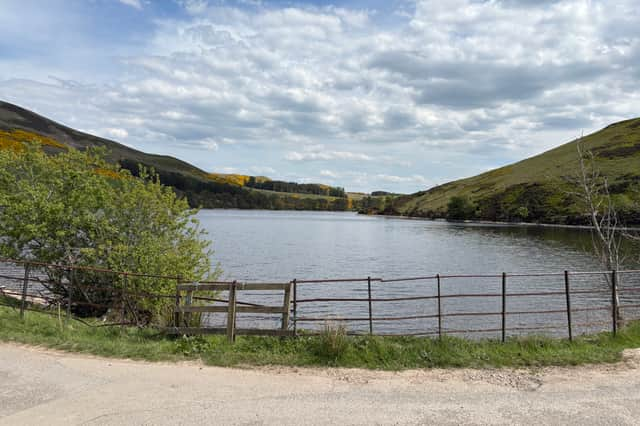

Most of mainland Scotland's east coast has now moved to "moderate scarcity" level, while most of the rest of the country is at "alert" and only the Inner and Outer Hebrides remain at "early warning".
With the dry and warm conditions set to continue this weekend, Scots have also been warned to avoid naked flames and barbecues because an "extreme" risk of wildfires across the country until Monday.
Scotland has experienced the driest January to April since 1964, with only 59 per cent of the long-term average rainfall over this period.
Water usage has increased by 150 million litres per day across Scotland since the middle of April, with average reservoir levels at 81 per cent - 10 per cent lower than average for this time of year.
Scottish Water said Scots are using an average of 178 litres of water per person per day, which is higher than in England and Wales where people use an average of 137 litres per person per day.
Advice includes shorter showers and turning off taps
The supplier said with the current spell of dry and warm weather continuing, people should make an effort to save water by taking shorter showers, turning off the tap when brushing teeth, and using watering cans rather than hoses where appropriate.
It also said washing machines and dishwashers should only be used when fully loaded, and buckets and sponges should be favoured over hoses to wash cars.
Scottish Water chief executive Alex Plant said: "We're working hard to maintain normal supplies for all customers and would ask that they use water efficiently to protect this precious resource.
"We believe that a large part of the additional water use at the moment is in gardens, so we would ask that customers are mindful of how much water they use there.
"Scotland's climate is clearly changing and, as a country, we need to ensure we adapt both by investing appropriately in water infrastructure - which Scottish Water is doing - and ensuring we do what we can to use water more efficiently in our homes and businesses.
"Water is always worth saving and by taking simple steps to reduce the volume used around the home and garden, we can make our country's water go even further and help maintain normal supplies."
Places affected by peak water usage include Gullane and Aberlady in East Lothian , Potterton, Middleton Park and Belhelvie in Aberdeenshire , Maybole, Turnberry and Maidens in South Ayrshire , Kippen and Balfron in west Stirlingshire , and Strathpeffer in Ross-shire.
Water taken from Spey to supply Moray
To help mitigate the consequences of peak water usage, Scottish Water is taking supplies from the Spey, pumping water from the river to its supply in Moray.
The water supplier is due to launch its Water is Always Worth Saving campaign next month, with the aim of showing the public they should be conscious of saving water.
Claire Tunaley , senior hydrologist in the water resources unit at Sepa, said: "We're seeing the kind of conditions we normally associate with late summer in some places - and it's only May.
"Groundwater and river levels across the east are already hitting record lows. In Fife and Aberdeenshire , we're seeing some of the driest conditions in living memory for this time of year.
"With parts of Scotland now at 11 months of below average rainfall, it will take above-average rainfall over an extended period to recover to normal levels, especially for groundwater levels.
"Our message is clear: if you abstract water from our environment - whether you work in agriculture, energy, industry, distilling, food and drink or the leisure sector - you must take action now to help protect your operations and help safeguard Scotland's rivers and wildlife in the weeks ahead."
The Scottish Fire and Rescue Service (SFRS) warning for wildfires is in place across the entire country until Monday. They have the potential to burn for days and devastate vast areas of land and wildlife, and pose a risk to nearby communities.
On Thursday, six fire engines were dispatched to a blaze at a plot of land measuring 800 metres in Cumnock, East Ayrshire which they extinguished, with no reported casualties.
Fire crews spent five days this week battling a wildfire which broke out in a forest in Bathgate, West Lothian , while six teenage boys were charged after an alleged deliberate fire at Portlethen Moss, near Portlethen, Aberdeenshire , on Saturday.
Loch Lomond and the Trossachs National Park Authority said it has seen "unprecedented" numbers of bin fires this year.
The fire service warned the "vast majority of wildfires" are started by human behaviour and it has urged the public to avoid lighting fires and using naked flames during the current period of dry weather.
A joint additional warning has been issued by Police Scotland, Loch Lomond and the Trossachs National Park Authority and West Dunbartonshire Council, highlighting the damage caused to "vulnerable ecosystems" including by cigarette butts and campfires, and the speed that wildfires can take hold.
Anyone who witnesses a wildfire is urged to dial 999 rather than assuming someone else has already done so.
‘Avoid the use of naked flames, including barbecues’
SFRS wildfire lead, area commander Michael Humphreys , said: "Responsible human behaviour can significantly lower the chance of a wildfire starting.
"That's why we're urging people to absolutely avoid the use of naked flames, including barbecues, at this time.
"It only takes one spark to start a wildfire and things can get out of hand very, very quickly.
"Discarded cigarettes and unsupervised campfires pose a significant threat, so it's vital to follow all safety advice when outdoors and to make sure you are familiar with the Scottish Outdoor Access Code at all times.
"Many rural and remote communities are hugely impacted by wildfires, which can cause significant damage.
"Livestock, farmland, wildlife, protected woodland and sites of special scientific interest can all be devastated by these fires - as can the lives of people living and working in rural communities.
"These fires can also have a hugely negative impact on the environment and the release of air polluting gases into the atmosphere."
Area commander Joe McKay , SFRS local senior officer for East and West Dunbartonshire and Argyll and Bute , added: "Many people are out enjoying this weather and are visiting our national parks. While we don't want to spoil their fun, we are urging people to absolutely avoid the use of naked flames, including barbecues, at this time."
Leigh Hamilton , ranger service manager at Loch Lomond and the Trossachs National Park Authority , said: "A carelessly discarded barbecue or cigarette can destroy precious ecosystems, as well as lives and livelihoods.
"At this early stage in the season, we have also already seen an unprecedented number of bin fires and significant damage to visitor facilities including bins and picnic tables across our sites.”
Comments
Want to join the conversation? Please or to comment on this article.