


The image of a buzzing ball of cactus bees spinning over the hot sand on a Texas ranch has helped its creator to win the coveted Wildlife Photographer of the Year competition.
The bee-level close-up was captured by US photographer Karine Aigner and makes her the fifth woman in the competition’s 58-year history to claim the grand title award.
The other main title of Young Wildlife Photographer of the Year 2022 was won by 16-year-old Katanyou Wuttichaitanakorn, of Thailand, for his image about the beauty of a whale.
Ms Aigner’s image was praised for its “sense of movement and intensity” by the judges at London’s Natural History Museum, who develop and produce the Wildlife Photographer of the Year competition.
All except one of the bees in the close-up are males, who are intent on mating with the single female at the centre.
Like most bees, they are threatened by habitat loss, pesticides and climate change, as well as farming practices that disrupt their nesting grounds.
Chairwoman of the judging panel, Roz Kidman Cox said: “Wings whirring, incoming males home in on the ball of buzzing bees that is rolling straight into the picture.
“The sense of movement and intensity is shown at bee-level magnification and transforms what are little cactus bees into big competitors for a single female.”
The success of Thai teenager Katanyou Wuttichaitanakorn in winning the Young Wildlife Photographer of the Year title was due to his fascination with the colours of a baleen whale.
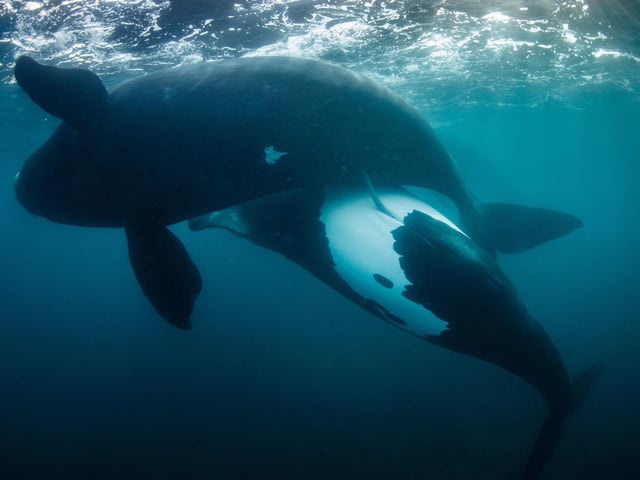
5. New life for the tohora by Richard Robinson, winner of the Oceans: The Bigger Picture category at the Wildlife Photographer of the Year competition.
Wildlife Photographer of the Year is developed and produced by the Natural History Museum, London. Undated handout photo issued by Natural History Museum of New life for the tohora by Richard Robinson, winner of the Oceans: The Bigger Picture category at the Wildlife Photographer of the Year competition. Photo: Richard Robinson/Wildlife Photog
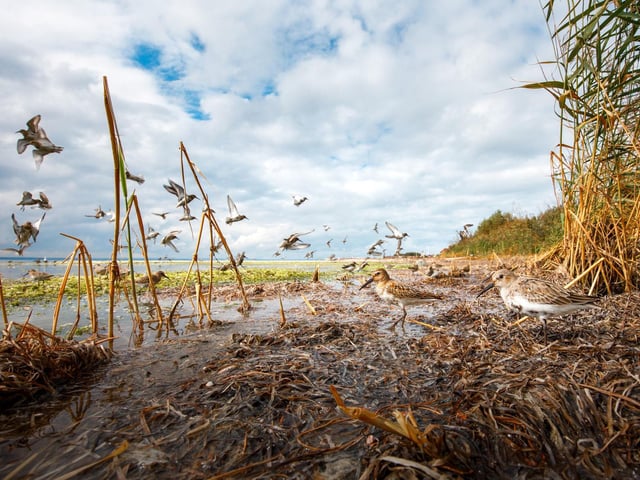
6. A theatre of birds' by Mateusz Piesiak, winner of the Rising Star Portfolio Award category at the Wildlife Photographer of the Year competition
Wildlife Photographer of the Year is developed and produced by the Natural History Museum, London. A theatre of birds' by Mateusz Piesiak, winner of the Rising Star Portfolio Award category at the Wildlife Photographer of the Year competition. An exhibition of the top images submitted to the competition opens at the Natural History Museum in London on October 14, before going on a UK and international tour. Photo: Mateusz Piesiak/Wildlife Photogr
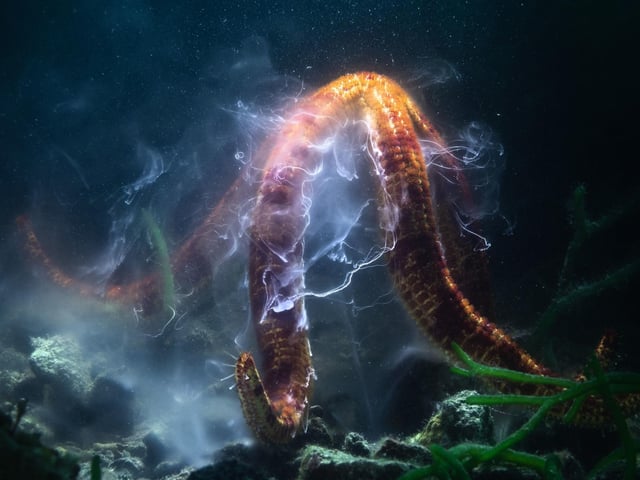
7. Shooting star by Tony Wu, winner of the Underwater category at the Wildlife Photographer of the Year competition
Shooting star by Tony Wu, winner of the Underwater category at the Wildlife Photographer of the Year competition. The “dancing” shape of the spawning sea star as it rises and sways may help release eggs and sperm, or help sweep the eggs and sperm into the currents where they fertilise together in the water. Photo: Tony Wu/Wildlife Photographer of
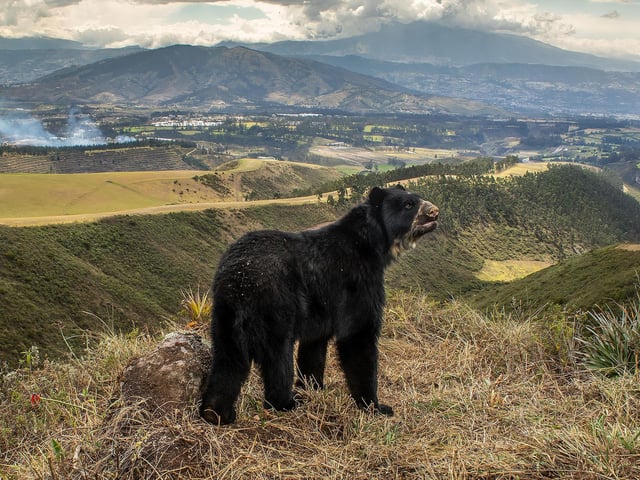
8. Spectacled bear's slim outlook by Daniel Mideros
Spectacled bear's slim outlook by Daniel Mideros, winner Animals in their Environment category at the Wildlife Photographer of the Year competition. The bears, which are found from western Venezuela to Bolivia, were captured by Daniel Mideros, of Ecuador, who set up camera traps along a wildlife corridor used to reach high-altitude plateaus. The bears have suffered massive declines as the result of habitat fragmentation. Photo: Daniel Mideros/Wildlife Photogra