
Exclusive:Encyclopedia firm synonymous with Scottish Enlightenment sues AI giant for 'cannibalising' content
Legal action highlights ongoing tensions over AI’s use of materials owned by legacy publishers

It emerged from Scotland’s capital during a golden age when the likes of Adam Smith and David Hume were helping to cement the nation’s position as a global centre of scientific and philosophical thought, and remains a trusted source more than a quarter of a millenia on.
Now, the firm behind the world-renowned Encyclopaedia Britannica is taking legal action to safeguard its meticulously researched content in the face of the artificial intelligence revolution.
The firm, founded in Edinburgh in 1768, is suing the one of the tech world’s most valuable firms, OpenAI, accusing it of “cannibalising” the diligent work of its ranks of researchers, writers, and editors by generating AI summaries which flout copyright and trademark laws.
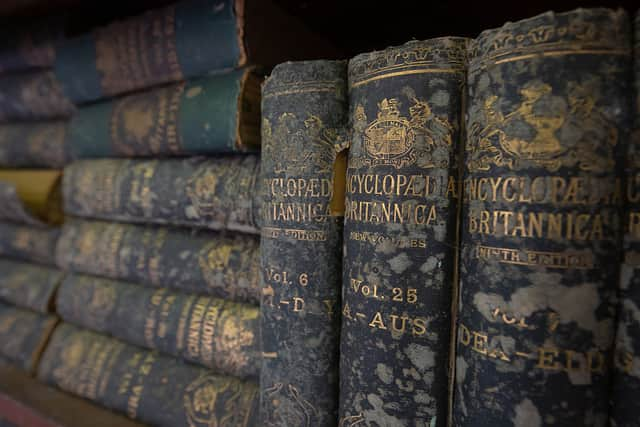

The complaint, filed in a US court, accuses the firm’s ChatGPT based AI products of taking a “free ride” on Britannica’s “trusted” and “high quality” content, meaning it was losing out on crucial advertising and subscription revenues.
The complaint, seen by The Scotsman, argues that while traditional search engine results as “informational products” and an "intermediary" that connects users to external webpages, allowing them to generate revenue and sell subscriptions, the AI models used by OpenAI “starves” the firm of crucial income.
“To build its substitution products, defendants engage in massive copying of plaintiffs’ and other web publishers’ copyrighted content without authorisation or remuneration,” it states. “Upon information and belief, ChatGPT had copied, and continues to copy, plaintiffs’ copyrighted content at massive scale - including both to train the large language models that power ChatGPT and to supplement or ground that model’s knowledge base, including through using a retrieval-augmented generation model.
“ChatGPT then provides narrative responses to user queries that often contain verbatim or near-verbatim reproductions, summaries, or abridgements of original content, including plaintiffs’ copyrighted works.”

The complaint, filed in the US District Court for the Southern District of New York by Britannica in conjunction with Merriam Webster, which it owns, claims that OpenAI has used nearly 100,000 of Britannica’s online articles for use as “training inputs” for its AI language models, but stressed that the “true extent” of how much content as copied was only known to the the tech giant.
It adds that the law does not permit OpenAi’s “systemic disregard” for Britannica’s rights and intellectual property, and called on it to be held responsible for the “substantial harm” it is causing and “illicit profits it is reaping” by infringing copyrights and violating trademark rights.
It is not the first time that Britannica has taken action against an AI firm. Last September, it filed a lawsuit against Perplexity, accusing it of unlawfully copying its material and diminishing its revenues.
It is among a host of high-stakes cases being brought by publishing firms, authors, news outlets and other content providers against tech companies for the use of the material without permission in AI systems.
The first version of the Encyclopaedia Britannica was released in weekly sections costing six pence apiece, with the inaugural complete three-volume edition first printed in its entirety in 1771.
The idea came about after printer, Colin Macfarquhar, and engraver, Andrew Bell, enlisted scholar, William Smellie, to edit the work. The company eventually ceased production of its weighty 32 volume print edition in 2012 to focus on its digital offerings.
An OpenAI spokesperson said: “ChatGPT helps enhance human creativity, advance scientific discovery and medical research, and enable hundreds of millions of people to improve their daily lives. Our models empower innovation, and are trained on publicly available data and grounded in fair use.”
Comments
Want to join the conversation? Please or to comment on this article.