
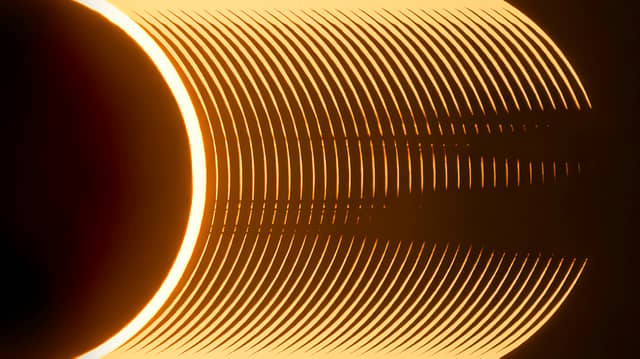

The overall winner of Royal Observatory Greenwich’s Astronomy Photographer of the Year 16 is Ryan Imperio for his photograph, Distorted Shadows of the Moon’s Surface Created by an Annular Eclipse, that captures the progression of Baily’s beads during the 2023 annular eclipse.
Baily’s beads are formed when sunlight shines through the valleys and craters of the Moon’s surface, breaking the eclipse’s well-known ring pattern, and are only visible when the Moon either enters or exits an eclipse. These are a challenge to capture due to their brevity and the precise timing needed. The image will be on display alongside the winners of the other categories in the accompanying exhibition, opening at the National Maritime Museum on Friday, September 13.
Mr Imperio said: “The images selected each year are absolutely astonishing and I am both thrilled and honoured to have my photo among them. I had hoped my image would be shared in some way, but never expected to be selected as a winner, let alone overall winner.”
The Astronomy Photographer of the Year competition is run by Royal Observatory Greenwich, supported by Liberty Specialty Marketsand in association with BBC Sky at Night Magazine. For the 2024 competition, there were more than 3,500 entries from 58 countries
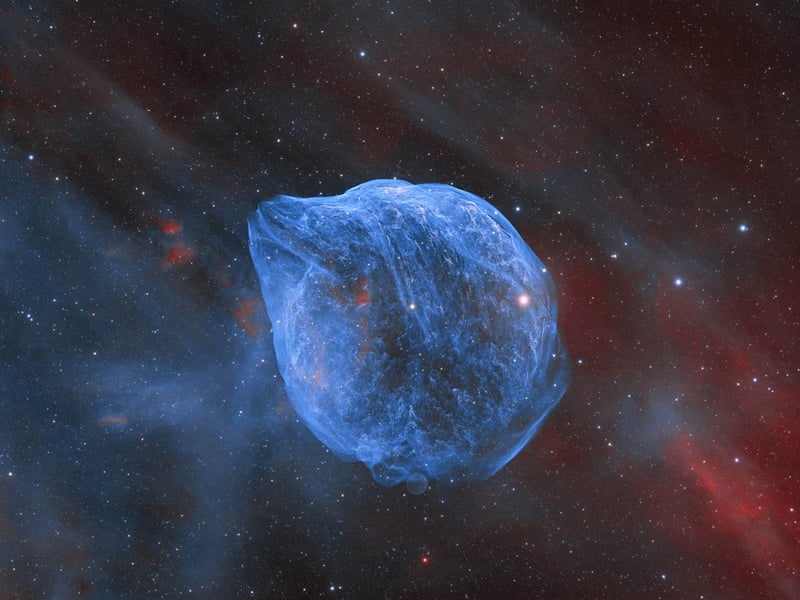
5. SH2-308 (the Dolphin Head Nebula) is at a low angle and can only be shot for five hours a day. This image comprises a total of ten days of shooting and post-processing with PixInsight. Taken with a Takahashi TOA-130NS telescope, Sky-Watcher EQ8 mount, ZWO ASI6200MM-Cool camera, 1,000 mm f/7.7, Gain 100, 144 x 600-second H-alpha exposures, 140 x 600-second OIII exposures
SH2-308: Dolphin Head Nebula by Xin Feng, Miao Gong China | Xin Feng, Miao Gong
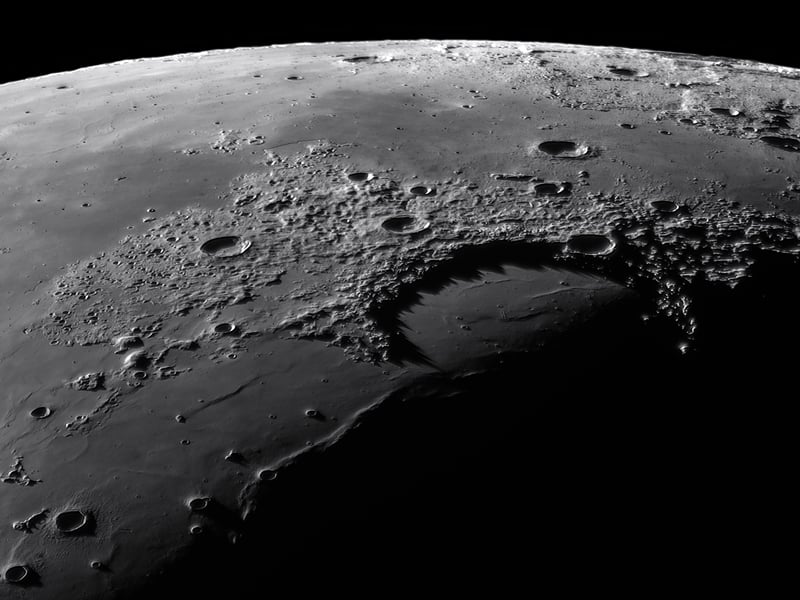
6. This photograph shows Sinus Iridum, also known as the ‘Bay of Rainbows,’ a 260-kilometre diameter bay bordered by several smaller craters. The photographer used a monochrome camera with a filter to capture the area. Taken with a Heyde-Zeiss refractor telescope, ZWO green filter, ZWO ASI178MM-pro camera, 4,500 mm f/15,
Shadow peaks of Sinus Iridum by Gábor Balázs Budapest, Hungary | Sinus Iridum
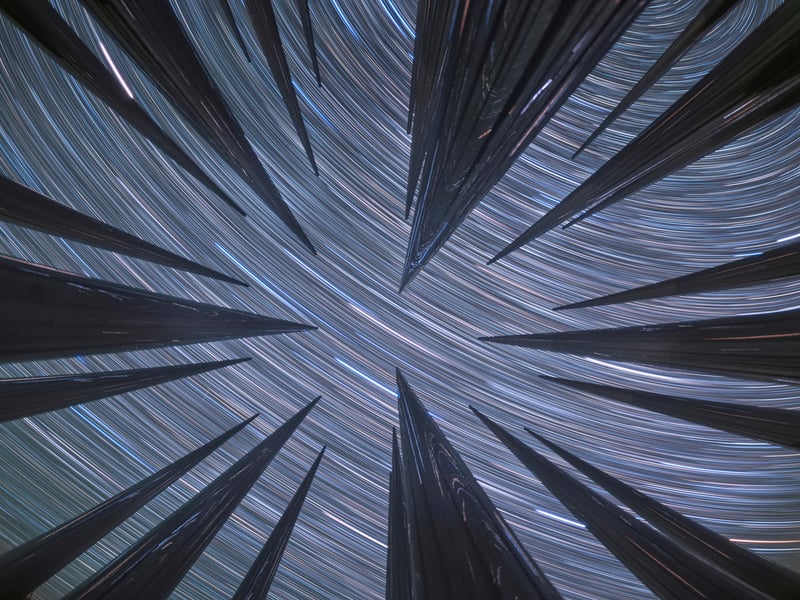
7. During a two-hour photography session, the photographer captured the trails of stars moving across the night sky as the Earth rotated. The shards in the image are metal columns on the ground. The interesting composition was achieved by placing the camera on the ground and shooting from a low-angle. Taken with a Sony ILCE-7RM4 camera, 15 mm f/1.4, ISO 3,200, 20-second exposure
Symphony of the Night Sky by Fei Xue China | Fei Xue
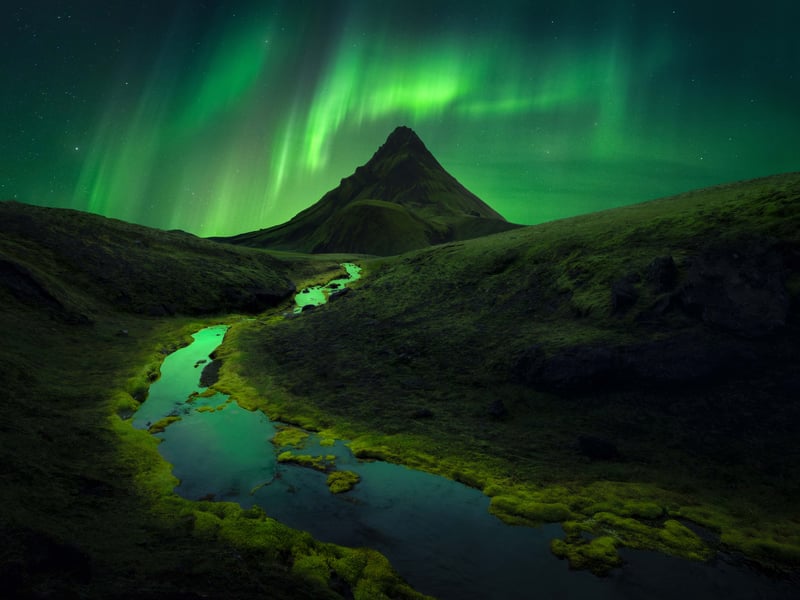
8. The photographer spent a few days waiting for the Aurora Borealis in the interior of Iceland (the Highlands). The green landscape inspired the title. Taken with a Sony Alpha 7RV camera, 20 mm f/2.8 (with focus stacking), ISO 3,200, multiple 4-5-second exposures Location: Laugavegur, Iceland
The Green Kingdom by Filip Hrebenda Slovakia | Filip Hrebenda