
TV historian Dame Mary Beard goes on the road with the Romans
Spilling the secrets of Ancient Rome leads Mary Beard into lives of crime as she brings her live show to Scotland
What did the Romans ever do for us? TV historian Mary Beard will be telling us as she reveals More Secret Histories of Ancient Rome in Glasgow this month in a follow up tour to her sellout 2025 dates.
With more than 20 books translated into over 35 languages and popular TV shows such as Meet The Romans with Mary Beard, Empire Without Limit, Civilisations and Meet the Roman Emperor with Mary Beard, on radio Ancient Lives, podcasts Instant Classics and Ancient Lives with Mary Beard, the Cambridge University emerita professor and Classics editor of The Times Literary Supplement reaches far beyond the halls of academia to explain how the truth about the ancient world is pieced together from fragments and evidence and how it affects way we understand the present day. There is also an interactive quiz and a Q&A with the audience.
With an interest in the ordinary Romans, Beard is about making history accessible and will be lifting the toga on what the Romans really got up to and how we have more in common than we think.
“The point is to take people into places in ancient Rome that normally remain hidden. So much that we get from the media takes you into the imperial palace to old, rich men conquering other people, and it's easy to get the impression Roman history is about aristocrats, emperors, political leaders. For me the most interesting stuff is about the people who are quite ordinary.
“It's about the messy, domestic, everyday side of ancient Rome, and there's loads and loads of that surviving.
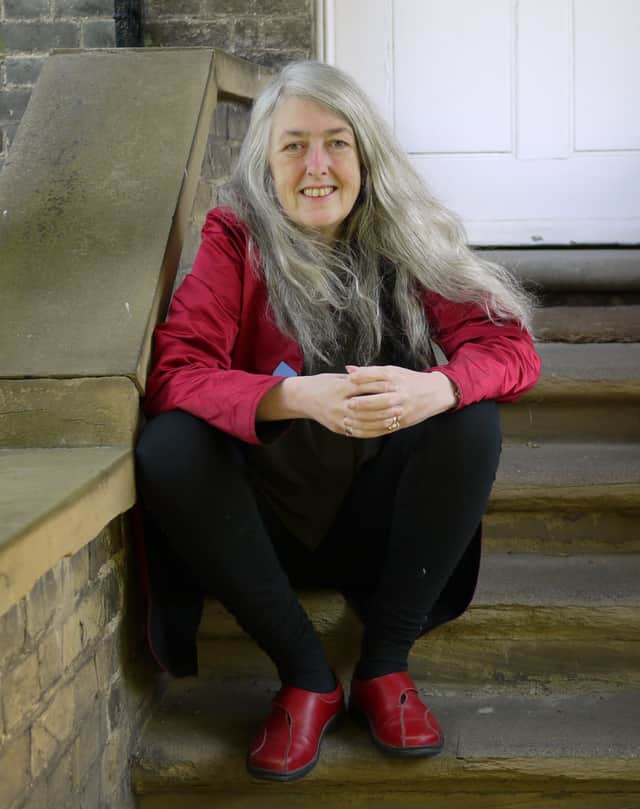

As well as the everyday, there are the dramas and intrigue of the ordinary.
“I'm going to look at some cold case murders in ancient Rome. There are hundreds of tombstones - one of which I’ll show - which say things like ‘here is my poor daughter, who was killed for her jewellery’. She was 10.
“I'm going into that seedier side of the ancient world to look at a nasty case of murder, or manslaughter, we're not quite clear, from the town of Cnidus in Turkey.
“And I'm going to look at a very unpleasant case that might have been domestic violence. You can explore the evidence for these cold cases, go into the crime book of ancient Rome, and not just emperors being poisoned by wives but ordinary people who got mugged or killed by falling objects, possibly dropped on purpose.”
But it’s not all drama as Beard also delves into the daily habits of Romans, “what they thought, what they said, how they communicated, what they did in the evening.”
“I'm going to visit my favorite bar in Pompeii,” she tells me, using the present tense, which she often slips into when talking about the past. In fact it does still exist, preserved by the ash that fell on Pompeii when Vesuvius erupted in 79AD.
“We have on its walls, paintings, a strip cartoon with speech bubbles of the people in the bar talking to each other. You can almost hear life in the bar. You also get to know the food was pretty ghastly.”
Like us, the Romans were given to graffiti and the walls of Pompeii are awash with it.
“People are a bit frightened off the graffiti because most is in Latin but some isn't and you can get that sense of immediacy with unknown people from the past who have drawn a cartoon on the wall, scratched their names, sometimes on lavatory walls, saying exactly what they were doing.”
Beard stresses that the lives of the ancients were not so different from our own.
“It's getting up close to the people who weren't at the top of the tree, the slaves and whatever. You can't really get to know anybody from the Roman world but you can get very close. I'm not going to talk about the brothel because there might be kids at the show, but the brothel of Pompeii survives. It's very gloomy in all kinds of ways; the poor women. But on the wall of every cubicle are messages left by clients and some are as you might expect, explaining graphically what they've done. You're right at the seedy side with the stuff somebody actually wrote, with his pen or scratcher, on the wall at the place where he had just had sex with the girl. That is history that is so living.”

What is it about the Romans in particular that fascinates Beard and why does she keep going back to them?
“Because it's such a big bustling community, preserved better than almost anything else from the ancient world anywhere. With a population just under 20,000 there were about 200 bars and they seem very familiar. The people who go are people who can't cook at home - the rich had ovens and cooks and places to sprawl and eat at home - so you're in the real world of the street. It's what the ordinary guys did.”
Beard will be dispelling some myths about ancient Rome, such as the idea that they all wore togas and sandals.
“That would be like spotting somebody's graduation photograph and imagining people now go round with a mortar board and funny academic dress. For formal occasions Romans did wear togas, like watching gladiatorial displays in the Colosseum.
Did they let women in?
“To gladiatorial displays? Yes, but they had to sit at the back.”
Of course.
And the sandals?
“They probably wore decent flip-flops.”
“The people in the bar show themselves wearing brightly colored tunics and they're not lying down. They're sitting at tables, gambling, drinking a glass of wine, like we might.”
Is this kind of history better than elite literary accounts and official records in terms of having a wider appeal?
“I don't think it's necessarily better. I've spent a lot of my life very much enjoying classical literature, reading the poetry, and think it's wonderful.”
“It's that we say what a pity we don't know what the ordinary people did, but we actually do. So it's rediscovering that.
“I was taught you can't do the history of women or slaves. You can - you just have to look in the right place.
“I don't think it's necessarily better than the history of the posh but it's more immediate. This is seeing the graffiti that the guy who just had sex wrote on the wall. It's very real.”
As one of the most northerly outposts of Ancient Rome, Scotland abounds with traces of their empire, from forts to walls to roads and artefacts, all highlighted in an exhibition about the Romans in Scotland running in Edinburgh this autumn, Roman Scotland: Life on the Edge of Empire, 14 November 2026 to 18 April 2027 at the National Museum of Scotland on Chambers Street.] Walking around Scotland, you’re literally walking in the footsteps of the Romans.
“It's fascinating and I think it's important to us because it really is under our feet,” says Beard. “It’s OK to say I'm not interested in the Romans, it’s a free country, but they are all around you. So it's a bit boring not to be interested in the Romans,” she says.
Walk up Croy Hill outside Falkirk and you’ll see a Roman fort, or along the St Cuthbert’s Way from Melrose and Roman helmet trail markers show where the path intersects with the historic Roman road of Dere Street. What did the soldiers stationed there think of the weather, the food?
“How did these squaddies relate to the local population? We know what happens with occupying armies and how women get brought in then people take against the women who get off with the soldiers. Presumably that was going on.
“I’m going to be looking at a tombstone from South Shields for a woman sold into slavery in Essex, bought by a man from Palmyra in Syria who was in Britain, who freed and married her. They go to Hadrian's Wall then she dies and he puts up a tombstone, saying he was a man from Syria who'd married this girl from the Catuvellauni tribe. You think ‘what's their story?’ He writes most of it in Latin then at the bottom writes her name in Aramaic, his own native language, and says ‘Goodbye, Regina, I miss you.’”
Beard points out that we know more about the Romans than we realise. Do audiences do well in the quiz?

“They do much better than they think they will,” she says. “Some have done Highers in Latin or whatever but some will come, I hope, never having thought about the Romans before. People know more than they think. They’ve seen Gladiator, haven't they?”
Beard has been fascinated by past ordinary lives since her mother took her from their home in Shropshire to London for the first time when she was five, and her attention was caught by a bread roll in an Egyptian display at The British Museum.
“My mother spotted this 4,000-year-old bread at the back of a case and tried to lift me up and as I was struggling to get a glimpse a curator walked past and opened it, got the Egyptian bread out on its little plate and held it right in front of my nose. What could be more miraculous than that? It was just unbelievable. And I never looked back.”
Does Beard still have moments like that, where the hair stands up on the back of her neck?
“Yeah often. When I was a teenager I’d go on digs in Roman Britain and the goosebumps you get from picking up a bit of pottery or a coin, knowing no one has touched it for 2000 years, that takes your breath away.”
“And in Herculaneum, the neighboring town to Pompeii, they've got a wooden baby's cradle and inside was a linen bag full of leaves to give a little softness and on top was a baby skeleton. The baby had died. Touching that, you think a Roman mum rocked this cradle in which that child died. Those are the stories that for me mean more than Caesar conquering the Gauls. It's what people really did. Ordinary people.
“I'm 71 and I'm supposed to be a cynical old thing but there are things which still give me goosebumps. It's still exciting.”
In Beard’s show there’s a Q&A session. What are the things that people ask about most?
“The most popular question now is ‘what Roman emperor is Donald Trump most like? They want you to say Nero burning down the city of Rome. Many people think he's awful but he’s probably not as bad as they were. Although when we saw him holding a cage fight, a kind of gladiatorial display, outside The White House, that looks pretty imperial. There is something imperial about the way Trump behaves. He's invested in classical architecture, is building a triumphal arch, and puts gold everywhere.
“People also ask what's one of the myths about the ancient world we always get wrong? Like Julius Caesar did not say ‘et tu, Brute?’ when he was assassinated. That’s Shakespeare. Most writers who describe the assassination don't think he said anything. There's one who thinks he said, ‘what on earth's going on?’, which I find the most convincing.
Beard has said idioms from ancient Greece are still used to normalise gendered violence today? What did she mean by that?
“I mean cultural idioms, not idioms of speech necessarily. If you look at Greek mythology, we tend to have a very nice view of Greek myth, like The Odyssey. People love the stories, but a huge number are appallingly violent to women.
“For example, Medusa was a snake-headed monster who could turn people to stone by looking at them. One of the tasks set for the Greek hero Perseus was to kill her so he took the silver shield of the goddess Athena to act as a mirror so he didn't have to look at her and decapitates her. That gets told as here is a deathly monster who is properly put to death. But one important Greek story is she was a beautiful woman, punished for being raped by being turned into a monster. Just think of the misogyny there.
“I don't think you should stop telling Greek myth just because it tells misogynistic stories. But we need to think about those stories and how they give a root back to stories we now associate with misogyny.
“And I don't mean to go on about Trump - this was his supporters - but in the election against Clinton they produced memorabilia which adapted a famous Renaissance statue of Perseus holding up the head of Medusa which they gave the features of Hillary Clinton. It was really shocking.”
“Our misogyny has roots of thousands of years. One of the reasons basic sexism is so ingrained in Western culture is it goes back so far. The stories we tell ourselves reinforce that misogynistic tradition.”
Does she think Christopher Nolan was trying to counter this in The Odyssey with an adaptation that has Anne Hathaway as Penelope pointing out that she’s been in charge of the kingdom for 10 years in Odysseus absence?
“It's sure not in Homer. What is there in The Odyssey is Penelope comes down from weaving upstairs and hears the bard singing a miserable song about how the Greek heroes are having a terrible time getting home and tells him to sing something more cheerful and her son Telemachus - and this doesn't make it into The Odyssey movie, - says, ‘shut up, mother, speech is man's business, go back upstairs’.
Beard and journalist Charlotte Higgins recently discussed The Odyssey and various adaptations in their podcast Instant Classics.
“When I came out of the movie I was disappointed then thought ‘Stop being a pedant, Beard!’. Think what the adaptations are trying to do.”
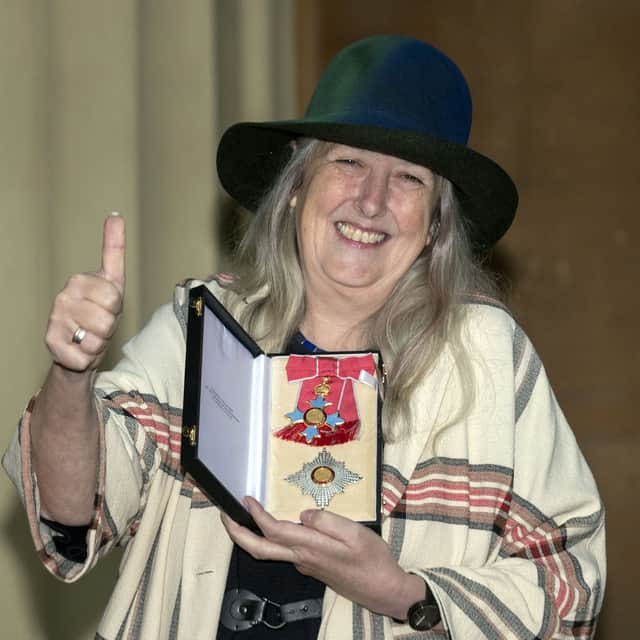
More recently Beard has been exploring Scotland - her husband’s family is from Caithness - and has visited Orkney several times.
“Very foolishly I hadn't realised until I went to Orkney that in prehistory it was the centre of the British Isles. I so enjoyed seeing the antiquities of Orkney. I'd seen pictures of Scara Brae and thought I knew what it's like. But going was a complete eye opener.”
If she was having a fantasy dinner who would she invite?
“The unknown person. I want the slave girl who cleans up in the Roman baths after listening to these blokes all day. I want to feed her, give her some wine and find out what they were saying. What her view of them was. Ordinary people have the best stories and are the best observers. You learn more from them than from very crafted performances by old men.”
Thanks to Mary Beard and her ability to get their stories out there, we get to hear the voices from the past too.
“I hope so. That's what I try to do. And I hope people enjoy it.”
Mary Beard, More Secret Histories of Ancient Rome, The Kings Theatre, Glasgow on 11 October 2026. For tickets visit www.fane.co.uk, https://www.atgtickets.com
Books will be available to buy on the night.
Want the latest Scottish headlines sent directly to your phone? Sign up to our WhatsApp Channel
Comments
Want to join the conversation? Please or to comment on this article.