
The women behind the fabulous fashion at the Fife Arms, Braemar

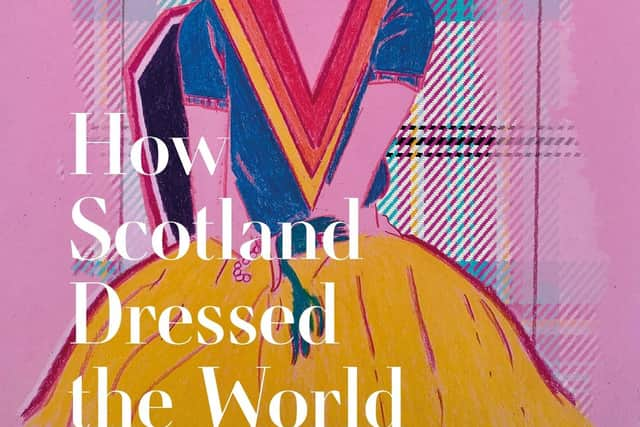
Ahead of the Festival of Fashion at the Fife Arms, author and designer Lynne Coleman, who will be speaking at the event, draws on stories from her book How Scotland Dressed the World and celebrates the women who inspired her.
There is a long list of ladies I truly admire. I’m a woman’s woman, always have been, always will be. I think it comes from having an elusive older sister who was impossibly chic and runway-tall as a teen, but never realised her own potent power or potential.
I lost her twice. Once to drug addiction in her twenties, leading to our estrangement, and, finally, when she tragically passed from a heroin overdose aged 36.
Six years my senior – an Atlantic-sized gulf growing up – she would steal my clothing and ask for fashion advice. A concept I only discovered, was the odd-way-round in adulthood. I’ll never know if my own strong sense of style was a byproduct of dressing a shy supermodel of a sister to bolster her confidence, or if it was a talent I embodied organically. With age, I now think it was a bit of both.
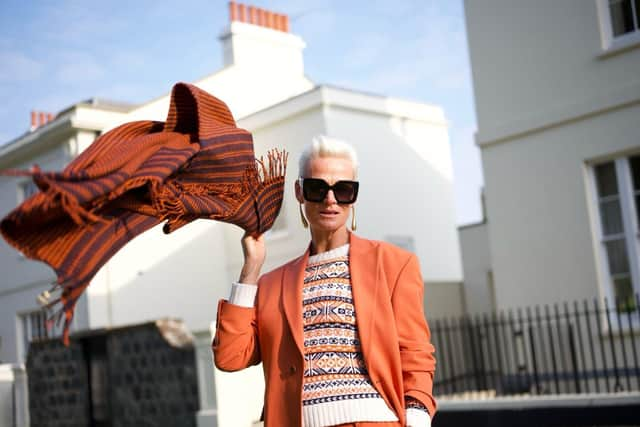
It explains why I gravitate towards older women. They are so alluring, fountains of knowledge and the best fun. In literature, art, design and cinema, I’ve always found my ultimate muses in women older than myself. You don’t need to be Freud to understand my obsession with Edie Sedgwick.
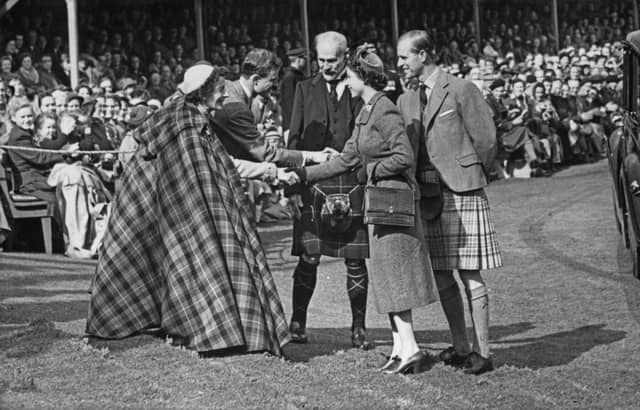
But it’s the women who have thrived in the face of adversity that really inspire me. The ones that freed themselves. None more so than Frances Farquharson. Who? I hear you ask. Well, settle in and let me tell you all about how an American edited British Harper’s Bazaar, married a laird and made the Highlands the most fashionable place on the planet.
Frances found herself in Deeside at the end of the 1940s because of her third marriage. The first ended tragically in a house fire that took her husband’s life and left her in a back brace for a year after jumping out of the window of the burning building.
She was told she would probably never be able to walk again or have children and, as she entered Braemar, she did so on two feet with a nine-year-old daughter by her side, having left her second husband. Formidable.
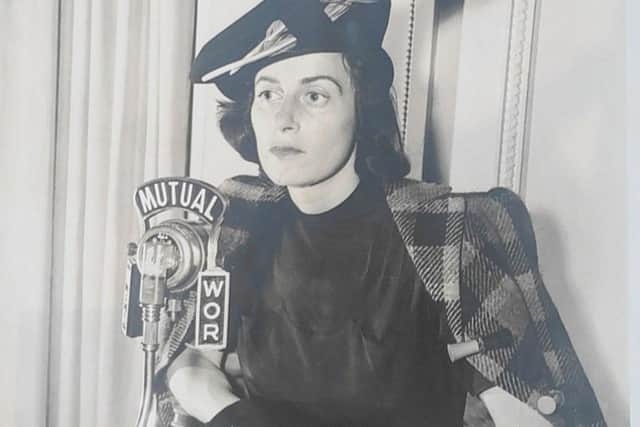
Born in 1902, she left Seattle, bound for Europe at 22, to begin her dreams of becoming a writer. Along the way, her flamboyant personality made her a firm favourite with all she met, becoming friends with exiled Russian princesses and staying with the Queen of Romania.
But there was no more magical a connection with interesting women than the one she had with Elsa Schiaparelli. The arch nemesis of Coco Chanel – who spent a large chunk of the 1920s on the other side of the Highlands at her lover’s estate – more about that in a second.
Schiaparelli would come all the way from her couturier in Paris to party in plaid with Frances. So magnetic was Frances that she set up festivals and fashionable gatherings, with the most incredible characters of the 20th century travelling to spend time in Braemar. Balmoral, being her neighbouring estate, saw her become friends with the Queen Mother.
But her wardrobe, for me, is the truest expression of how fabulous Ms Frances Farquharson truly was. You see examples of it scattered over museums in Scotland. The tartan and tweed ensembles still look avant-garde today.
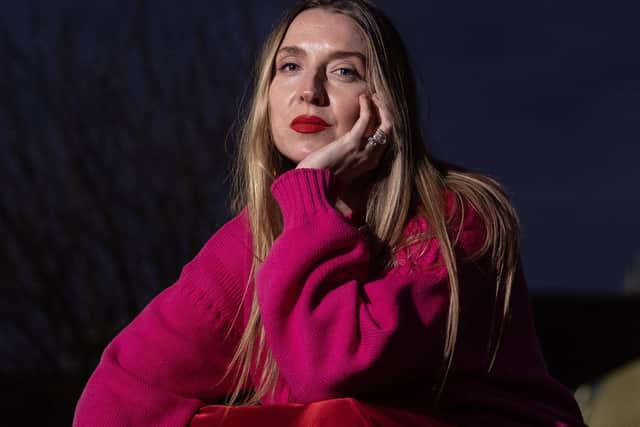
Later this month, the great and good across art, fashion and culture will gather in her honour at the Fife Arms Festival of Fashion. I’m so proud to be giving the opening talk of this year’s programme with the awe-inspiring group luxury fashion director of Harper’s Bazaar, Avril Mair, interviewing me about my book How Scotland Dressed the World. You don’t get many full pinch-me moments like this in life, so I’m going to enjoy this one.
Some of my favourite tales in my pocket sized tome are the most absurd. Like the story that links Kurt Cobain with Dennis the Menace and got Marc Jacobs fired.
Our claims back to Scotland via Seattle doesn’t come from Frances this time, but from Cobain being born in Aberdeen. That’s Aberdeen, Washington, not the oil rich shores of the ’shire. The story is grungier than that.
In the summer of 1992, Nirvana played at the King’s Hall in Belfast. That night, a local lad called Chris Black from Whitehead went to the gig wearing a black and red Dennis the Menace jumper. Courtney Love clocked it and began bartering to buy it.
Reluctantly, Chris parted with the sweater for £35, selling it to a jubilant Love. The tale has been retold in newspapers and radio programmes ever since. From there, the musician was pictured in Dennis the Menace’s pullover a plethora of times.
The symbolism of Cobain cocooned inside Dennis’s attire is not lost on me. What that character represents – a lost little boy adored by the world but who impacts his loved ones on a daily basis with naughty self-indulgent behaviour – is a poetic microcosm. I have no idea if Love knew the Dennis the Menace backstory when she bought it, but this piece of parabolic paraphernalia certainly has more weight knowing that she chose it.
By the time winter rolled round that year, a young Marc Jacobs sent a collection down the runway that critics scoffed at. Why? Well, he’d been brought into Perry Ellis fresh out of Parsons to inject youthful ideas into their stuttering sportswear line. Things weren’t really running to plan. The final nail in his coffin came when he sent Naomi Campbell and Kate Moss down the catwalk in Cobain-inspired clobber. Looking at it today, the collection was utter genius. Bias-cut tartan skirts teamed with cute cartoon t-shirts, finished with loose shirts and knitted beanies; it looked like Scotland-the-chic, but fashion writers condemned it. They stated he’d raided Seattle’s thrift stores and hardcore grunge lovers hurtled hatred at him, accusing him of selling out their beloved movement.
Fast forward to the present day and Jacobs has brought out different variations of The Grunge Sweater by Marc Jacobs. In 2018, he marked the 25th anniversary of the dreaded Perry Ellis firing by recapturing the vibe. It would prove another controversial move, with the surviving members of Nirvana suing Jacobs for a reimagined version of their smiley face Nevermind logo, resulting in a countersuit from Team Jacobs.
Someone should remind them if anyone should be hacked-off for style stealing, it’s our poor wee Dundonian Dennis – Dennis was a symbol of the punk movement that morphed into grunge. DC Thomson should totally have a cut of every jumper shifted but since inspiration doesn’t come with profit share, it’s only the people in the know who fully understand Dennis’ impact on modern fashion.
Now let’s talk romance. Much has been written about Gabrielle Chanel’s love affair with Scotland and our fabrics. In the Highlands, her hideaway home, Rosehall Estate, currently unlovingly crumbles.
During its heyday, Rosehall was loved, providing the perfect amount of remoteness for Gabrielle to play out her romance with the Duke of Westminster during their affair in the 1920s. Winston Churchill recuperated on the estate around 1928 and letters about his stay have since been published.
According to the National Records of Scotland, Churchill passed comment on Chanel to his wife in one letter: ‘She fishes from morning ’til night, and in two months has killed 50 salmon.’ He sounds a little salty about it all to me.
The importance of this estate on Coco’s inspiration and subsequent brand-building is not to be overlooked. This home formed the backbone of the woman she wanted to evolve into. The lady of the manor is quintessential Chanel. Tweeds and cashmeres fit to entertain in, but still with an air of ease about them should you wish to fish, are polished ensembles of hunting gear around here. This is how Parisian preppy was born.
It has left me thinking a lot about the ladies who inspire us, the sisterhood and how special the women in our lives are. Past, present and future. Let the ladies in your life know how fabulous they are. I’m looking forward to celebrating two that can’t be with me in person: my sister and Lady Farquharson. If you can make it, come join us.
Lynne will launch this year’s festival on Saturday 14th November at 10am with Avril Mair, thefifearms.com/offers/festival-of-fashion/ www.lynnecoleman.com