
The good news about Scottish skiing's worst ever winter

The winter of 2024/25 saw Scotland’s ski centres record historically low visitor numbers, but it also showed how resilient the industry has become, writes Roger Cox
It’s the middle of summer, and so it must be time to talk skiing, and in particular the annual “skier days” statistic released at around this time every year by ski-scotland, the body representing Scotland’s five ski centres, Cairngorm, Glencoe, Glenshee, The Lecht and Nevis Range.
This blunt but still important metric is based on a very simple principle: one person paying to go skiing for a day at one of Scotland’s ski resorts counts as one skier day; two people paying for a half-day each also counts as one skier day, and so on.
Clearly then, the skier days stat doesn’t really give us much in the way of nuance – it won’t tell you, for example, whether a season started well and finished badly or the other way round. What it does do, though, is offer an easy, at-a-glance way of comparing the commercial success of one ski season with that of another. So, how does the 2024/25 season measure up to seasons of the past? Honestly? Not very well.
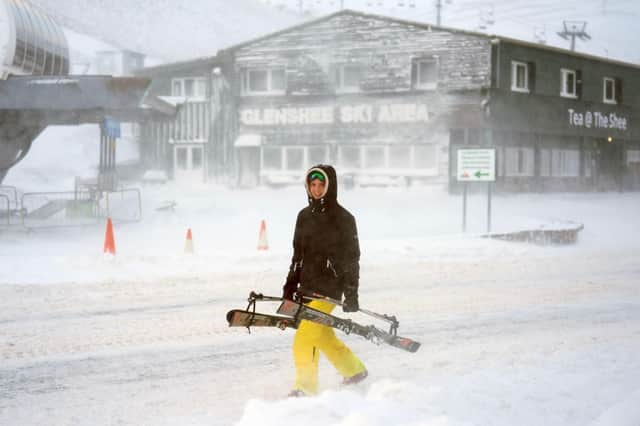

Prior to last winter, the worst ever Scottish ski season was 2016-17, which saw just 54,000 skier days recorded across the five resorts. Second worst was 2018-19, with 54,481 skier days, and third worst was 2023-24, with just 55,000 skier days. The total for 2024/25 then – 51,825 – represents a new low. Not only that, it also forms part of a worrying trend: not including the Covid-compromised 2019-20 and 2020-21 seasons, four of the worst winters for the Scottish ski industry have occurred in the last decade, and two of them have been in the last two seasons. Almost as worrying is the gulf between last season’s tally and the highs we were seeing a little over a decade ago: in the winter of 2012-13, the skier days stat was 290,996; in 2009/10 it was 374,789.
Identifying the problem isn’t rocket science: in order for Scotland’s ski centres to be able to open, a certain minimum level of snow cover is required up in the hills, and in recent years there has quite simply been less of the white stuff. Last season was particularly bad in this respect, and this can be seen in the number of days the resorts were able to offer skiing. Glenshee and The Lecht were able to open for 64 and 62 days respectively (so the equivalent of two months out of a possible five month-plus season) with Glencoe open for just 26 days.
Cairngorm and Nevis prefer not to report their individual ski season statistics, although both contribute numbers to the overall skier days tally, but we know that Nevis took the decision at the start of the 2024-25 season not to open until February, and subsequently only managed to open for a handful of days. Could this conservative approach have been part of the problem? Well, not really. Even if Nevis had gone all-out to try and offer skiing earlier, it’s unlikely they would have made much of an impact on the overall skier days total as for much of the winter the webcams at Nevis showed the pistes looking brown rather than white.
No, the problem is simple: less snow equals less skiable days equals less skiing – and given everything we know about climate change, it seems likely that things are destined to get worse not better. Then again... while it would be easy to write the Scottish ski industry off at this point, in spite of last season’s underwhelming figures there are still reasons to believe it can continue for a good while yet.
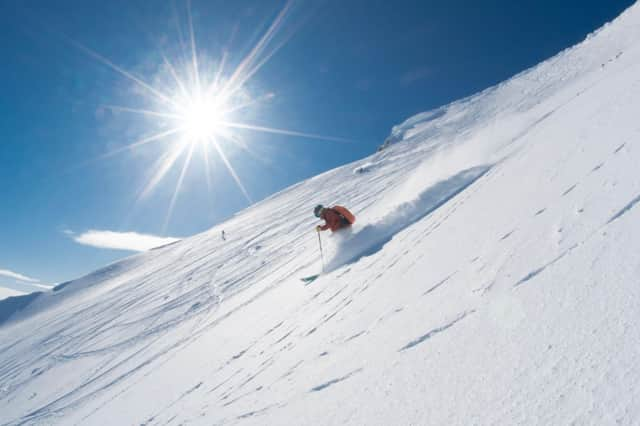
Reason One: the market for skiing in Scotland is definitely still there. If last season demonstrated one thing it’s that, when the conditions are right, there are still plenty of people with the means and motivation to get themselves up into the hills for a day on the slopes. Just look at Glencoe: they may only have been able to open for 26 days all winter, but in that short time they still managed to clock up 10,406 skier days, or an average of 400 people per day. That tells us that, even in a poor snow year, there are still a lot of keen skiers and snowboarders out there monitoring the conditions and ready to drop everything at the first sign of good snow.
Reason Two: advanced snowmaking is working. A decade ago, a season like the one we’ve just had wouldn’t have been far off a complete washout for Glenshee – based on my semi-regular studying of their webcams, they might only have been able to operate for a handful of days had they been relying purely on natural snow plus traditional snowguns, which can only operate in sub-zero temperatures. The fact that they were able to open more than any of the other resorts, and also rack up the highest number of skier days (16,000) was largely down to their use of Snowfactories – hi-tech bits of kit which can manufacture snow even when the temperature is above zero. Sure, for much of the season they weren’t able to offer much beyond the two slopes where they were concentrating their snowmaking arsenal – one for beginners, the other for intermediates. However, last season proved the resilience of their business by showing they are now able to operate even in an extremely poor snow year.
Reason Three: in Scotland as elsewhere, snowfall totals can vary wildly from one year to the next. Only the most hardened climate change denier would predict that Scottish winters are likely to get snowier as the 21st century progresses. However, while the overall trend might be for less snow, there’s still every chance that we could have plenty of snowy winters ahead of us. Here’s hoping that the winter of 2025/26 turns out to be one of them.
Comments
Want to join the conversation? Please or to comment on this article.