
Snowsport Scotland's CEO on how to ensure a future for Scotland's ski centres in a warming world

Iain Ramsay-Clapham, CEO of Snowsport Scotland, says the governing body is working on a strategy to help the country’s five ski centres diversify to ensure they stay viable. Interview by Roger Cox
Iain Ramsay-Clapham, CEO of Snowsport Scotland, is in good spirits. Not only is there some early season snow in the hills (“so I’ve got a big smile on my face”), it’s also looking as if Scotland will be well represented in the GB Snowsport team travelling to the Milano Cortina Winter Olympics in the New Year, although at time of writing the final selection decisions have yet to be made.

“At the moment we’ve got nine Scots who we hope will be part of a GB Snowsport team of 24,” he says, “so that’s really punching above our weight – we’ve got to be proud of that.”
But while he may have one eye on the near future of February’s Winter Olympics, Ramsay-Clapham is also looking further ahead, all the way up to 2030 and beyond. SnowsportScotland is currently approaching the end of its current four-year funding cycle, and in early 2026 they will find out how much funding they are to receive for the next four years.
“SportScotland give us funds to develop and sustain snowsports,” Ramsay-Clapham explains, “as well to bring our performance athletes through, and because of [the new funding cycle] we need to work out our strategy for 2026 to 2030, when the next Winter Olympics will happen in France.
“We’ve been working on that strategy for 12 months now, if not longer. It’s been a real journey, with a lot of consultations, but out of all of the debates and discussions the really key word is sustainability. Everyone wants these sports to still be here in five, ten, 15 years’ time, and the question on everyone’s lips is: if we don’t have snow, how do we inspire a nation to get involved in these sports?”
READ MORE: Scottish Ski & Board 2025/26 e-mag
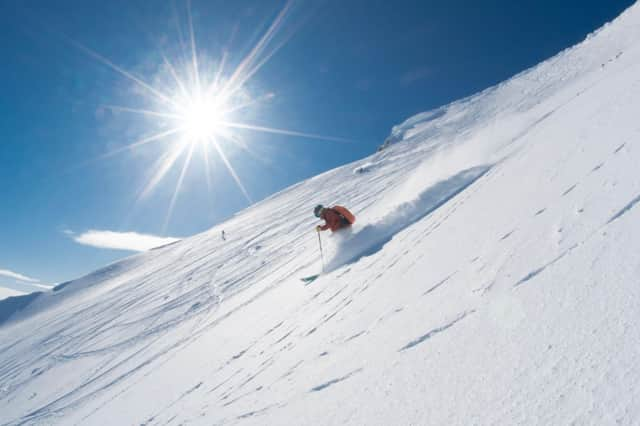
It’s no secret that the snowsports industry in Scotland is facing serious challenges due to climate change: there’s less snowfall in an average winter than there used to be, and more sustained periods of thaw, too, meaning that Scotland’s five ski centres are finding it harder and harder to offer reliable skiing. Last year was the worst winter for commercial skiing in Scotland since records began, with Cairngorm, Glencoe, Glenshee, Nevis Range and The Lecht clocking up just 51,825 skier days between them. (To put that figure into perspective, in the winter of 2012-13, the combined skier days stat was 290,996; in the stellar winter of 2009/10 it was 374,789.)
Still, Ramsay-Clapham is a man with a plan, the full extent of which will be revealed next April, when Snowsport Scotland will unveil “Sustainable Snowsports For All” – their strategy for 2026-30. That document will cover all aspects of the Snowsport Scotland remit, from promoting inclusion and health and wellbeing to identifying and developing the potential Olymipans of tomorrow. However, Ramsay-Clapham believes that ensuring Scotland’s ski resorts can continue to operate as the climate continues to heat up is a fundamental part of the jigsaw, and so this has become the focus of a separate document, the Mountain Facilities Strategy.
While he admits that Snowsport Scotland doesn’t have “a big pot of money to subsidise the ski centres”, Ramsay-Clapham has identified various ways in which his organisation can help to keep them on an even keel.
“Our Mountain Facilities Strategy is all about how can we better support [the ski centres] to get the funding they require to diversify, and how can we equip them to be able to work in marginal conditions – so stuff around snow fencing and snow-making, whether it be snow cannons or SnowFactories, which can operate in above-freezing temperatures.”
But it’s really diversification, according to Ramsay-Clapham, which will be the decisive factor in guaranteeing the ski centres’ survival, at least in the medium term.
“What can we do as a governing body to support our five mountain centres? The very simple answer to that is: help them diversify as businesses, to build year-round revenues, so that when the snow comes they can turn the infrastructure on and support snowsports.
“We’re not going to suddenly turn them into profit-making entities relying just on snowsports – it’s going to require that year-round revenue stream.”
Of all the five ski centres, Nevis Range has undoubtedly done the most to diversify already, turning itself into a world-famous mountain bike destination. In spite of this success, however, it was only open for skiing for a handful of days last season. How have Ramsay-Clapham’s discussions been going with the folks at Nevis?
“I think the challenge for Nevis,” says Ramsay-Clapham, “is that for quite a long time now they’ve not generated any profit out of the period between December and April and clearly they make all their money over the summer season. So it’s a tricky one, and I don’t have an answer.
“But I think the question is perhaps, OK, how can we be more clever about facilitating you getting the lifts in action [during the ski season]? Are there models that we can develop that we can support you with where you engage with the community? Let’s explore options.
“There are certainly people on the board at Nevis who are wholly in support of the facility retaining its roots as a snowsports centre, and being able to provide snowsports – it’s just about making it viable for them.”
Want the latest Scottish headlines sent directly to your phone? Sign up to our new WhatsApp channel here
Comments
Want to join the conversation? Please or to comment on this article.