
Scots adventurer Mark Agnew on his Arctic kayak double first and the importance of group dynamics

On a record-breaking kayak journey through the Northwest Passage as part of a four-person team, Mark Agnew discovered that navigating relationships was just as important as navigating around icebergs. Interview by Roger Cox
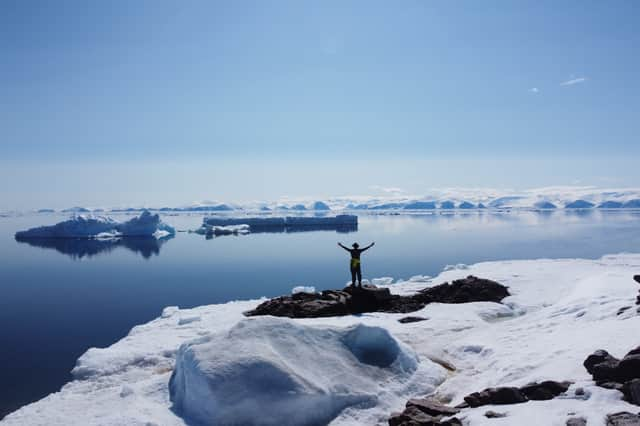
In 2023, Scottish adventurer Mark Agnew achieved a remarkable double first when he and three Americans – West Hansen, Eileen Visser and Jeff Wueste – completed a gruelling 83-day, 2,000-odd mile kayak from one end of the Northwest Passage to the other. In doing so, they became not only the first people to make the journey by kayak, but also the first to make it entirely under human power.
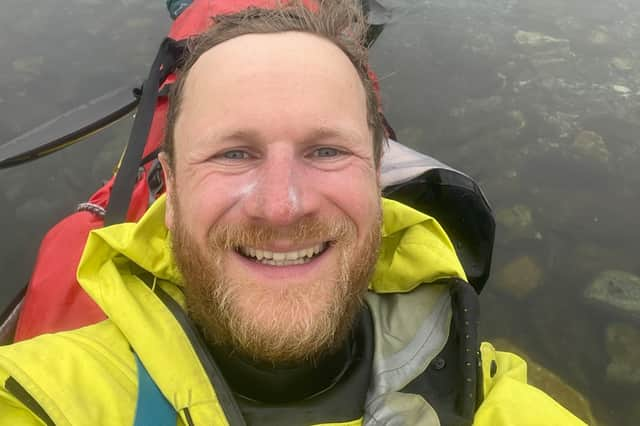

Calling themselves the Arctic Cowboys, the foursome faced all kinds of challenges during their voyage, from polar bear encounters to being trapped by pack ice. However, Agnew’s recently published account of their adventure, There Will Be Headwinds, suggests that perhaps the most important factor in completing the journey across the top of Canada may have been the way in which the group dealt with the tensions that inevitably arose along the way.
At various points, disagreements broke out which could potentially have destabilised the entire expedition; every time, however, the Arctic Cowboys managed to make up and move on, and Agnew’s warts-and-all accounts of these critical moments provide some of the most fascinating moments in an already compelling story.
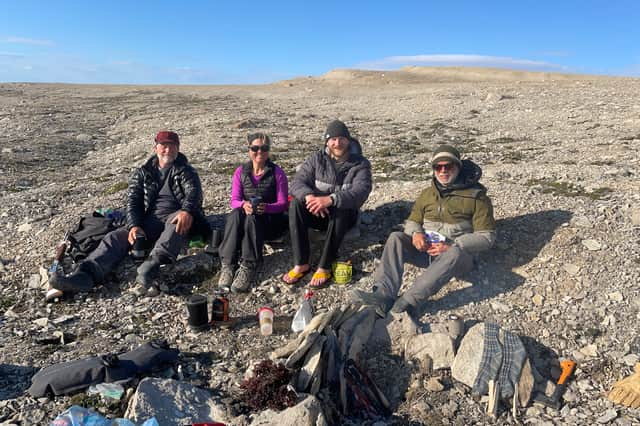
When he joined the Arctic Cowboys in northern Canada in June 2023, Agnew was already the odd man out: the only Brit in a team of Americans, and in his 30s while the others were in their 50s and 60s. Perhaps more importantly still, while he was a competent kayaker, he had nothing like the same experience or expertise as the other three – indeed, before joining the Cowboys, he had been preparing to undertake the same journey as part of a team of British rowers. On a somewhat crackly phone call from France, where he’s holidaying with his young family, I ask him how he felt meeting these hardened kayakers for the first time, just a matter of days before they were due to depart.
“I think the dynamic settled really easily to begin with,” he says. “Everyone was having a really good time. But then as soon as we started kayaking there were a lot of sideways looks and there was a lot of anxiety on my part.
“I’d kayaked a lot during Covid with a friend who was a guide, so he knew what he was doing, and then with another friend who was planning to come on the Northwest Passage kayak but didn’t come, and I was as fast or faster than both of them. I’d never actually been exposed to people who were really good at kayaking though, so as soon as we started I was like ‘Oh good god, I have overestimated my ability here.
“Things got better very quickly – partly because of Eileen coaching me, partly because of West and Jeff going slower. But at one point there was talk that we might not be able to do a big [open water] crossing if we were going so slowly. I just had to be humble, and they were very patient with me.”
The group paddled in two two-man kayaks, mostly with Hansen and Wueste in one, Agnew and Visser in another, and strong bonds soon developed between those sharing a boat. “For me, Eileen transformed the trip from good to great,” says Agnew. “She was a sister, a best friend, a mother, she looked after me and was very patient with me and we also had some great conversations. She was in turn sharing stuff with me and I was supporting her where I could, which is a huge part of building camaraderie – it’s not just about effort, it’s about being vulnerable together.”
One corollary of those sharing a boat getting closer, however, was that, as the expedition wore on, any debates tended to become more polarised, with the occupants of one boat often presenting a united front against the occupants of another. One particular bone of contention was the amount of time Hansen and Wueste often took to get themselves ready to leave in the morning – sometimes as long as three hours. Agnew and Visser may have been the slower pair on the water, but, they argued, that would matter less if they could start each day a little earlier.
READ MORE: Adventurer Mollie Hughes on how to build resilience: 'deal with the adversity, move on and grow'
There were tensions, too, over the best routes to take. For all that Agnew was the weakest paddler of the four, it turned out that he had a lot to offer the group in terms of his navigation skills – to the extent that on one section of the journey when the two boats took different routes, he and Visser ended up far ahead of the others.
“At the time they didn’t really mention it, they were like ‘Oh man, good to see you again’, but then we had a huge blow-up about a month later about how we’d left them behind in ice and so that’s why they were then leaving us behind, but I had no idea that’s how they’d felt.”
Understandably, as the Arctic Cowboys neared the end of their challenge, with winter and the accompanying sea ice closing in fast, tempers became increasingly frayed. However, at no point were relations between team members allowed to get so bad that they seriously reduced the effectiveness of the group. I ask Agnew what made this possible. “The secret is just not to take things personally,” he says. “That can be difficult when you’re tired, and it also requires a fundamental trust in the relationship: I know that West likes me, West knows that I like him, I have a mountain of evidence for that, so in the context of that, this is not personal.”
There Will Be Headwinds: Kayaking the Northwest Passage, by Mark Agnew, Icon Books, £20
Comments
Want to join the conversation? Please or to comment on this article.