
Scotland's new sewage pollution map is a step in the right direction


Increased monitoring of Combined Sewer Overflows is the key to building an accurate picture of pollution in Scottish waters, writes Roger Cox
Over the last couple of years, water companies in England have taken a near-constant battering in the media due to the regularity with which they have allowed untreated sewage to flow into rivers and seas. Perhaps the lowest point of many came in March last year, when it emerged that raw sewage discharges had increased by an incredible 105 per cent over the previous 12 months.
Many of the maps published in print and online showing the worst-affected areas seemed to suggest that sewage was only a problem south of the Border, with all the red crosses or skull-and-crossbones icons stopping somewhere around Berwick-Upon-Tweed. Looking at these maps, Scots might have been forgiven for feeling a certain degree of relief. Unfortunately however, the situation is nowhere near as simple as “privately owned English water companies bad, state owned Scottish Water good.”
The truth is, it's still difficult to build up an accurate picture of the sewage pollution situation in Scotland as there is less data available here than in England. Alasdair Steele, Edinburgh representative for the environmental charity Surfers Against Sewage (SAS) explains: “There’s quite a lot of spin that goes around suggesting that we don’t have a problem in Scotland,” he says, “but that’s not true. It’s just not as public as it is in England and Wales, because here less than 30 percent of the overflows are monitored.”
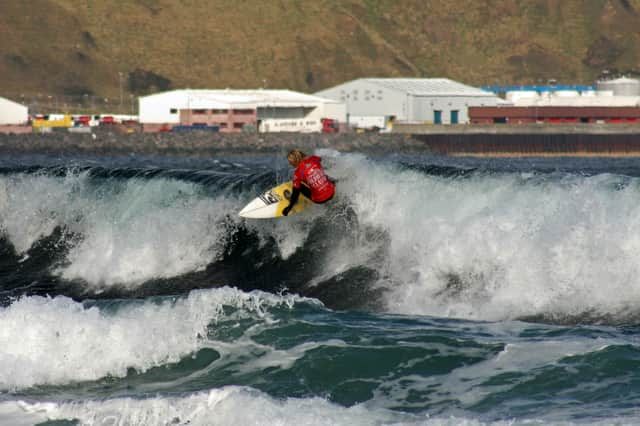
By “overflows”, Steele is referring to CSOs or Combined Sewer Overflows, which act as a sort of systemic safety valve to reduce the risk of sewage backing up into people’s homes during periods of heavy rainfall. There are just over 3,600 CSOs in Scotland, but at time of writing only around 1,000 are monitored.
“These things are dotted all around the UK,” says Steele, “they run into rivers and they run into the sea. They were only meant to go off if you had a major storm, but obviously we’ve had a lot more development since our sewers were built, and that development has put more concrete onto the ground, which means there’s more water flowing into them more quickly.
“You’ve also got climate change and you’ve got more people, so all of these things combined mean our sewage systems can’t cope, so these CSOs are going off all the time.”
For all that the English sewage system is very evidently falling apart in places, it is at least now possible for water users south of the Border to determine whether the water near them is safe to swim in or not. Since 2014, real-time data from CSOs around the country has been fed into an app developed by SAS called The Safer Seas & Rivers Service, which enables people to see at a glance whether there has been recent discharge from a CSO.

Steele is keen to stress that things are now moving in the right direction in Scotland: on 16 December, Scottish Water launched an interactive Overflow Map, billed as “a near real-time map show[ing] the status of monitored overflows and the duration of any overflow events to help better inform our customers.” However, he also points out that, with only around 30 per cent of CSOs included so far, the picture is nowhere near complete.
“It’s great that this is coming,” he says, “but we need to move fast, so we need to get all our CSOs monitored, and we also need this to link in to the Safer Seas & Rivers Service app, because it’s already got a quarter of a million users – it’s a much easier way for people to find the information.”
Clearly informing people about likely risks of sewage pollution is vitally important, but it’s only a short-term fix – the long-term goal of SAS and other groups working alongside them is to prevent pollution events from happening in the first place. Fixing antiquated sewage systems will take both time and money, however, and from the perspective of an environmental pressure group, this is a more problematic thing to push for in Scotland than it is in England.
South of the Border, it’s easy to attack well-paid CEOs of private water companies for letting an outdated sewage system rot while raking in profits, and the general public are more likely to be sympathetic to calls for – say – shareholder dividends being cut in order to help fund infrastructure upgrades. In Scotland, however, Scottish Water is a public body, so any upgrades will require increased public expenditure: an altogether tougher sell.
Still, Steele is optimistic. “We can’t just suddenly sort these things out,” he says. “What we can do, though, in the short term, is we can tell people if there’s an issue. We’re not going to turn round and say, ‘we need to put hundreds of millions of pounds into the sewage system straight away’, so in the meantime, let’s make sure that if you want to go swimming or kayaking or surfing, in the sea or in a river, you at least know whether it’s polluted.”
The new Scottish Water Overflow Map can be found at www.scottishwater.co.uk/Your-Home/Your-Waste-Water/Overflows/Live-Overflow-Map
The Surfers Against Sewage Safer Seas & Rivers Service app can be downloaded via the App Store or the Google Play Store, www.sas.org.uk
Comments
Want to join the conversation? Please or to comment on this article.