
Sceptical about surf therapy? These numbers say you shouldn’t be

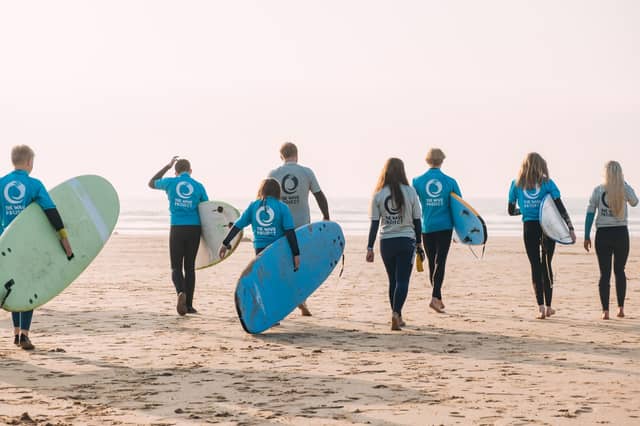

A new study highlights the significant mental health benefits of surf therapy, writes Roger Cox
When it comes to being taken seriously, surfing has a bit of an image problem. Hollywood has a lot to answer for. I could spend the next 900 words or so listing some of the many surfing high achievers across the arts and sciences, carefully itemising their most notable achievements, but it wouldn’t do much good. The next time you heard somebody say the word “surfer”, chances are the first image to pop into your head would still be something like the grinning face of Jeff Spicoli, the clueless, perpetually stoned surfer played by Sean Penn in Fast Times at Ridgemont High.
To be fair, real-world surfers do sometimes help perpetuate the stereotype by living up to it. Witness the now-internet-famous TV interview given a couple of decades ago by the so-called “Wappah Guy”, aka Micah Peasley, a Californian surfer, fresh out of the water following what was clearly the session of his life, whose heroic struggles with the English language made Spicoli look like Shakespeare. Wherever the goofy surfer stereotype comes from, though, there’s no doubt that it exists – and for anyone trying to advocate for serious surf-based medical interventions, that’s a problem. Such is the case for The Wave Project, a UK charity which has been achieving highly impressive outcomes via surf therapy since 2011.
Inevitably, given all of the above, any attempt to convince serious-minded people of the efficacy of surf-based anything is going to be met with above-average levels of scepticism. However, as previously reported in The Scotsman, there have been signs for a while that surf therapy can be hugely beneficial for people suffering from a whole range of mental health issues.
Various attempts have been made to quantify the effects of surf therapy – indeed, Scotland’s Jamie Marshall completed the world’s first PhD in Surf Therapy at Napier University in 2022. Because it’s a relatively new new concept, though, and because the numbers of participants have been relatively small (it’s only been possible for medical professionals in the UK to prescribe surf therapy to patients since 2019) there isn’t yet a huge volume of hard data to back up all the compelling anecdotal evidence.
There was a big step in the right direction earlier this year, however, when the Wave Project published a report – developed in consultation with Marshall – titled Impact Beyond the Surf. Based on interviews with 365 young people with an average age of 12 undertaking surf therapy courses at the 16 Wave Project hubs across the UK, it doesn’t just demonstrate that surf therapy has an impact, it also shows it has a highly significant one.
Wave Project courses typically last for six weeks, with groups of ten to 14 young people taking part. In Scotland, there are hubs at Dunbar, St Andrews and at the Lost Shore surf resort at Ratho. Each participant has their own “surf mentor” and everyone works at their own pace. In a broad sense, the sessions are about learning to surf, but the environment is designed to be supportive and non-competitive – it’s less about how quickly you progress, more about simply spending time in the waves.
The report uses a range of different measures to quantify the success of Wave Project courses, and participants were interviewed before and after taking part. Importantly, all those involved had been referred to the Wave Project by professionals, whether Child and Adolescent Mental Health Services (CAMHS), GPs, teachers, social workers or youth services, and many were experiencing challenges such as anxiety, low mood, social isolation, low confidence or physical and/or mental disabilities. These are people, in other words, who might have been referred for conventional therapy already, or who might be on the road to being referred; as such, any positive impacts observed would be helping reduce pressure on an overstretched health service.
READ MORE: Stephen Spencer on biking 1,000 miles for The Wave Project: 'these volunteers make magic happen'
The first part of the report measures changes in participants’ wellbeing using the WHO-5 Wellbeing Index – a questionnaire developed by the World Health Organization which is frequently used in mental health research. Not only did 77.6 per cent of young people interviewed report an improvement, the so-called “effect size” was significant too. Without getting bogged down in statistical minutiae, an effect size of 0.2 is considered “small”, with 0.5 “moderate” and 0.8 “large” – the Wave Project’s score was 0.865.
Subsequent sections of the report also show increases in participants’ confidence, resilience and self-belief (all in the moderate range, effect scale-wise). Perhaps the most eye-catching stat, though, is the ratio of “Estimated wellbeing value per participant” (based on the so-called “WELBY Score”) to the cost of delivering a course: approximately 2:1. Or, to put it another way, the cost of a course pays for itself twice over in terms of the impacts achieved.
I’m no economist, but that sounds like a pretty decent return on investment to me. To what extent those in power decide to act on all this remains to be seen, but in the meantime the folks at the Wave Project are holding a fundraiser called 15 Peaks of Summer in July and August, encouraging people to climb 15 peaks to celebrate 15 years of the Wave Project. To find out how to take part or donate, visit www.waveproject.co.uk
Want the latest Scottish headlines sent directly to your phone? Sign up to our new WhatsApp channel here
Comments
Want to join the conversation? Please or to comment on this article.