
Mountaineering Women by Joanna Croston review: 'In the way of every good woman, there's always a man'

When female mountaineers refer to hostile conditions, it might not be just the rockface they are talking about, writes Roger Cox
Readers of two-score years or more will probably remember Jürgen the German, one of the more out-there characters from the 1990s BBC2 sketch show Harry Enfield and Chums. Played by Enfield in a tousled blonde wig and garish multicoloured anorak, this confused young tourist, holidaying alone in the UK, was forever being overcome with guilt for the crimes of Nazi Germany, and, having attempted to engage complete strangers in toe-curlingly awkward conversations, would always end up making ludicrously over-the-top apologies for “ze conduct of my nation during ze vor.”
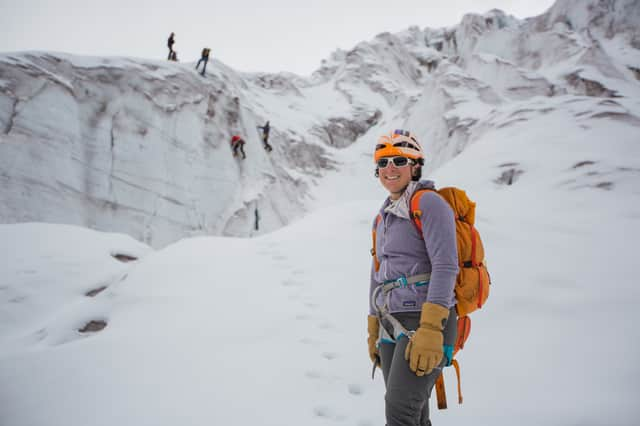

Well, any men planning to read Joanna Croston’s fascinating new book Mountaineering Women, which tells the stories of 20 inspiring female climbers from Gwen Moffat (b.1924) to Brette Harrington (b.1992), supported by a carefully-curated selection of jaw-droppingly good photography, should expect to feel a bit like Jürgen, and be prepared to do a lot of apologising for the conduct of their sex during the last 100 years or so; because if there’s one common theme linking many of the remarkable athletes in its pages together, it’s the fact that their endeavours were either obstructed, misrepresented or otherwise hamstrung by men. In fact, if there’s any truth in the saying that “behind every great man there’s a great woman”, then on this evidence perhaps it’s also true that standing in the way of every great woman there’s usually at least one man, and very often more than one.
Take, for example, the incredible and also incredibly frustrating story of Ecuadorian climber Juliana Garcia (b.1984). Having made her first trip to Peru at the age of 17, and fallen in love with the mountains of the country’s spectacular Cordillera Blanca, she set her sights on becoming a certified mountain guide. As Croston explains, however, once she’d started training with her home country’s official mountain guiding organisation, the Association Ecuatoriana de Guias de Montana (ASEGUIM), she quickly discovered that “the rules would be different for her and her male counterparts.” Still, in spite of the fact that “some of her fellow guides felt that things were made intentionally more difficult for her” during the course, in an environment where “an atmosphere of machismo reigned supreme”, she put her head down and gained her guide’s certificate.
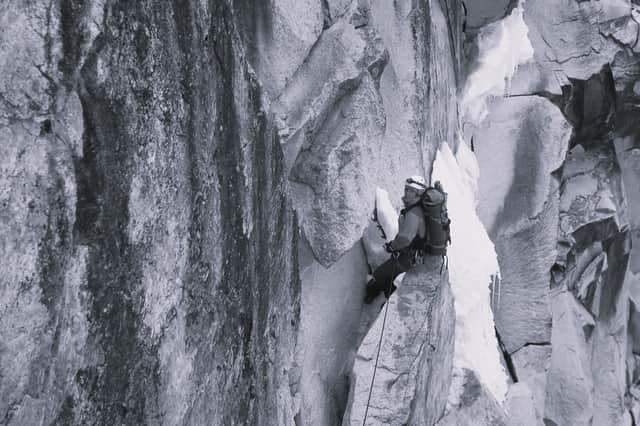
Unfortunately for Garcia though, it turned out the ASEGUIM wasn’t recognised outside Ecuador, so if she wanted to work as a mountain guide elsewhere – including in her beloved Cordillera Blanca – then she would need a qualification from either Bolivia, Peru or Argentina, all of which had training programmes recognised by the International Federation of Mountain Guides (IFMG). So, undeterred, she travelled to Bolivia and entered their intensive three-month training programme. By this point, she had already established a new route on 6,070m Huandoy Este in Peru, recognised as a notable ascent by the committee of the Piolets d’Or in 2013, but her golden ice axe didn’t cut any ice with her new instructors. “They had never had a female candidate before,” Croston writes, “and when it came time for the graduates to be announced, Garcia was ignored and, to her dismay, realised she had failed the training. Her instructors gave her no indication of how close she was to passing, nor did they provide feedback on what skills she needed to work on.”
Still, Garcia had the last laugh: two years later she was elected president of ASEGUIM and, thanks to reforms she implemented, by 2017 Ecuadorian mountain guide training had been recognised by the IFMG, who awarded her an official guide’s pin the same year. She has since led climbing groups all over South America, as well as in Greenland, the USA and Greece.
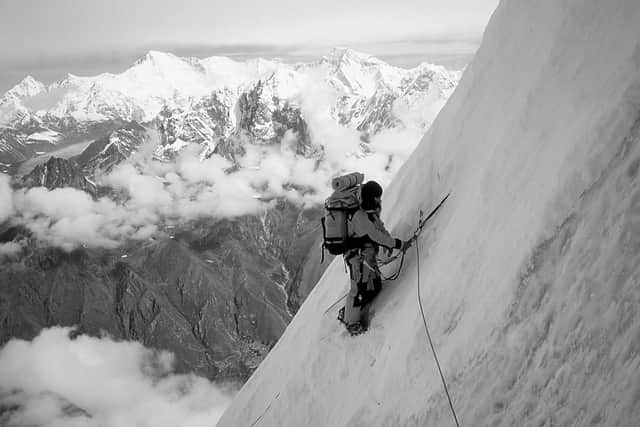
Other women in Mountaineering Women whose progress has in some way been hindered by the actions of men? Take your pick from Pasang Lhamu Sherpa, the first Nepali woman to climb Mount Everest, who, as the only girl in a family of boys, was not permitted to go to school like her brothers, and had to leave home as a teenager in order to avoid an arranged marriage and pursue her climbing dreams; or Alison Hargreaves, the British climber pilloried by a (male-dominated) press for climbing the north face of the Eiger while five months pregnant and then “isolated by a jealous male climbing community”, as Croston puts it, after completing her ambitious “Six Faces” project in the Alps in 1993; or indeed Gwen Moffat, who became the first certified mountain guide in Britain in spite of “rampant discrimination against women in the men’s world of climbing” and in doing so “set an adventurous blueprint for other women guides to follow.”
If the mountaineering women in this book are all brave, resourceful and almost supernaturally determined, then the men (with a few notable exceptions) mostly serve the same narrative function as cornices, bergschrunds and overhangs – that is: obstacles to be overcome. Perhaps in the next 100 years we can do better.
Mountaineering Women: Climbing Through History, by Joanna Croston is published by Thames & Hudson on 7 August, £30.
Comments
Want to join the conversation? Please or to comment on this article.