
Autumn? Must be time to break some skiing world records

Skiers have been achieving world firsts in some unusual places in recent weeks, writes Roger Cox
You’d think the most popular time of year for setting skiing records would be January or February. That’s usually the snowiest slice of the northern hemisphere winter after all, and most of the world’s ski areas are located north of the equator.
A contrarian might perhaps suggest the peak southern-hemi ski season months of July and August as an alternative. Sure, in general there’s a lot less skiing going on down there in the bottom half of the globe, but what if the folks in Argentina and Australia are just more interested in setting records than their snow-sliding cousins in Austria and Alaska?

Whatever your thoughts on skiing’s north-south divide though, one thing you’d think everyone could agree on is that the northern-hemi autumn is likely to be a lousy time for ski-based record-setting: too early for snow in the Alps and the Rockies; too late for snow in the Andes and the Antipodes. And yet, for some reason, the autumn of 2025 is seeing skiing history made right, left and centre.
Admittedly, not all of the records set in recent weeks have been dependent on natural snow. On 7 October, serial skiing record-breaker Oliver Kern set not one but two new world records at the SnowWorld Bispingen indoor ski area near Hamburg. The first was for the greatest elevation gain at an indoor ski facility in a 24 hour period – a whopping 20,319 metres, which he achieved by completing some 524 laps of the facility’s 300m-long piste, 305 by chairlift, the other 219 by drag lift. While he was at it, Kern also broke the indoor elevation record for one hour, clocking up 910m in 24 chairlift rides.
Judging by the pictures, the skiing on offer at SnowWorld Bispingen doesn’t look all that technical, but while it might not have required much in the way of skill Kern’s double-first undoubtedly took a good deal of endurance, not to mention the ability to function without sleep. Indeed, sleep-deprived skiing seems to be something of a Kern speciality: he is now the proud holder of nine skiing world records, and among the others is “first person to ski resorts in Japan, the US and Canada on the same day” – a feat he accomplished by making creative use of jet-assisted time travel, Seattle being 16 hours behind Tokyo yet only about nine hours away by plane.
Like Kern’s Hamburg double-whammy, the record set on 25 September by French ski instructor Mahé Freydier didn’t require natural snow – in fact, it didn’t require any snow at all.
Running the very real risk of acquiring the world’s ouchiest friction burn, Freydier set out to break the world speed record for sand-skiing on the enormous Toro Mata dunes in southern Peru. The previous record, set by Henrik May in Namibia in 2010, was 92.12 kilometers per hour, or 57.24 mph. Fall at that speed on sand and you’ll end up with a face like Freddy Krueger. Freydier’s new record? An eye-watering 121 km per hour, or about 75 mph. Suffer a sand crash at that speed and you may well end up with no face at all.
Happily though, Freydier managed to stay on his feet all the way to the bottom of his chosen sandpaper mountain, although it sounds like things were touch and go towards the end. The friction of ski on sand caused his ski bases to melt, making it difficult to stay in control in the final stages of his run. At time of writing, Freydier’s attempt is still awaiting official confirmation from the Guinness World Records people, but having been documented by video and GPS data, it seems likely he’ll soon be taking up May’s “fastest sand-skier on the planet” mantle.
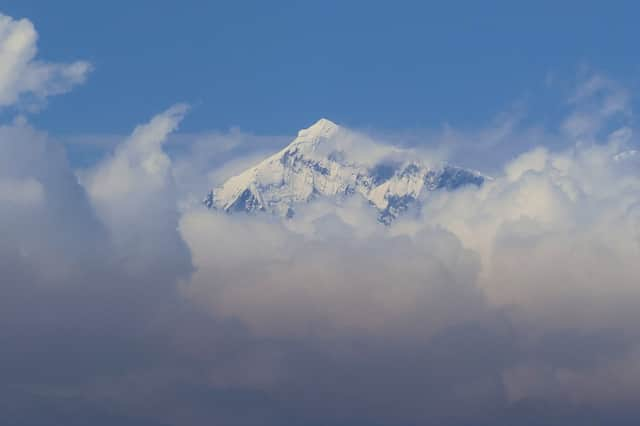
And finally... an autumn skiing record made on actual snow, and a monumental one at that. On 15 October, American ski mountaineer Jim Morrison became the first person to make a ski descent of Mount Everest’s North Face via its notorious Hornbein Couloir. The route from the top of the world at 8,849m to the Rongbuk Glacier at 6,088m – super-steep, at around 50 degrees, and also stomach-churningly exposed, running almost straight down the fall-line – had eluded some of the world’s best extreme athletes for decades. French snowboarder Marco Siffredi died trying to ride it in 2002, and in 2003 another snowboarder, Stephen Koch, had to abandon his attempt due to avalanches.
Conditions for the day of Morrison’s attempt were – to put it mildly – sub-optimal. The mountain had been scoured by wind for about a week beforehand, making the surface icy and uneven. It took him just over four hours of mostly very careful jump turns to make it all the way to the bottom.
“Some sections were smooth enough for real turns,” Morrison told National Geographic, who sponsored the expedition, “[but] others were rutted and raised four feet up and down, like frozen waves.”
Just to make life really interesting, when Morrison reached the crux point of the couloir he found only bare rock, which required him to take off his skis and rappel about 200 metres before putting them back on again. His achievement has been variously described as “a minor miracle” and “easily the most audacious ski run in history”, and for once the hyperbole seems justified.
Want the latest Scottish headlines sent directly to your phone? Sign up to our new WhatsApp channel here.
Comments
Want to join the conversation? Please or to comment on this article.