
Fancy yourself as a chatelain?
Then, should you have a mere couple of million in the bank, you could be the owner of what has been described as Scotland’s finest baronial-style castle.
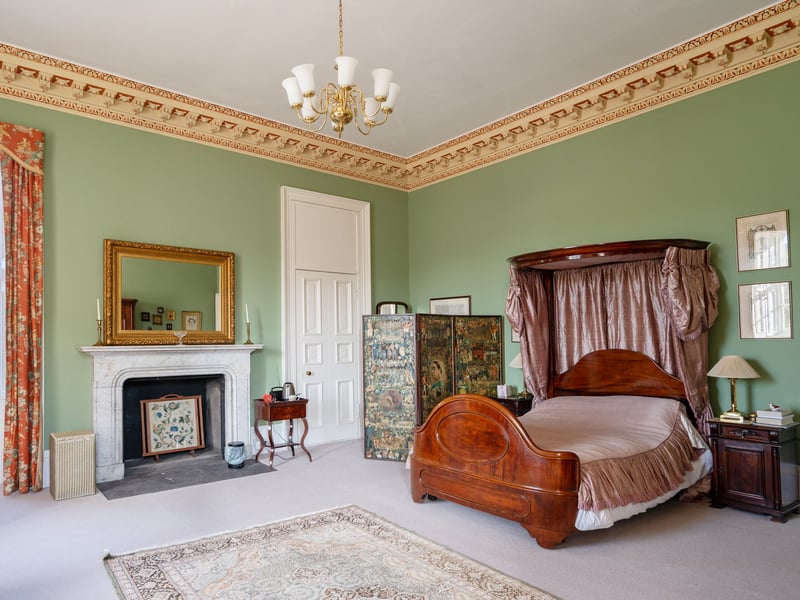
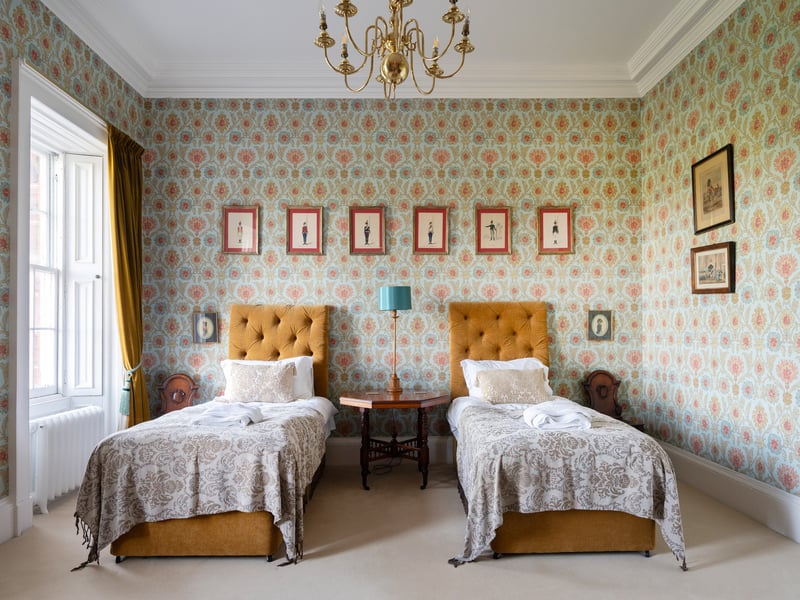
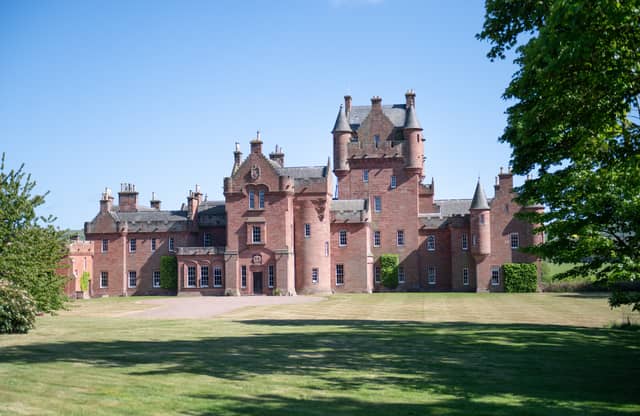
The red sandstone Ayton Castle, which is situated near Berwick-upon-Tweed and near the village of Ayton, boasts 17 bedrooms, a successful livery business and its own 600m narrow gauge railway, which offers return trips from Eyemouth Road Station to Castle View Halt.
“This is an iconic Scottish castle with land, extensive secondary accommodation and limitless potential,” says James Denne, property consultant at estate agent GSC Grays. “Ayton Castle is set in 160.56 acres of wonderful Scottish Borders country and is a fabulous example of baronial-style architecture and features a beehive type 16th century dovecot among garden terraces, parkland and attractive woodland, which together make an outstanding scenic contribution to the local landscape”.
If you’re worried about the upkeep, it also has income-generating estate cottages, gate lodges and stable flats, as well as the livery business, which is centred round the two-storey stable block and a courtyard, with room for around nine horses. This space also features several stores, horse boxes, a staff room, tack room, all weather manege - an enclosed area for training - workshop and double garage.
Ayton Castle, which is built around a medieval tower house, is also notable as it’s the only Scots Baronial structures created by prominent 19th-century Scottish architect, James Gillespie Graham (1776-1855). He usually worked in the Gothic revival style and designed Armadale Castle on the Isle of Skye, Duns Castle and the now derelict Cambusnethan Priory, among other important buildings.
Its interior schemes were created by leading Victorian era house decorators, Bonnar & Carfrae. Apparently, their style impressed American author Mark Twain, who visited in 1873, so much that he bought the dining room fireplace mantel, which is now housed in the Mark Twain House & Museum in Hartford, Connecticut.
The current owners of Ayton Castle have been there since 2014, and have made major improvements over their tenure, including partial rewiring, re-plumbing, redecoration, creating the formal garden to the southern front of the house and installing the railway, which winds through part of the grounds.
We asked owner Richard Syred to tell us more about the move.
Why was it time to sell up?
We’ve had significant changes in family circumstances.
What kind of state was Ayton Castle in when you took over?
We bought it back in 2014, and it felt tired and unloved and was desperate for a new lease of life.
What has it been like, living in a castle? Any challenges?
Living in a cast Grade A listed building has been an amazing experience, though in many ways it’s just like conventional living except with a lot more walking involved! The proportions of the castle and the estate give the place immense potential and local people are always very appreciative of the use of the grounds.
Unfortunately, Storm Arwen took its toll back in 2021 and wiped out hundreds of our trees, but there have been eventual benefits from the storm, such as the instant thinning of any overstocked areas of woodland and the opening up of new vistas.
The expenses in running Ayton are obviously not insignificant but luckily the income generated by various aspects helps to offset some of these costs.
Do you feel like you have to be a custodian for somewhere so historic?
Absolutely. As with all notable buildings one is merely the caretaker for the time being.
You've done a lot of work to the building, what were the trickiest jobs to get done?
The most challenging project was our narrow gauge railway. Obtaining the necessary permissions to go ahead with the project was a lengthy process. We had to convince the authorities that we weren’t building something akin to HS2!
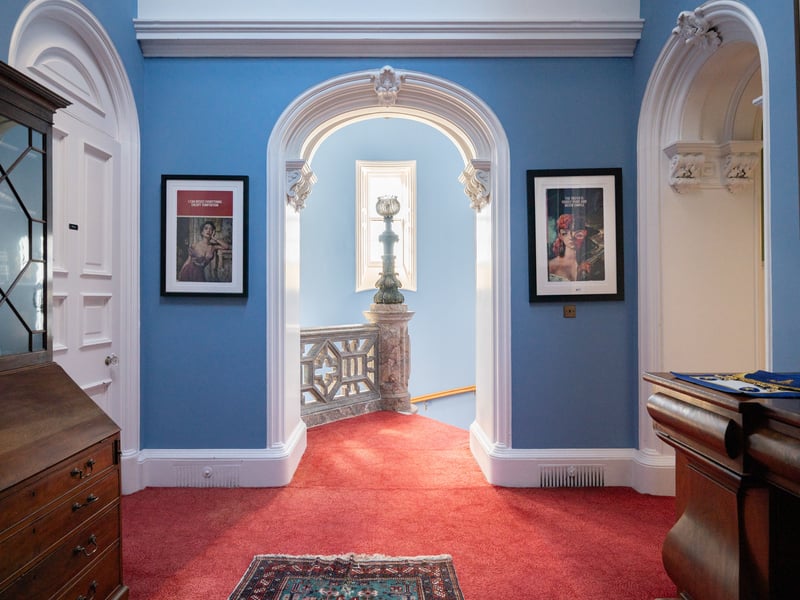
The John Bellany paintings throughout the castle are beautiful. Do you think more modern pieces can work in a historic property?
For sure. Mixing the old and the new seems to be a trend in the arts. I’d say that, generally, one complements and enhances the other.
Tell us about the architect - any unusual design features in the castle?
It’s the only example of James Gillespie Graham’s work that was done in the Scottish Baronial style, so from that point of view it’s a unique building. As a point of interest, when the current castle was built, a time-capsule - a box containing items of the day - was buried in the grounds but, as yet, it’s still undiscovered.
Any ghosts?
No, and we like to think we would have detected any, having had experience of these elsewhere.
What have been your happiest times there?
The best times have involved bringing people together in different contexts, such as our annual Christmas carols evening for the villagers, the opening of the railway and our formal garden, and our annual music weekend.
What are your guests most impressed with, when they come to stay?
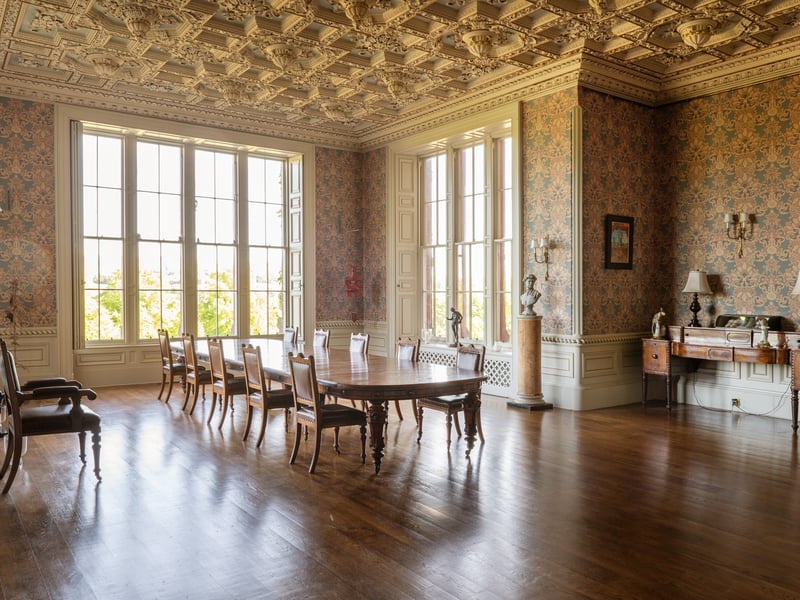
The ceilings, which are incredibly ornate and amazing, and each is different. The dimensions of the state room and the views from that space are always commented on as well.
Do you hope someone will continue the livery business?
Yes, it has been very popular in the short time we’ve had it and it would be great for it to be maintained by the new owners.
What are your favourite spaces, inside and out?
My favourite spaces are the library, the billiards room, the formal garden and the railway.
Ayton Castle is on the market through the GSC Grays Alnwick office (Tel: 01665 568310) with a guide price of offers over £3,250,000. www.gscgrays.co.uk
Read more: “I tried the £39.50 lunch in Edinburgh’s most elegant dining room and it was a proper treat”.