


The Royal Incorporation of Architects in Scotland (RIAS) has today revealed seven extraordinary new buildings as winners of the 2023 RIAS Awards.
The RIAS Awards are Scotland’s national architecture awards, and demonstrate the quality and breadth of architectural endeavour in Scotland. As the 2023 winners demonstrate, all types and sizes of architectural projects can win a RIAS Award.
Buildings are assessed by an expert jury who visit each project in person, and consider the buildings’ architectural integrity, usability and context, delivery and execution, and sustainability.
The winners of the RIAS Awards will now become the ‘longlist’ for the RIAS Andrew Doolan Best Building in Scotland Award – one of the most significant architecture prizes in the world – with the shortlist announced in July ahead of the winner announcement in November.
Recipients of the 2023 RIAS Awards are also eligible for the Royal Institute of British Architects (RIBA) National Awards.
Tamsie Thomson, chief executive at the Royal Incorporation of Architects in Scotland, said: “From simple yet elegant new homes that respond to varied Scottish landscapes, to complex higher education and corporate buildings created for some of Scotland’s world-leading institutions, the winners of the 2023 RIAS Awards demonstrate that architecture in Scotland continues to have the power to delight and inspire. Great architecture happens when architects and clients can come together with a clear focus on collaboration and quality. This year’s winners show that regardless of setting, scale and budget, it is careful procurement and partnership that creates buildings that are truly special.”
Here are the seven winners.
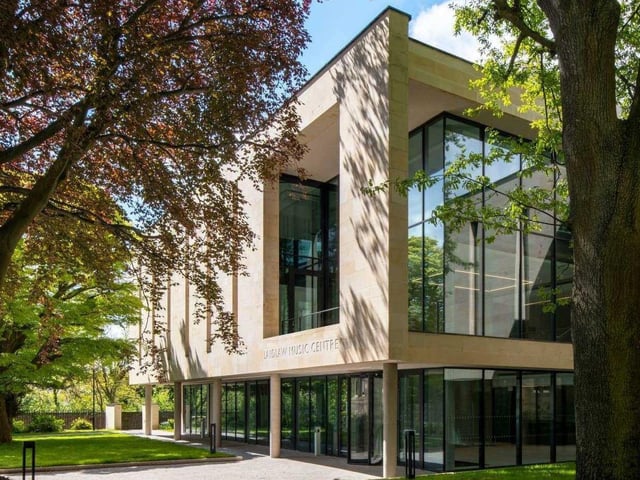
5. Laidlaw Music Centre, University of St Andrews - by Flanagan Lawrence
The first building dedicated to music in the University of St Andrews’ 600-year history creates new opportunities for young people – including students as well as those from the local community - to connect with the performing arts. The new building contains an intimate performing venue, flexible rehearsal space, and a high-tech recording facility, and creates a new quadrangle as an extension of the historic St Mary’s Quadrangle – the oldest part of the University dating to the 16th century. Within its pale sandstone walls, the oak lined recital room contains exceptional technology that allows it to be physically reconfigured and acoustically ‘tuned’ at the touch of a button in order to suit anything from orchestral rehearsals to small-scale ensembles. Photo: Paul Zanre
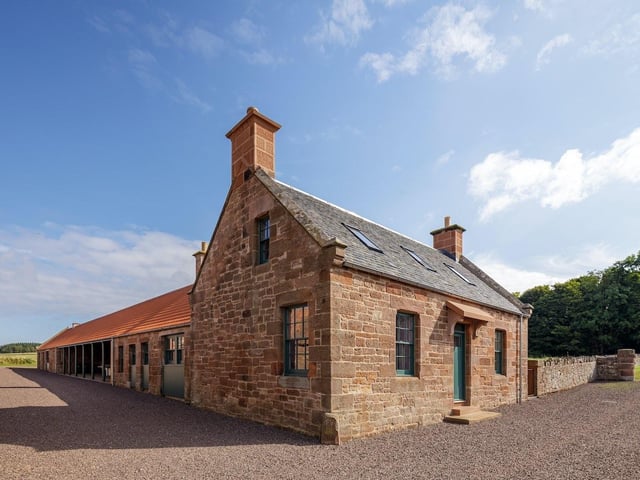
6. Papple Steading, East Lothian - by cameronwebster architects with Ian Parsons Architect
Papple Steading, originally built in the 19 th century to house cattle, store grain and machinery, and provide farm workshops, is one of the largest steadings in East Lothian. It had lain underused and derelict for years, until client George Mackintosh set about creating a museum to celebrate an agricultural way of life that is fast disappearing. The first completed phase sees the restoration and conversion of the original farmhouse and outbuildings into self-catering accommodation, in order to create income to support the museum’s creation. The extensive conservation project has carefully retained, repaired and upgraded the historic range of buildings, preserving the character of the steading and making best use of its historic fabric to secure its long-term future. Photo: Ross Campbell
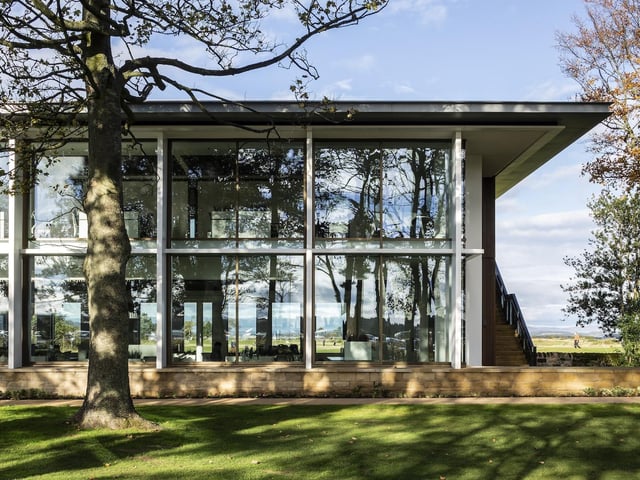
7. Pilmour House, St Andrews - by Nicoll Russell Studios
St Andrews Links Trust operates the seven public golf courses that constitute the 'Home of Golf': revered by the worldwide golfing community and cherished by local residents as a place for outdoor recreation and relaxation. The new HQ is grounded within its landscape, using highly tailored architecture to encapsulate the Trust’s values of quality, heritage and commitment to excellence. Sandstone masonry – a common material across St Andrews – is juxtaposed with lighter framed construction in timber, glass, zinc and aluminium in a pavilion-style building that presents a new public presence for the Trust and commands exceptional views over the surrounding golf courses. Nicoll Russell Studios harnessed this setting to create an office building that draws upon, and augments, a very distinct sense of place. Photo: Keith Hunter