
Why Scottish butter is fuelling a new trend in food tourism
With food tourism on the rise in Scotland, it’s local dairy products that are on the menu for visitors finds Rosalind Erskine.
What makes you choose your holiday destination? For most it’ll be practical elements such as budget, kids club options and where the weather is at its best. But for some where they choose to travel is driven by trends and sights seen on film, TV and, more commonly, social media. But would you base a trip on food, specifically Scottish butter?
The rise in people being inspired to visit Scotland because of its food and drink isn’t new. In Visit Scotland’s 2023 food and drink tourism insights they found that over a quarter of visitors (26%) visited a whisky, gin distillery, or brewery during their trip in Scotland.
Almost half (46%) of visitors participated in at least one food and drink experience whilst on their trip, rising to 62% for long haul visitors. Visiting a farm shop or farmers market was mentioned by over one in five visitors (22%). Based on a ten point scale and looking at respondents who stated nine or ten on this scale, 36% stated that experiencing locally produced food and drink whilst on their trip in Scotland was important to them. This rose to 48% for long haul visitors.
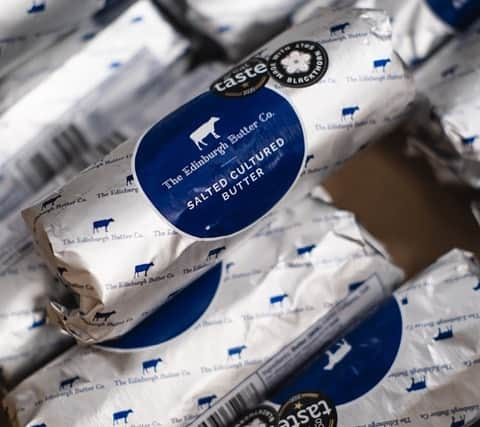

Is it any surprise that food tourism is now being driven by micro trends? Laurence Malyon, cofounder of Moment Stays doesn’t think so, explaining it’s all about social media. He said: “Through the rise of social media (particularly TikTok) food has become a primary reason to travel, not just something people figure out once they arrive. We’re seeing trips planned around viral dishes, cafés and neighbourhood spots in the same way people used to plan trips around tourist landmarks.
“Beyond trends, food plays a huge role in how people experience culture. When you eat like a local, you feel part of a place. That’s especially true in Edinburgh and Glasgow, where the food scene is independent in the local community rather than big chains. People want trips that feel immersive, and food is often the easiest and most enjoyable way to do that.”
What is it about Scottish dairy, and butter in particular, that’s inspiring people to get in a car, train or plane and come to Scotland?

Mr Malyon explained that it’s about a growing trend: “There’s something about dairy that taps into the idea of quiet luxury; everyday products done well. Butter, cheese and milk are staples, but when the quality is higher and the provenance is clear, they feel special.
“People will always be drawn to food that’s comforting and familiar, but elevated. Dairy does that beautifully. It also has a strong connection to place through local farms which makes people willing to travel that extra mile (sometimes literally) to experience it where it’s made.”

Bryce Cunningham, owner of Mossgiel dairy in Ayrshire agreed that it’s all about the local element, saying: “Food has definitely become a reason people travel now. I do it myself all the time and see it both on the farm and at the coffee house. People want to understand where food comes from, how it’s made, and who’s behind it
“Dairy fits into that really naturally - especially somewhere like Scotland where we have a climate that grows grass well. Milk, butter and cheese are really sensitive to how they’re produced and it all shows up in the final product. There’s nowhere to hide with dairy, so when it’s done well, people notice. At the same time, there’s a growing pushback against ultra-processed food, and dairy when processed minimally is about as honest as it gets.
Mr Cunningham has also seen the rise in visitors first hand, with more people coming to his farm. He said: “We are seeing more people asking to come to our farm too. What’s interesting is that they’re not just coming to buy milk - they want to understand it. Why it tastes different, how it’s produced, what makes it better. There’s a curiosity there that didn’t exist in the same way a few years ago.
“I think the bigger picture is that this isn’t really about butter or any single product. It’s about trust. People have become disconnected from food, and they’re trying to rebuild that connection by going closer to the source. Small farms are in a unique position to offer that - as long as we keep it genuine."
While travelling for Scottish butter might not be for everyone, our national food and drink is still a big draw for many. Mr Malyon said that whisky is “an obvious one for Scotland” with people visiting distilleries and whisky-led experiences but there’s another growing trend - “everyday food tourism”. He said: “People want to experience the local corner shop, supermarkets and farmers’ markets – seeing what locals actually buy week to week.
“Farmers’ markets are also a big draw in cities like Glasgow and Edinburgh, where visitors want to meet producers, try local ingredients and take a small part of that experience home with them.
“We’re seeing huge interest in local food full stop. Through partnerships with neighbourhood coffee shops and bakeries, it’s clear that guests want to support independent cafés and specialty coffee roasters, not just tick off the highest reviewed spots.”
How does fine dining and our growing number of Michelin Star restaurants factor into the visitor experience and desire to visit? Mr Malyon said: “For us, it’s less about Michelin stars and more about the places locals genuinely love. Those are often the experiences guests remember most – the bakery round the corner, the café they return to twice in one weekend – or the neighbourhood favourite they discover by accident.
“Food tourism doesn’t have to be overthought. Sometimes the most memorable moments come from something simple, done brilliantly, in the right place."
Mr Cunningham agreed saying: “We’re seeing similar trends across other categories.Coffee is a big one - people travelling for roasteries and origin stories. Whisky has of course always had that pull, but now it’s more about craft and process in other areas of food too. Even things like sourdough and fermentation are becoming part of the travel experience outside of dairy.”
Comments
Want to join the conversation? Please or to comment on this article.