
‘We’ve talked about the St Andrew’s problem for years’ - Scots encouraged to unite around charity and community this 30 November
After the tartan army’s popularity in America this summer, a group of Scots are calling for us all to participate in St Andrew’s day for the first time in hundreds of years.
This summer will always be awash with memories, and memes, of the tartan army travelling en-mass to America for Scotland’s first men' s world cup games in 28 years. This led to viral videos, bagpipe-led matches to football and baseballs matches and the adoption of ‘cone-ing’ statues. With us now firmly into winter with its dark nights and freezing days, a group of Scots wants us to continue that legacy of friendship, community and charity - the tartan army raised over £20k for children’s charities in Boston - by encouraging us all to participate, observe and celebrate St Andrew’s day 2026.
The tartan army’s antics and reception led to actor Isla Fairfield’s viral social media call to action on us “sleeping on St Andrew’s day”. After which, she teamed up with, amongst others, Craig Ferguson, who made headlines this year after his walk across America for mental health; food historian Peter Gilchrist and Lindsay Middleton; Grant MacLeod, The Munro Bagpiper; tour operator Alistair Heather; food and drink writer and influencer Julia Bryce; travel influencer Michelle Catherine and whisky historian Macon McCormack to come up with ideas on how to wake us up to St Andrew’s day.


“We’ve been talking about the St Andrew’s problem for years,” said food historian Peter Gilchrist. “That problem is we haven’t really celebrated St Andrew’s day since the 1600s because the reformation got rid of all religious feasts. There probably were rituals and customs and foods that were observed 500 years ago. Other quarter days and Christmas days were kept on because they were important for farming, government or financial institutions.
“St Andrew’s day isn’t important to anyone right now. For years there was chat about how to reignite St Andrew’s day but it felt like there wasn’t a focus or a need when we could just focus on Burns night or Hogmanay. Things where there is a win. The proposition now, after the tartan army, is there’s such a focus on Scotland and I think Scottish people feel quite esteemed that an entire country, that’s not ours, is singing our songs. We tend to brush it under the rug a bit as we don’t like to talk about ourselves but I think that has had a seismic impact on conversations people are having on what it means to be Scottish.”
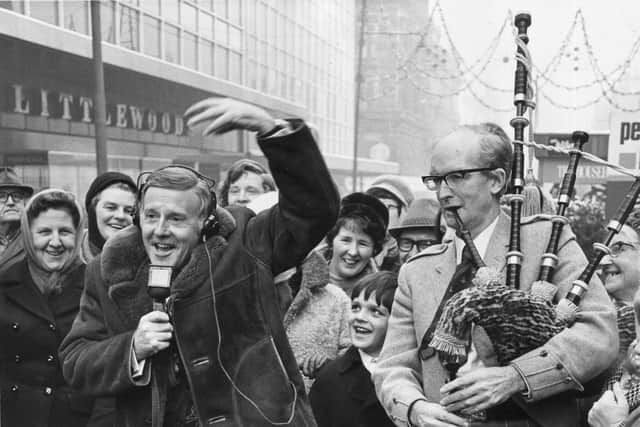
What started as a viral social media post led to discussions on how to make St Andrew’s day our version of St Patrick’s day. Peter explained why this has since been abandoned. He said: “For the last four or five months I’ve been talking to Irish historians and chefs to work out what we should be doing, and everyone said ‘no don’t copy St Patrick’s Day.’ In particular Irish food historians and influencers said it doesn’t actually connect to the people, it’s big outside of Ireland and it’s a bit of a p*** up in Ireland but actually Imbolc, which was made a holiday two years ago in Ireland, is what you should look at for a blueprint. It’s more like a matriarchal festival that focuses on food and about real ritual customs. No one is wearing a big Guinness hat.”
Speaking of headwear, Peter said: “I don’t want to see Jimmy hats. I have more patience for the cone hats than the Jimmy hats because the cone is real. It’s a bit of a joke, and it’s not romanticised or glamourised, it’s real - at least for Glasgow anyway. It doesn’t represent the entirety of Scotland. If Boston started every St Andrew’s day putting cones on their statues. Great. It’s working class, it represents real Scotland.”
With all of this in mind the group sat down to plan what a St Andrew’s day celebration in 2026 might look like, and decided on three pillars: community, culture and charity. On these pillars Peter said that the community aspect is all about bringing people together to help alleviate the current mental health crisis around isolation and loneliness.
The cultural aspect of St Andrew’s day is, he said: “the antithesis of St Patrick’s Day, maybe even Burns day as we want to focus on what do you really do, as a Scottish person. Football matches, wild swimming or going to the pub - the things that make you Scottish, the things that you actually do- do them together as a community.”
Finally charity, which is a link to St Andrew’s days from the past. Peter explained: “There used to be this thing called the Scots box which was, on St Andrew’s dinners, everyone would give money to the Scots box and that money would be given to the poor. There’s a long history of charitable giving on St Andrew’s day and actually in 2026 a charity, especially a young person's charity or children’s charity could use the money as they’re under more strain than ever.”
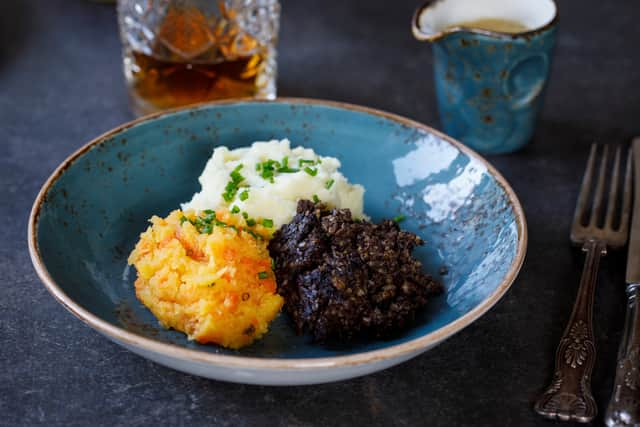
As for what’s on the menu, Peter said it definitely doesn’t have to be haggis, neeps and tatties. He said: “Haggis, neeps and tatties was a menu that was developed in the 1920s. It didn’t exist as a trio before then or if it did, it wasn’t a set menu. Part of what we want to do with this is really give people the opportunity to make family recipes; make your lentil soup or doughballs. What would your granny make today? Use it as an opportunity to look at our rich history of food in this country that’s not just about haggis, neeps and tatties but maybe gives a bit of space for other things. Start your day with a morning roll, go out and try your local restaurant, or go to your local butcher, eat lamb, do the things that you want to make a ritual for St Andrew's day. If that is haggis, neeps and tatties then eat that but there is so much more that we can do.

“We want to give everyone that opportunity to participate in a way that is right for you. Things will come from that. Communities will join together and begin to do the same thing every year and in 50 years time or 100 years time- it has been 100 years since haggis, neeps and tatties was invented- what could be the haggis, neeps and tatties (version) of St Andrew’s day? You don’t get there unless you let the community find it themselves. You just end up with the same Scotland tartan shortbread tin on repeat and that’s not good.”
If you do decide to observe, participate and celebrate St Andrew’s day on 30 November, do what makes you feel Scottish; invent your own rituals and customs and enjoy some time with loved ones. If, what started way back in June as a celebration of Scotland and coming together no matter what the economic or political landscape, can continue on for years to come; what a legacy that’ll be for all of us.
Comments
Want to join the conversation? Please or to comment on this article.