
Revealed: The best and worst places in Scotland for food hygiene pass rates
The local authorities across Scotland with the highest pass ratings for their food hygiene inspections have been revealed, thanks to a report from online training provider High Speed Training, marking 15 years since the introduction of the Food Hygiene Rating Scheme.
- Ranked 1st in Scotland, South Ayrshire has the highest pass rate of 99.00%, although this was a decrease of -0.81% from 2024.
- Highland, ranked 32nd, has the lowest pass rate in the country at 77.88%, which was a slight improvement of +0.04% from the previous year.
- North Lanarkshire, which is now ranked 7th, had the biggest improvement in ranking, moving up 10 positions from its 2024 rank of 17th.
- The biggest drop in ranking was experienced by Angus, which fell 12 places from 12th in 2024 to 24th.
- The most significant improvement in pass rate was seen in the Shetland Islands, which improved by +3.60% to achieve a pass rate of 78.31%.
- Angus also saw the biggest decrease in its pass rate, which fell by -3.94% to 91.30%.
- Glasgow is ranked 27th with a pass rate of 88.47%, a decrease of -0.82% from 2024.
- Edinburgh is ranked 26th with a pass rate of 89.68%, representing a decrease of -0.63% from the previous year.
- View the report with interactive map
- Infographics download
The report, which analysed Food Standards Agency (FSA) data for over 240,000 food businesses across England, Scotland, Northern Ireland and Wales, found that in Scotland, the average pass rating across all food establishments in 2025 was 92.2%.
A similar report run in 2024 by High Speed Training calculated Scotland’s average pass rating at 92.5%, showing that food hygiene standards have dipped very slightly across the country.


The top spot in Scotland went to South Ayrshire, with an impressive pass rate of 99.00% from over 500 premises. South Ayrshire has consistently held the top spot in previous reports.
The most significant improvement in pass rate was seen in the Shetland Islands, which improved by 3.60% from 2024. In terms of rankings, North Lanarkshire was the biggest climber, moving up 10 positions to 7th place.
The biggest drop was experienced by Angus, which fell 12 places in the rankings. It also saw the biggest decrease in its pass rate, which fell by 3.94% from 2024.
The report showed that the lowest pass rate in Scotland went to Highland, with a pass rate of 77.88%, though this was a slight improvement on its 2024 score.
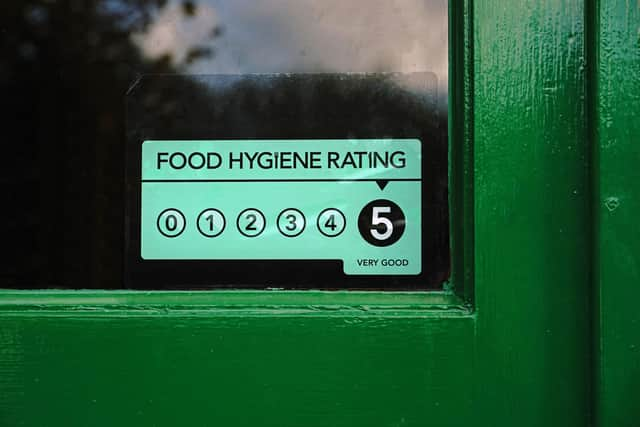
Edinburgh just edged the battle of the major cities, with a pass rate of 89.68% to Glasgow’s 88.47%, placing them in 26th and 27th spot respectively. Both cities saw a small decrease in their pass rates from 2024.
Of the local authorities with over 1000 premises, Fife performed the strongest, with a pass rate of 96.79%, placing them 5th in the rankings. On average, local authorities across the country saw their pass rate fall by 0.28%, and 10 out of 32 local authorities secured a pass rate of 95% or higher.
The Food Hygiene Information Scheme (FHIS), evaluates businesses on their food hygiene practices. After an EHO has reviewed the safety systems, observed food hygiene in practice and spoken with the staff, the businesses are given either: Pass - The business meets the legal standard of food hygiene, or: Improvement Required - The legal standard of food hygiene was not evident during the inspection. The business will need to improve certain areas to then qualify for a pass.
As in England, it is not required by law for a business to display the rating they receive. However, the FHIS is available for customers to view online.

Dr Richard Anderson, Head of Learning and Development at High Speed Training comments: “Food safety and robust hygiene practices should be of paramount importance to food businesses, and to the customers who use them. 15 years have passed since the launch of the Food Hygiene Rating Scheme, and its place in the industry is as vital as ever.
"These ratings are a direct reflection of how safely and hygienically that establishment operates, and we urge businesses and customers to take them seriously. “For businesses that perform well, a high rating is a real selling point. However, establishments with a low hygiene rating can be extremely off-putting for customers, which ultimately have a significant impact on reputation and profitability.”
“Our report shows that, on average, standards remain high across the UK, and have improved from 2024. This commitment to correct food hygiene training for staff, alongside robust food management procedures and everyday good practices are crucial to keep performing at high standards.
“We would also urge customers to check the food hygiene ratings of establishments they wish to dine at, so that an informed call as to whether you eat there can be made.”
To view the report in full, and to see how your area compares to others, please visit www.highspeedtraining.co.uk/hub/food-hygiene-ratings-report.