
Giant Scottish strawberries may look delicious - but the changing climate is a flashing red light
This year’s berries season may seem like a boon - but it comes with complications, writes Iain Clunie.
This year’s berry season has come early - far earlier than growers expected.
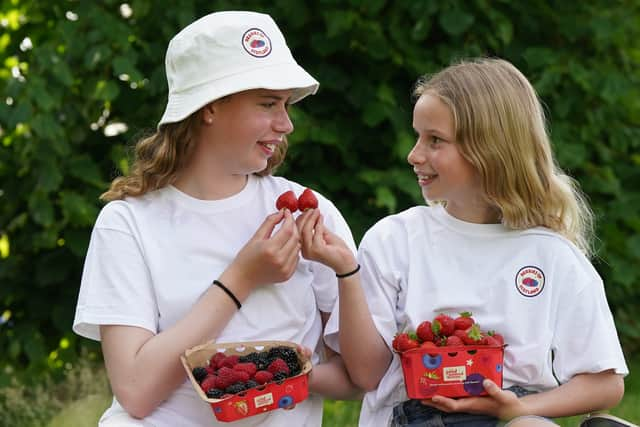
Across Scotland, an unseasonably warm spring has accelerated the development of soft fruits, pushing ripening windows forward by as much as two weeks in some regions. For consumers, that might mean local strawberries on shelves a little earlier than usual. But for the growers behind those berries, it’s a flashing red light.

What we’re witnessing is more than a one-off anomaly. It’s climate change in real time. While the immediate disruption is logistical, affecting harvesting windows, labour scheduling and delivery slots, the long-term implications are deeper and more existential.
Scotland’s soft fruit sector is worth £197.8 million a year to the Scottish retail market and supports hundreds of rural jobs. But its future is becoming harder to predict, let alone plan for.
Warmer winters and earlier springs are now regularly altering the growth cycle. Inconsistent temperature patterns can affect berry size and sugar development, while wetter winters and springs are fuelling the spread of pests and diseases once considered uncommon in Scotland.
This year’s warm spring may have brought excellent pollination conditions and unseasonably early, accelerated growth for many berry growers. In the short term, this can seem like a win.
But Scotland’s natural environment is a finely balanced system, and it can only absorb so much disruption before the strain starts to show. Earlier ripening can clash with labour availability, affect fruit quality, and narrow the crucial window for harvesting and packing. What benefits growers one year might create bottlenecks the next.

Farmers and growers are incredibly resilient, but their tools for managing such volatility are being stretched to the limit. Many say they can no longer rely on the traditional growing calendar. With conditions shifting unpredictably year to year, they are increasingly being forced into reactive decisions around harvesting, labour and logistics.
And yet, while climate change is clearly a threat, it also brings opportunity.
Scotland’s natural environment still gives us a climate advantage. While parts of southern Europe and even England may struggle to maintain consistent soft fruit production due to extreme heat and water stress, Scotland could become an increasingly important growing region. But that potential will only be realised if we invest now in adaptation and resilience.
That means innovation. Research institutions like the James Hutton Institute are pioneering climate-resilient berry varieties, such as raspberries bred to need less water, labour and fertiliser, and are helping farmers adopt techniques such as remote monitoring and precision irrigation. These aren’t futuristic concepts. They’re already being trialled and already making a difference.
It also means aligning with the food and drink industry’s wider net-zero goals. Scottish producers are starting to invest in low-carbon technologies, from renewable-powered cold storage to reduced-emission logistics, and rethinking how they use energy, materials and waste. These aren’t just environmental changes. They’re strategic decisions that position businesses to meet rising expectations from retailers and consumers.
But farmers can’t do it alone.
From local community growers supplying farm shops and markets to the big-name producers putting berries on supermarket shelves across the UK, all of Scotland’s growers are feeling the pressure of a changing climate. All of them play a vital role in feeding the nation, sustaining rural jobs, and keeping our shelves stocked with world-class summer fruits.
To thrive as a nation of berry growers, we must ensure every producer – large or small –has the tools to adapt. That means equal access to innovation, technology and funding. It may require greater publicity around available support, longer funding windows, hands-on help with applications, and tailored business advice.
The pace of climate change must be matched by a step change in how we support the food system. That includes long-term investment in research, infrastructure and practical guidance, as well as a culture of collaboration that lifts the whole sector.
And above all, it means recognition from retailers, policymakers and the public that backing Scottish berries is an investment in our food security, our rural economy, and our net zero future.
This year’s early berries are a gift of summer, but also a signal. We are at a critical juncture. The climate is shifting. The pressures are mounting. But with the right tools and commitment, Scotland’s berry growers can adapt, innovate and lead.
The heat is on. So is the opportunity.
- Iain Clunie is the programme director at Scotland Food & Drink Partnership’s Net Zero Commitment.
Comments
Want to join the conversation? Please or to comment on this article.