
Calls for 'game changer' lateral flow tests which detect drink spiking to be rolled out in UK
They were part of everyone’s life during the Covid-19 pandemic, but now lateral flow tests could be used in UK pubs and clubs to test for drink spiking.
A company which has been behind drinks spiking tests for 24 years has created a new test kit that can rapidly detect if a drink has been contaminated within a matter of minutes.
SureScreen Diagnostics, which has been making drink spiking test kits since 2001, has developed the Multi-Lined Rapid Beverage Test Cassette (MRBT), based on the same technology as the lateral flow test used widely during the pandemic.
The firm, whose tests are already being used in Australia, hope they will be rolled out widely in the UK in order to deter would-be spikers.
The world-first lateral flow spiking test enables rapid, highly accurate detection of substances commonly used in drink spiking, including GHB, Ketamine, and 22 benzodiazepines including flunitrazepam (Rohypnol), within licensed venues.
Manufacturers say it will deliver rapid results without false positives from common drinks such as tonic water, certain lagers, red wines, some fruit juices and dairy within a beverage or cocktail. The MRBT’s Limits of Detection and sensitivity is more than 10 times greater than earlier detection methods, particularly for Ketamine and Benzodiazepines at lower concentrations.
The test works much like a double lateral flow, wherein a small amount of liquid - three drops - from the potentially spiked drink, are placed into the extraction tube and dropped onto the test wells. These will show results for GHB on one side and 22 different benzodiazepines and ketamine on the other.
A control line will appear and, if the drink has been spiked, a purple colour will appear on the side for GHB and no line means a positive for the benzodiazepines and ketamine - the opposite of a Covid positive. The results show in a matter of minutes.
SureScreen is advocating for the device to be used by trained bar staff and security if they see someone put something in a drink or if a customer comes to them either suspecting their drink has been tampered with or feels unwell.


Colin Mackie, whose son Greg Mackie died aged just 18 in a suspected drink spiking incident in 2017, founded the charity Spike Aware UK along with his wife Mandy.
Mr Mackie has met with Troy Stewart, managing director of SureScreen Diagnostics and is calling for the tests to be used in bars and pubs across the UK.
He said: “It’s going to have to go through governments for testing but this could be a game changer. They've got the spiked drink, they've got the test there, along with CCTV - that's the evidence for the police.”
Mr Mackie warned that people of all age groups are at risk of spiked drinks.
He said: “ Older people in particular don't think it's going to happen to them. There has been a rise in people over 40 being spiked as, if someone can get access to a mobile phone, they can usually get access to bank details.
“I'm hoping that Scotland follows on from England and Wales where spiking is becoming a standalone offence. While there's no prosecutions, there's no deterrent. But in the long run, I want spiking to be just socially unacceptable.”
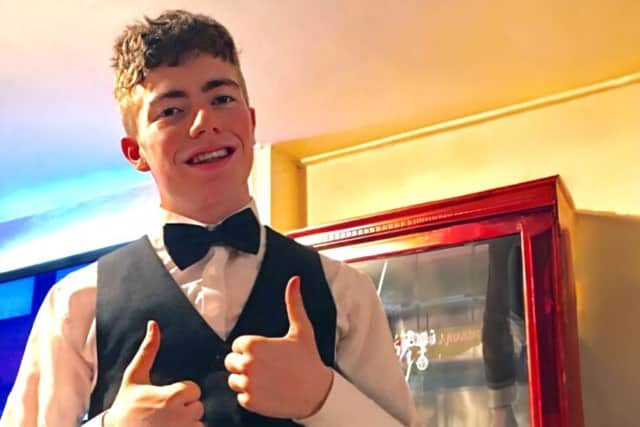
Mr Stewart and Mr Mackie are hoping that the UK and Scottish governments will follow suit - and are in dialogue with both - as cases of drink spiking have been steadily rising.
Mr Stewart said he believes these tests will empower the public and deter would-be spikers.

He said: “Drinks spiking remains grossly underreported - that’s mainly due to the lack of forensic evidence and the SureScreen Rapid Beverage Test Cassette addresses the gap by equipping bar staff and security personnel with a rapid detection tool. You can’t quantify how many would-be offenders that the device would deter with effective campaigning or signage within the venue. Not only that, it empowers patrons and guests to start calling out on spiking incidents and once empowered, they’ll become more vigilant knowing there’s a device behind the bar, on request.”

A Scottish woman who has been spiked, but wishes to remain anonymous, told The Scotsman the technology is a “comfort that spiking is being taken seriously”.
She said: "I was spiked a few years ago, and I count myself lucky that I was out with friends who were able to get me home safely. It was my first drink of the night, so it was apparent that I wasn't drunk and that something else had happened.
“I completely blacked out, and was told that I was stumbling all over the place in the pub. I don't remember anything at all. I felt ill for days afterwards as well.
“I had finished my drink and it was probably in the glass washer before it was clear what had happened, and I can only assume no one else saw anything as no one stopped me from drinking it.”
She added: “I do think (the test) has potential though, and it's a real comfort to know that someone, somewhere is taking the issue of spiking seriously, rather than something that women just have to put up with. Even if it helps just one person, and helps catch and stop the person who did it, then it'll be worth it."

A spokesperson for the Nighttime Industries said that drink spiking requires “urgent attention.”
He said: “We welcome the Scottish Government’s focus on tackling drink spiking, a serious issue that requires urgent attention. However, there are significant challenges with the proposed testing mechanism. While a variety of tests exist, they primarily detect specific substances and do not account for all cases, some where alcohol itself is used as a spiking agent. Additionally, given the wide range of methods used to administer or spike a person, many incidents may fall outside the scope of this testing.
“A thorough and evidence-based approach is crucial to ensure that any testing mechanism introduced is both effective and fit for purpose.”
Comments
Want to join the conversation? Please or to comment on this article.