
Dog Greetings: Vet reveals what your dog's welcome home greeting means, from exitement to indifference - and how to react
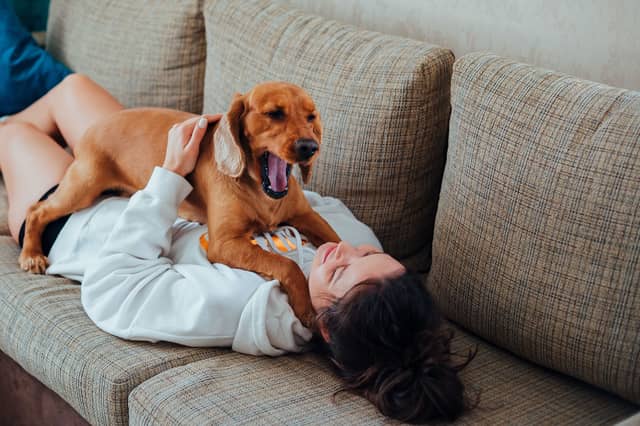

If your pet ignores you completely, it might actually be a good thing.
The way your pet reacts when you walk through the door might reveal more about your relationship than you think, according to animal experts.
Is your dog so overjoyed to see you that they zoom around the house in excitement? Do they bring you a ‘gift’ – or barely even acknowledge your return? How your pet greets you after time apart can reveal much about their emotions, and even your bond with them.
To decode your dog’s reactions TrustedHousesitters – the global pet-sitting community dedicated to keeping pets happy at home – has teamed up with vet Dr. Rebecca MacMillan to decode what your pet’s reactions really say about your relationship, and how best to respond to keep your time apart (and return home) healthy.
Over-the-top excitement: Jumping, barking, running in circles, or even a little accidental pee?
Does your arrival home call for fanfare from your beloved pet? This is a telltale sign of strong attachment and pent-up energy. “Your arrival home can send their excitement into overdrive, especially if you greet them with a high-pitched voice and enthusiastic body language,” says Dr. MacMillan. “Some dogs will accidentally pee when they are overexcited, especially puppies and young dogs.”
How to respond: Keep greetings low-key to help prevent overexcitement. A calm entrance and delayed affection can encourage more relaxed behaviour over time.
Shy or bashful behaviour: Head down, eyes averted – but a wagging tail?
If your usually confident pet suddenly comes over all bashful upon your return, this could simply be their way of saying, “I’m happy you’re home” – but politely.
“Some pets are a bit more subtle, but just as pleased,” explains Dr. MacMillan. “Acting shy or bashful may even be a form of submissive behaviour. Your [pet] sees you as their leader, and they are greeting you in a respectful manner.”
How to respond: Get down to their level and use a soothing tone to reassure them.
Bringing you a toy or gift: A slobbery tennis ball, perhaps?
Dogs often bring toys as a request to play. “It’s their way of trying to engage with you immediately,” says Dr. MacMillan. “They may have even been a bit bored while you were out and are now ready for a play session or some exercise.”
How to respond: If it’s safe, accept the offering – even if it’s not exactly your idea of a welcome-home gift. MacMillan elaborates, “The way you react can also reinforce this behaviour. If they know that bringing you a toy is likely to elicit a good response from you, they will continue to do it each time.”
Total indifference: They barely glance up when you walk in
Believe it or not, this is often a good sign. “It shows that they don’t consider your arrival and departure as a big deal and that they are happy in their own company,” says Dr. MacMillan. This means behavioural issues like separation anxiety are less likely to affect them.”
However, if the behaviour is new or accompanied by other signs of depression, it may warrant a check-in with your vet.
How to respond: Don’t take it personally. Let them come to you on their terms.
Vocalisations: Barks and whimpers – what are they trying to say?
Are you greeted by a noisy pet? Each sound is a communication attempt. Dogs may bark, whine, or howl to release pent-up emotion.
How to respond: Pay attention to the tone and body language accompanying it. Happy tail wag? They’re excited. Pinned ears or pacing? They may need some comfort or space.
Comments
Want to join the conversation? Please or to comment on this article.