
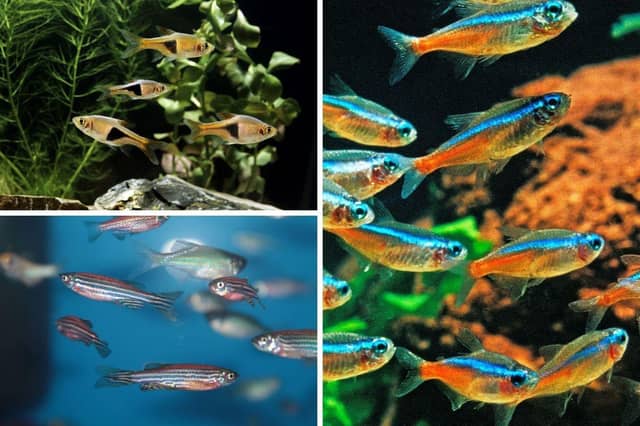

From garden ponds filled with Koi Carp to the humble goldfish bowl – the UK is a nation of fish lovers.
And the Pet Food Manufacturers’ Association (PFMA) say there are an incredible five million indoor fish tanks in Britain.
There’s plenty of choice when it comes to adding fish to (well prepared and correctly set up) home aquariums, with pet shops offering a bewildering range of colourful and interesting finned friends.
Schooling fish are particularly popular – fish that are only happy in a group of the same species, travelling around your tank in colourful packs.
As a general rule you should make sure to have at least six of these fish in your tank at any one time – and be aware that some species thrive when there’s a particular proportion of males to females (if there’s any doubt ask an expert at your local pet shop).
So, here are 10 of the best species of schooling fish for aquarists (people who maintain aquariums).
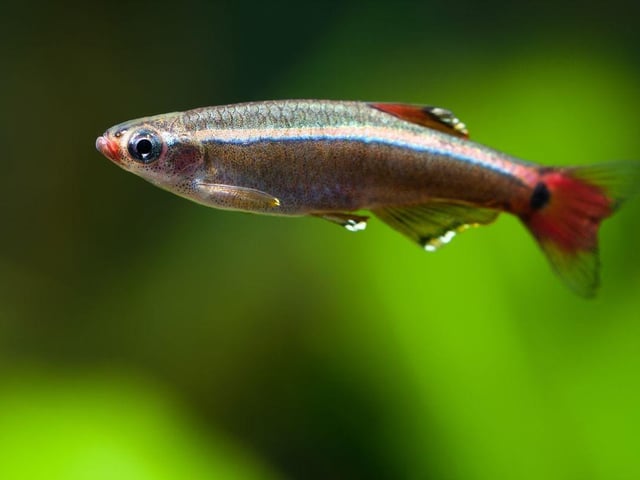
5. White Cloud Mountain Minnow
The evocatively-named White Cloud Mountain Minnow gets its moniker from where the originate - the picturesque White Cloud Mountain region in China. They school similarly to the Tetras but are a slightly more unusual aquarium resident. Photo: Canva/Getty Images
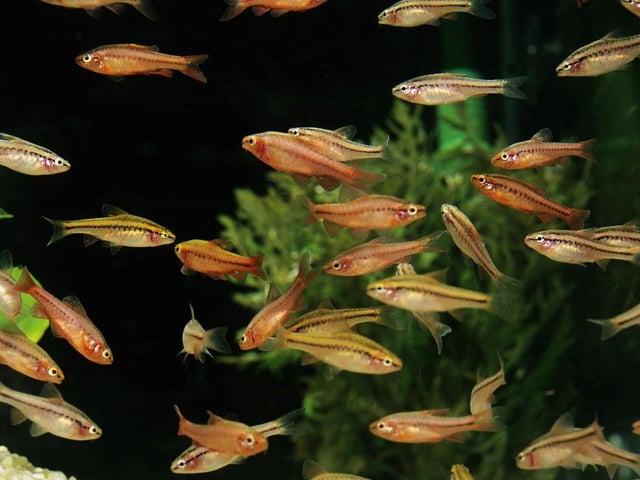
6. Cheery Barb
Not all Cherry Barbs live up to their name - only the male is deep cherry red, compared to the female's browny red colour. They are a classic example of a schooling fish that require a particular ration of males to females - one boy fish to every two girl fish is perfect. They are very easy to care for. Photo: Canva/Getty Images
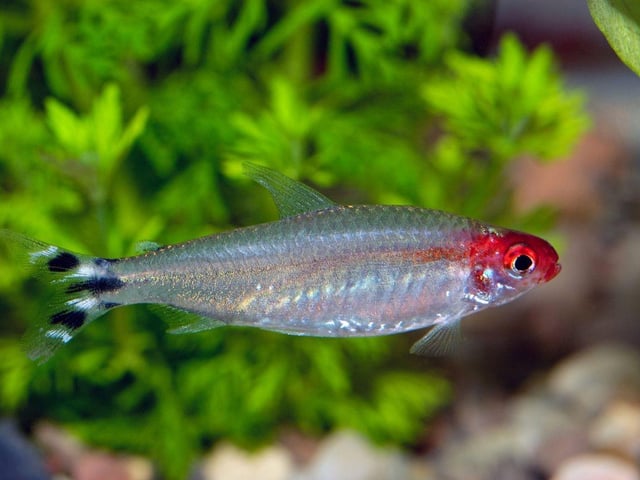
7. Rummynose Tetra
When it comes to schooling fish it's really hard to beat a Tetra. The Rummynose Tetra, from South America, is a case in point - flashing silver as they swim around your tank. The eye-catching red mark on their head makes them an attractive resident. Photo: Canva/Getty Images
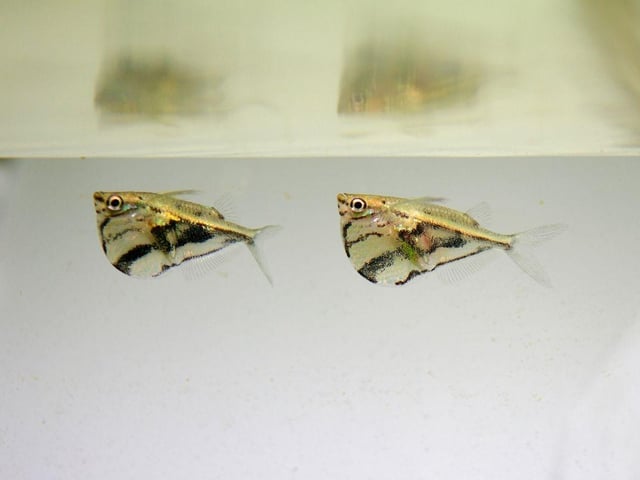
8. Hatchetfish
If there's not much happening at the top of your tropical tank then a school of Hatchetfish will happily fill that space. These pretty fish swim close to the surface, but watch out as they also enjoy jumping out of the water. This means they are only an option if your aquarium is securely covered. Photo: Canva/Getty Images