
Isuzu D-Max V-Cross review: Still here, still tough and better than ever
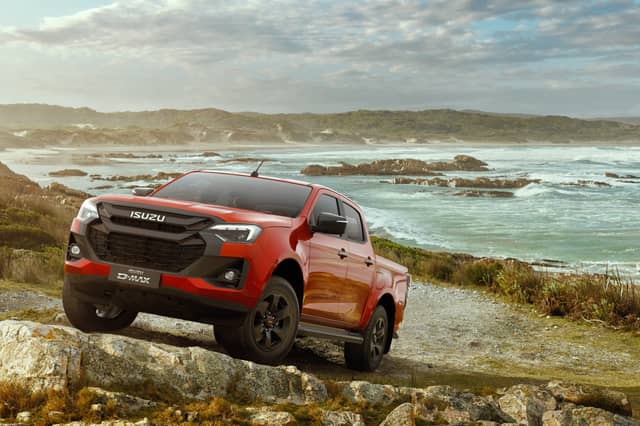

Now a UK exclusive, the Isuzu D-Max adds creature comforts to their reliable pick-up
The pick-up market in the UK continues to strong — up 3.3% year-to-date in 2025 (31,731) v 2024 (30,719) — despite political decisions and tax changes introduced in April. And these are topics which are likely to raise their combined heads again in various forms when Chancellor Rachel Reeves stands up to deliver her Budget on November 26. But despite the new challenges, Isuzu continues to fly-the-flag for the sector. In fact, nowadays Isuzu only sells its D-Max pick-ups in the UK. Hence the reason I found myself driving the latest, updated version of the D-Max V-Cross Double Cab.
Such is the company’s comprehensive approach to the sector that whatever you’re looking for in the shape of a pick-up, Isuzu will have something that fits the bill, be it two-wheel drive or 4WD, or single, extended or double cab. You name it, basically they’ve got it. Prices start at £27,755 for the entry-level utility 2WD single cap. That price of course, as is always the case in the commercial vehicle world, excludes VAT, which, at the current 20% adds an additional £5471 to the overall price.
Engines and loads
Choose a D-Max and you get the Euro 6D compliant 1.9 litre turbo diesel 4-cylinder engine which produces 162bhp and 360Nm torque. It’s a utilitarian chunk which simply delivers the raw requirements to ensure everything a pick-up is essentially designed for. It’ll transport up to five people, can tow, plus carry loads of kit on its flat deck.
The tow and load figures though vary. All except the RWD single cab variant can tow a 3.5 tonne braked trailer (RWD = 2.5 tonne). Double-cab versions can carry 1100kg fully loaded whereas the 4×4 single-cab manages 1205kg. The 4×2 single cab in contrast can cope with 1190kg, with the extended cab capable of carrying 1140kg.
What’s it like to drive?
I had the keys to the D-Max V-Cross with its six-speed auto ‘box. Start the engine and you’re left in no doubt this is a diesel engine, complete with a traditional cold-temperature rattle. Thankfully it isn’t long before, as the temperatures rise, the noise abates. But don’t expect a serene, quiet cabin: this is, after all, a workhorse of a vehicle.
That said, the latest six-speed auto is slick between the ratios — Isuzu say it’s 25% quicker between ratios than the gearbox it replaced — and on the road it certainly makes for an unruffled drive. Worth mentioning the auto ‘box does add a tad over £3k to the list price.
Every D-Max is fitted with leaf springs, always the best for carrying loads. Plus here the Isuzu rear suspension boffins have ensured they also deliver a ride which doesn’t resemble something akin to a buckin’ bronco as you negotiate poor road surfaces. Instead the D-Max stays well planted and smooths out the imperfections.
All four trim levels — Utility, DL20, DL40 and V-Cross — now benefit from a reversing camera as standard. The DL20 supplements this with rear parking sensors, with DL40 and V-Cross adding front sensors. The latter two also benefit from a rear radar, which protects from oncoming vehicles reversing out of a parking space with Rear Cross Traffic Alert and Braking.
Performance and fuel figures
It’s a diesel pick-up, so set your expectations realistically accordingly. It’ll cover 0-62mph in 13-seconds, max out at 112mph, and return 31.4mpg with the auto ‘box (manual 32.5mpg)
Interior
The cabin is actually a comfortable place to be. In fact, it’s in the cabin where the most obvious improvements have been made. Those changes are even more apparent in my V-Cross, which is Isuzu’s most civilian-orientated trim version in the UK. There’s acres of space, not only in the front — where the driver’s seat has an eight-way electrically-adjustable function (six-way manual in the two lower-trim Utility and DL20 models) – but also the rear section of the cabin, allowing room for occupants to stretch out. Rear occupants benefit from the extra 30mm added to the wheelbase of the latest model. V-Cross and DL40 get leather upholstery, while Utility and DL20 get cloth and ‘High Grade Cloth’ respectively.

There’s a 9in infotainment system which features wireless CarPlay and Android Auto. Across the D-Max range, all models also benefit from Bluetooth connectivity, a DAB radio, and both front and rear USB C ports. Cubby-holes abound — there are 10 cupholders located around the cabin, six in the front, four in the rear —and there’s lots of stowage compartments tucked round the cabin. It’s actually about as near a “car-like” interior you can find in a pick-up.
What else is new?
The latest Isuzu D-Max gets a redesigned tailgate, plus the rear bumper now has an integrated step making it easier to access the load area. And exclusive to the V-Cross is a new namesake decal across the rear panel.
There’s also a bold new radiator grille design, aimed at adding to its “dynamic and commanding road presence”, plus a new sleek headlight design. Both DL40 and V-Cross get new-design Bi-LED headlights with integrated LED daytime running lights and indicators, plus LED front foglights.
Is demand for pick-ups still high?
While the allure most definitely remains they certainly, unfortunately, don’t have the same financial appeal. Since April this year, most double-cab and extended-cab pick-ups in the UK were reclassified as cars for tax purposes, rather than commercial vehicles. This major change, which followed a Court of Appeal ruling, meant significant tax increases for businesses and employees who use them.
Such were the increases following the changes to the Benefit-in-Kind Tax that a higher-rate taxpayer could see their annual tax liability increase by more than £7000.
But Isuzu pick-up sales though remain strong in the UK, with 6574 units sold in 2024. Last year the Isuzu D-Max had an average sales mix of 41% ‘adventure’ buyers and only 27% business. The remaining 32% fell into the “all-purpose” category. The double-cab accounted for 82% of sales. This year the V-Cross trim level was forecast to account for a 45% share of sales.
All that said, there’s no denying pick-ups are still a thing.
Pricing
The range starts with the Utility 4X2 Single Cab which is priced from £27,755. The DL20 range starts at £33,255 for the 4x4 Extended Cab, while the DL40 is priced from £36,755 for the 4x4 Double Cab. The manual V-Cross 4x4 Double Cab starts at £38,255 rising to £40,900 for the automatic version. (All figures quoted are Commercial Vehicle OtR prices, and subject to 20% VAT).
Every D-Max comes with a 5-year/125,000-mile warranty and a 12-year corrosion warranty. And in the unlikely event of your D-Max breaking down, you also get a 5-year roadside assistance package.
Verdict
Inherently, pick-ups need to be tough, whether that’s for the daily grind of being a tradesperson’s workhorse or heading out to conquer your nearest mountain. And in the majority of cases, to ensure they remain reassuringly capable of taking whatever’s thrown at them, there’s an honest, slightly crude engineering to them.
In most buyers’ eyes, that’s one of the most appealing aspects of a pick-up. It has a job to do. That is its core objective. But over recent years, buyers’ expectations of comfort, especially from those using their pick-up for leisure, has increased.
In the D-Max, and certainly in the form of the V-Cross, Isuzu has hit the nail on the head by combining a reputation of being up there with the best in terms of build and functionality, and now adding the ‘creature comforts’ buyers expect. If you are in the market for a pick-up, then the D-Max definitely has to be considered.
Comments
Want to join the conversation? Please or to comment on this article.