
EV car grant returns with savings of up to £3750 on ’affordable’ models
The EV grant is back, meaning electric cars are set to become more affordable. As private sales of electric cars stall, the Government has finally announced the relaunch of an Electric Vehicle (EV) grant scheme. The result will mean the price of a new zero-emissions car could be slashed by up to £3750. The Department for Transport (DfT) said the discounts could be applied to new EVs from Wednesday (July 16).
Labour’s new Electric Car Grant will be available on EVs priced under the scheme’s £37,000 barrier. Importantly, only models from manufacturers that have committed to a ‘Science-Based Target’ (SBT) for carbon reduction and emissions, and have already showcased reductions, will be included.
The scheme will operate on two tiers. The full £3750 discount will be available on cars deemed the most environmentally friendly. Other EVs not deemed ‘green enough’ will be discounted by £1500.
So, what EVs would be available if they meet the sustainability criteria? Important to stress here, the government has yet to disclose exactly what the sustainability criteria will actually be, or how it will be measured. It has also yet to define the SBT’s threshold figures.
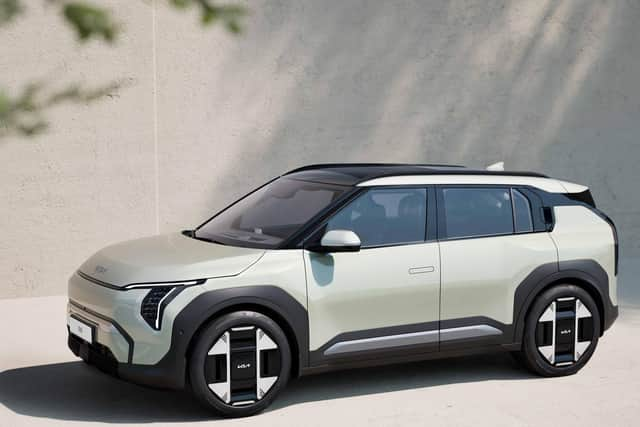

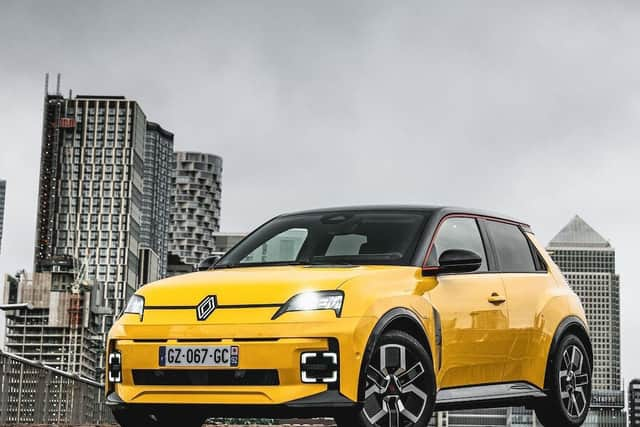
Amongst those electric cars that slip in under the £37,000 threshold include the (priced from):
Renault 5 E-Tech (£22,995)
Fiat 500e (£25,035)
Mini Cooper Electric (£26,905)
Renault 4 E-Tech (£26,995)
Ford Puma Gen-E (£29,995)
Peugeot e-208 (£30,150)
VW ID.3 (£30,860)
Kia EV3 (£33,005)
Volvo EX30 (£33,060)
Omoda E5 (£33,065)
Hyundai Kona Electric (£34,500)
Cupra Born (£35,690)
The £37,000 figures was chosen because, according to the government, “it covers the more affordable end of the market, thus ensuring funding for the Zero Emission Vehicle transition can reach as many people as possible”.
And it’s worth highlighting that, with many manufacturers already heavily discounting electric cars, it’s not out of the realms of probability that some carmakers will reduce the car's recommended retail price (RRP) in order for it to fall within the Government’s £37,000 cut-off point.
Across the UK, registrations of electric cars showed a near 26% year-on-year increase in May. Significantly, despite that growth, the shift toward EVs has been more substantial among fleets than individual consumers. Private buyers have been slower to adopt, primarily because of cost concerns.
The new scheme will see the Government allocate £650 million in grants: that’s enough to subsidise around 173,000 electric car purchases at the maximum grant amount of £3750 per car.
This latest scheme comes three years after the previous Conservative government axed the Plug-in Car Grant (PiCG), which offered a fixed £1500 off list prices on EVs priced below £32,000. Following that, demand for EVs has fallen short of the target figures which were announced at the time. Not surprisingly, recently the car industry has called for support to stimulate the market, particularly for private buyers.
The new scheme was welcomed by Simon Williams, RAC head of policy, who said: “Within weeks, discounted cars should start appearing at dealerships across the country. And, as the biggest savings will be given to cars with the strongest ‘green’ manufacturing credentials, drivers will be picking models that are not only better for their wallets, but better for the planet too.”