
The plan to return abandoned Scots fishing boat that became a tourist draw in Poland home

Plans to restore wooden vessel and return her to Scottish Borders town
It was a fixture of a Scottish town’s fishing fleet for decades, only to become an unlikely tourist attraction in the heart of a busy east European port.
Now, plans to return a rescued wooden fishing cutter from a Polish harbour to the Berwickshire coast are gathering pace.
Although its name is relatively little known among aficionados of Scotland’s rich maritime heritage, the Incentive has become one of the most well known vessels in Poland.
The boat, built by Alexander Dougal in Eyemouth in 1960, served as a commercial fishing vessel through to the mid 1970s. The vessel remained a well-known sight during the Scottish Borders town’s annual Herring Queen festival, which celebrates its storied connection with the seas.
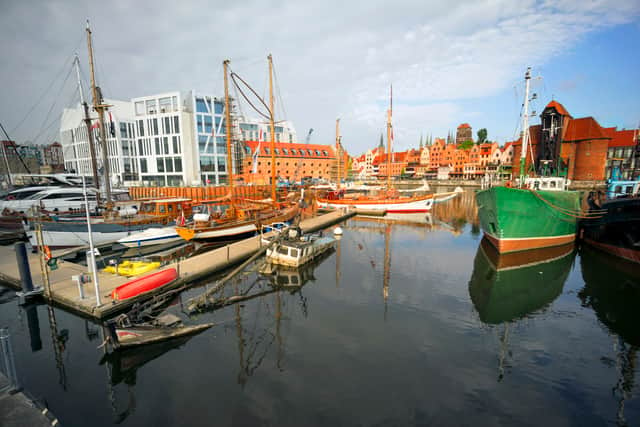

But after being sold on, the boat found its way to Poland, where it was eventually abandoned. Forgotten and uncared for, the vessel was left to rot in Gdansk marina, seemingly consigned to a watery grave.
As time went by, locals and visitors to the city’s waterfront became intrigued by the submerged vessel, in large part to its status as one of only a handful of wooden fishing cutters left in Poland.
Social media campaigns were set up to trace its history and, ultimately, have it lifted from the bottom of the harbour. According to Robert Smagon, president of the Polish Maritime Heritage Foundation, it became “the most photographed boat in all of Europe”.
That claim may be somewhat tongue in cheek. But even today, the number of Polish Facebook sites set up to commemorate the Incentive reveals the affection with which it is held.
When it was eventually raised and secured at auction by the foundation, the organisation’s detective work using old shopping logs and registers traced the route back to Eyemouth.
Its work did not stop there. The Incentive, it realised, was a unique opportunity to recapture traditional boat building techniques for a new generation.
Poland’s own fishing fleet was decimated during the Second World War when retreating German forces destroyed or seized many of the country's vessels, leaving its coastal communities without a working fleet.
In the years that followed, the adoption of more modern construction materials, such as steel and fibreglass, replaced the wood. The skills to build and maintain boats such as the Incentive all but disappeared.
Mr Smagon explained: “It's a treasure, that is why there is interest to restore these wooden boats. It's not just about the boat, it's about the skills, the history and the heritage.”
Restoration work is due to begin in spring next year, with the aim of sailing the Incentive back to Scotland before long. The majority of the work will be carried out by students at the Gdansk University of Technology.
Basia Staniewicz, the project leader, said the hope was to put the old cutter back in the water and return her shipshape to her “place of birth”.
She said: “I think it will be a great thing to bring it back. I think boats should sail, not go stale.”
Comments
Want to join the conversation? Please or to comment on this article.