
Scotland's People: How you can look for Georgian domestic servant ancestors for free
Archivists say that if you have Scottish ancestors there is a “very good chance” one of them is mentioned in the tax rolls.

They were the key household roles that took centre stage in hit TV series Downton Abbey - the unheralded faces that ran kitchens and households across the country.
Now Georgian tax records listing the names of thousands of domestic servants across Scotland have been made available online for free.
The Scotland’s People website is providing access to thousands of tax rolls, which were previously available on the now retired ScotlandsPlaces portal.
Searching the indexes on the website is free, with a small fee to view images of the original records.
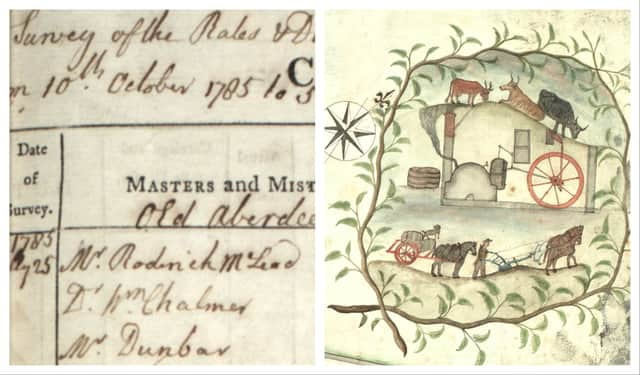

Records of female and male servant tax are just two of 15 different types of taxation records released online by National Records of Scotland. The tax rolls give the location, name of the employer and usually the name of the servant.
What was the servant tax?
During the late 18th century, employers paid taxes on their household servants to fund government expenditure, particularly during the costly wars with France.
The Servants' Tax was levied on households employing ‘non-essential’ servants. This was primarily aimed at domestic and personal servants in the country and excluded the majority of the servant class such as farm labourers and people working in factories, inns and shops.

The tax was targeted at wealthy households, which employed domestic and personal servants such as butlers, valets, coachmen and gardeners. For example, the Duke of Hamilton employed 41 servants at Hamilton Palace in Lanarkshire in 1785.
An extract from the male servants’ tax roll shows the range of their occupations, including a ‘Valet de Chambre’, cook, butler, four footmen, two gardeners, two gamekeepers, three grooms and five stable boys.
In Scotland, taxes on female servants were assessed between 1785 and 1792 and on male servants between 1777 and 1798.
Those with Scottish ancestors have ‘very good chance’ of spotting one in the tax rolls
Archivist Tessa Spencer said: "Large numbers of people worked in domestic service in the 18th century. This means there is a very good chance that if you have Scottish ancestors, one of them is mentioned in these tax rolls as either servant or employer.
"Domestic service wasn't exclusive to the wealthy aristocracy. While the Duke of Hamilton employed an impressive 41 servants at his estate, many ordinary households of modest means also employed domestic help.
“These records are a fantastic resource for anyone researching family, local or social history.”
To make it even easier to search through the records, a new index has been created for both female and male servant tax rolls. This is set to help users locate specific individuals whether they were footmen, housemaids, gardeners or even their employers.
Tax records range from those imposed on animals such as dogs and horses, the windows on buildings, and vehicles such as wheeled carts and carriages.
Plain text transcriptions of the original handwritten and typed text are available to search for most of the records available on the Scotland’s People site
The records were moved to Scotland's People following the closure of the ScotlandsPlaces website hosted by Historic Environment Scotland (HES).
A HES spokesperson said: “HES inherited a number of legacy websites from predecessor bodies and projects, and due to the age of these sites we can no longer support them safely and securely.”
Comments
Want to join the conversation? Please or to comment on this article.