
Why Edinburgh can do better than an Elsie Inglis statue in military attire on the Royal Mile
Edinburgh can do better than the proposed statue design to commemorate Dr Elsie Inglis, writes SNP candidate Lyn Jardine.
When I scrolled through the comments under The Guardian’s recent story about the proposed statue of Dr Elsie Inglis, something stopped me in my tracks.
Again and again, people wrote the same words: “I was an Elsie baby.” Others added: “My mum was an Elsie baby.”
These weren’t abstract debates about art or heritage policy. They were living testimonies.
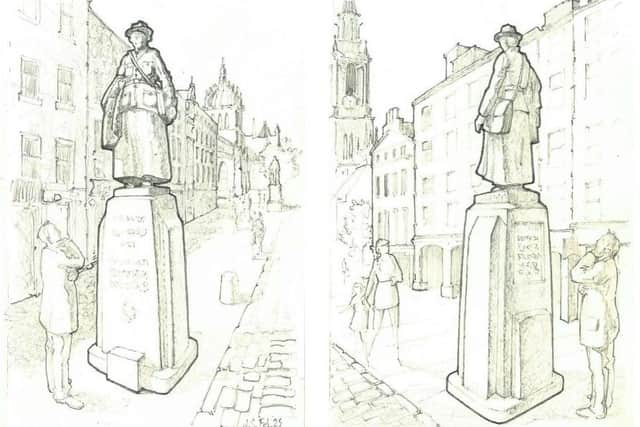

Families in Edinburgh and far beyond still trace their story back to the small maternity hospital Elsie Inglis founded on the Royal Mile and the memorial hospital in her name at Abbeyhill. Places where women found care, and where thousands of children were born into the world with her name on their lips.
No one disputes that Elsie Inglis deserves commemoration. She was a pioneering doctor who pushed open the doors of medicine for women. She was a suffragist who campaigned for equality. She was a reformer who fought for those ignored by the establishment.
And yes — she was also the leader of wartime medical units, a remarkable achievement for a woman of her time. Her family, speaking in The Scotsman, recalled her pride in wearing her wartime uniform. Their perspective matters deeply.
But public commemoration must also reflect the way a community remembers its heroes. For many, Elsie is remembered not in khaki, but in a white coat; not on foreign fields, but on the wards of her hospital; not in command during conflict, but in compassion for the poor.
The statue now proposed for the Royal Mile depicts Elsie in military styled attire. The concern is not whether that is untrue, but whether it is enough.
To present her primarily as a figure of war risks flattening her legacy and overlooking the achievements that most directly changed lives. This also matters because of where the statue would stand.
The Royal Mile is no ordinary street. It is part of a Unesco World Heritage Site, its skyline and streetscape scrutinised by the world.
Edinburgh’s own policies demand that new monuments enhance their setting and reflect an inclusive understanding of cultural significance. That means councillors must ask not just whether the statue is well-meant, but whether it is right for this place.
And then there is the question of process. The initial competition was dropped, and the commission handed to a well-established male sculptor. Many have asked: should a feminist icon not be represented through a process that embodies the equality she fought for?
Representation matters, and so too does how decisions are made. When we build monuments to men, we rarely hesitate to celebrate their breadth. For women, we too often reduce them to a single image or symbol.

Edinburgh can do better. This is not an argument against commemoration. Quite the opposite. It is an argument for getting it right.
We should aspire to honour Elsie Inglis with a memorial that speaks to her full story: the doctor who stood up to the medical establishment and opened her own hospital; the suffragist who challenged injustice; the reformer who brought care to the forgotten; and yes, the wartime leader who defied expectations.
For the “Elsie babies” whose lives began in her care, for the families who still speak her name with gratitude, and for a city that claims her as one of its own, we owe her nothing less.
- Lyn Jardine is the SNP’s candidate for Edinburgh North Western in next year’s election.
Comments
Want to join the conversation? Please or to comment on this article.