
VJ Day: How the anniversary helped me discover the secrets of my uncle’s Far East POW past
They didn’t talk about it then, but their stories still matter now, in the wake of marking the VJ Day anniversary.
I knew my Uncle Dave had been a Japanese POW, but that’s about as much as I did know. That was until VJ Day media coverage prompted me to search the internet for more information and for the first time I had facts staring me in the face.


A frequent visitor in my home as I was growing up and a good friend of mine until his death in 1999, on his wartime experiences this charming raconteur was silent and I’d assumed I’d never know.
Like his brother, my dad, who also enlisted as a young 20-something and left Dundee for the Second World War and survived Dunkirk, El-Alamein and Monte Cassino, they did not talk about it. In fact, Far East POWs were told not to.
Had I known they wouldn’t live forever, I’d have focused my teenage attention on them and asked more. Or maybe not, especially in my uncle’s case, because the scars they carried were visible.
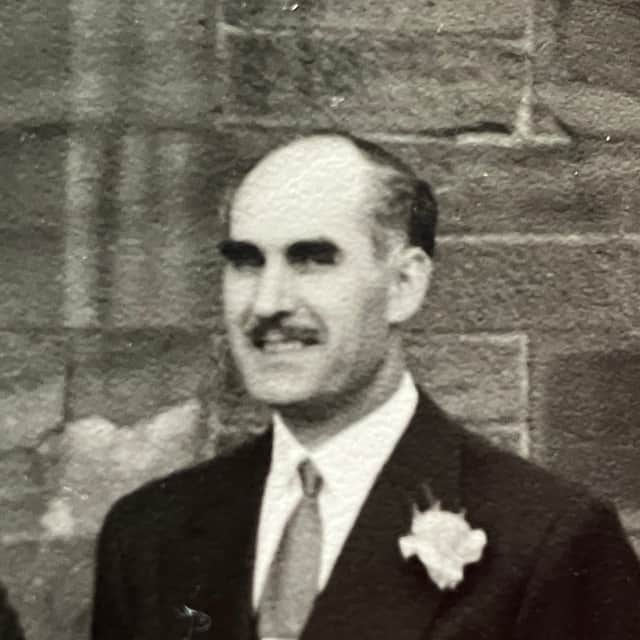
While my dad had a bullet wound in his arm (El-Alamein) and a bayonet scar on his leg (Monte Cassino) and was irrepressibly chipper, my uncle recovered physically and had a long successful accountancy career. But he suffered years of PTSD and periods when he would come and stay with us - he never married, said ‘it wouldn’t have been fair’.
But after watching VJ Day commemorations, I found a box of old papers and my uncle’s certificate of service from the War Office. His number and rank confirmed he was in the Intelligence Corps and Royal Army Pay Corps, which led me to a website of liberation questionnaires - completed by some Far East POWs after release - and there in his familiar copperplate writing, were facts.
Captured in Tjikadjang, Java on 9th March 1942. Six months in Tanjong Priok camp, Java. September, October 1942, Changi Barracks [sic], Singapore. October 1942 to September 1945 Kuching camp, Sarawak, Borneo.
Further searches led to accounts of life in Kuching, where two thirds of the inmates died, which reminded me of something my uncle did tell me.
As one of those responsible for recording the amounts the POWs were paid for forced labour, he knew everyone’s name and address and on return home visited the families of those who did not return to tell them where, when and how their relative died.
I also came to understand how Punjabi and Malay were among the many languages he spoke, as Commonwealth troops were also imprisoned, along with civilians, at the camp next door. These included fellow ex-pat Dundonians he told me he’d chat to ‘through the wire’.

And I remembered how towards the end of his life - when he resolutely refused to leave his home to be cared for elsewhere - I had searched kitchen cupboards in his flat in a Dundee multi-storey for condiments for his beloved fish supper, enquiring why so many big bottles of soy sauce. “We used that in the camp, stops you going blind,” he said.
Should I have pressed him to talk more about his wartime experiences? I don’t know, but I knew the man and I remember him. And I’m determined to find out more.
Comments
Want to join the conversation? Please or to comment on this article.