
The small Scottish island at a 'turning point' as holiday homes outnumbered
Colonsay has broken new ground in its quest to get more permanent homes on the island.
A “turning point” has been reached on a Scottish island as the number of permanent homes for residents gets set to overtake properties used for second homes and holiday accommodation.
Residents of Colonsay in the Inner Hebrides have spent more than ten years trying to address the housing shortage on the island, which about 124 people call home.


A total of 14 new affordable homes are now due to be occupied, with keys to four properties built by Colonsay Community Development Company (CCDC) at Scalasaig, the main settlement, handed over to tenants at the weekend. Two more will be sold by CCDC.
It follows more than a decade of negotiations with Colonsay Estate, which is owned by Alex Strathcona, 5th Baron Strathcona and Mount Royal, to buy land for housing.
Dannie Onn, chair of the CCDC, said a “milestone of sorts” had been reached as the balance in the nature of property on the island started to tip in favour of those who wanted to live and work there permanently.
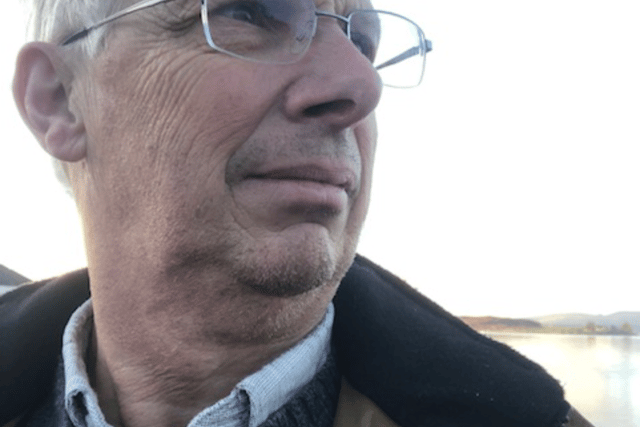
Mr Onn said: “Just on a very simple count of how it is perceived on the island, there are more second homes and holiday lets than permanent residences and that number will now flip. That will be a turning point if you like.
“It has taken ten years, many years of wrangling, to get to where we have got.”
The new homes will be prioritised for young families and those of working age. Five more will be built by West Highland Housing Association, with three more coming from the community company.
While depopulation had not been “dramatic” on Colonsay over the past 30 years, demographics had shifted more acutely with the majority of residents now over the age of 60.
“At one point several years ago, there was no one aged between 18 and 30 living on the island,” Mr Onn added.
There are just two pupils on the roll at Kilchattan Primary School, with three attending pre-school. Meanwhile, businesses run on reduced hours over winter - or don’t open at all, given the population change after summer ends.
In recent years, Colonsay had over five times the level of holiday homes in Argyll and Bute generally, where 7 per cent of properties are used for this purpose, research from Rural Housing Scotland found.
Mr Onn said it was not a case of “us and them” on Colonsay - but the prevalence of second homes created issues for those seeking to live permanently on the island.
He said: “It obviously has an impact on house prices and it also has an impact on housing availability. It also has positive impacts in terms of people and people who sometimes contribute well to the community. Some have certainly invested in the island.
“If you are running a tourism business or high-end sales, some of these second home owners are wealthy people. They will buy your art and craft work, they will support your business, they will be in the bar in the hotel.
“So there are pluses and minuses. Some of them are our best friends. It is a tricky one.”
Colonsay, which sits to the north of Islay, was the ancestral seat of a branch of Clan MacNeill from the 1500s. Residents were offered voluntary emigration to North Carolina from 1737 before the clearance of tenants began, with many sent to Pictou and later Prince Edward Island.

Following the death of owner SirJohm Carstairs McNeill in 1904, Colonsay was sold to Donald Alexander Smith, First Baron Strathcona and Mount Royal.
The Forres-born businessman and son of a saddler built his fortune and reputation in Canada as governor of the Hudson’s Bay Company and president of the Bank of Montreal. He also played a key role in the development of the Canadian Pacific Railway and served as High Commissioner for Canada in the United Kingdom.
Today, his descendant, the 5th Baron Strathcona, owns Colonsay Estate along with his wife, Jane, with income derived chiefly from farming and holiday accommodation.
Negotiations between the community development company and the estate to buy land for housing began around 2012 with a District Valuer assessing a site as worth £130,000. The estate later said the land was worth £1.2 million.
Hopes of building community housing was sidelined due to the “huge gap” between the two valuations, Mr Onn said.

Two sites on a different footprint at Scalasaig, covering 1.75 hectares, were ultimately secured from the estate for £525,000, with the money coming largely from the Scottish Land Fund.
The “protracted” process of getting the new houses in place was further hampered by the complexities of building on an island.
Mr Onn said: “Not many people want to build at that scale on Colonsay because of the difficulties involved and then we had issues with Covid, Brexit, Ukraine war. So a 12-month contract took 38 months to complete.
“There are additional costs getting materials and other resources to the island. The best time to build is in the summer months and then there is no accommodation around for the builders. It is complicated.”
Mr Onn said the arrival of the new affordable homes would hopefully attract people back to Colonsay who had been forced to leave due to homelessness. Others who had been unable to find a home had moved into caravans as an alternative.
Meanwhile, the island was seeing a “significant trend” of people living on Colonsay and working remotely, some for themselves and others in roles with government agencies. For example. MOWI fishfarm is another key employer.
Mr Onn said handing over the keys to new tenants at the weekend had raised the mood on the island. “There are a lot of smiles at the minute,” he said.
Jane Howard, who runs Colonsay Estate with her husband Alex, said her partner was the "original architect" of the affordable homes now being built, with the scheme having his "full support".
She said: "This is the fourth sale of land or houses for social housing on Colonsay by the estate at sub market value, resulting in 13 social houses for the community prior to this current development.
"Alex believes that he, as a landowner on Colonsay, has a responsibility to ensure land can be bought for social housing If that is required. He also runs his business and farming enterprise with the future sustainability of Colonsay, both socially and environmentally, at its centre."
Comments
Want to join the conversation? Please or to comment on this article.