
Scotland’s most remote community with just 120 people on 25 years of going alone
The community of Knoydart will celebrate this weekend.
Reached by a near 20-mile hike over mountains or the mail boat from Mallaig, there is something very special about the Knoydart Peninsula where one of the mainland’s most remote communities can be found.
This community knows a thing or two about coming together and this Saturday they will do exactly that - to celebrate the 25th anniversary of the day they bought the Knoydart Estate from its absentee landlords.
Speeches and a ceilidh - with drink from the local brewery and food provided by the peninsula’s venison stores - will help along the occasion, as will appearances from those who made the sale happen back in the day.


When the land sold in 1999, it started a turnaround in the way Knoydart was run - and the way it saw itself. Today, it is a community defined by hard work and ambition and a place that is attracting more residents to make it home.
While much of the West Highland coastline has seen population fall, and schools struggling to keep numbers up, community-led Knoydart has seen an astonishing doubling of the population from 60 in 1999 to around 120 today. Among new residents is Finlay Greig, 31, a former journalist who relocated to Knoydart after hiking there three years ago. He never really left after that.
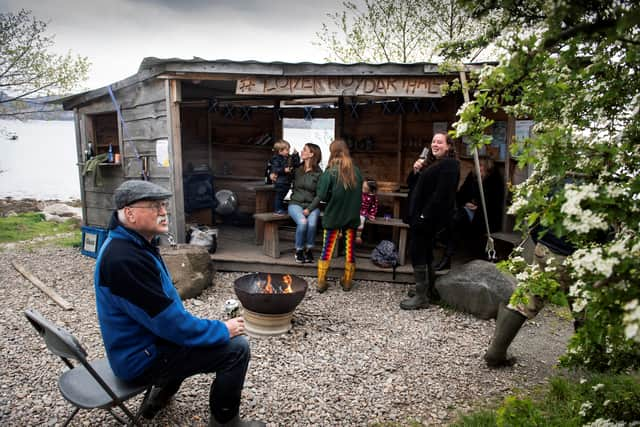
Mr Greig now works as a ranger for the Knoydart Foundation, which bought the 17,000-acre Knoydart estate on the west coast for £750,000 in 1999.
He said: “I came here hiking and pretty much stayed. I ended up doing some volunteering and I was just really taken by the hard-working and committed nature of the people here and their ambition.
“I wanted to be part of that and I felt like I could be part of it. It is easy to romanticise what life might be like on a remote peninsula - it is tough living here in the winter and there are many logistical headaches. But the main thing you take away from here is the people. I wanted to be part of that community and feel part of the community.”
As the 25th anniversary of the buyout approaches, there is much reflection on where the peninsula has come from - and where it might be going.
Jacobitism and Clearances - as well as Nazi-supporting landlords and iconic land-agitators - have all been part of shaping what Knoydart is today. It is a place now highly regarded as a micro-society transformed by co-operation, goodwill and ambition.

With the Old Forge pub - where possibly the UK’s most remote pint is served - a woodland, a venison business, a campsite and bunkhouse among community-owned enterprises, the work continues to secure affordable housing and environmental biodiversity to protect the peninsula in the future.
Lorna Schofield is the manager of the Knoydart Forest Trust, which has planted 600,000 trees and created 450 hectares of new woodland over the past 25 years. As well as creating a peaceful and beautiful place, the wood also provides jobs from the production of timber and firewood.
Ms Schofield said: “Probably the biggest single challenge is affordable housing. There are lots of things we can do, but we need more people to do these things and for more people, we need more housing.
“So, affordable housing is always a top priority and we are developing temporary accommodation for six workers and looking at more affordable housing options.
“We also have plans for a nature restoration area of about 3000 hectares. We aim to keep the deer numbers down in this area. There will be deer, but fewer in this area, which will allow restoration and help young saplings to grow.
“With the population doubling in 25 years, there is always lots more to do. We do face real challenges. Like everyone we face global warming challenges … will climate change affect our lovely woodlands, will some tree diseases flourish because of the warmer climate?
“More imminently we need to be mindful of the economic situation and what that means for us.
“We do have private business here and that is great. But so much is community-owned it gives people that extra commitment to get things sorted for the community. It isn’t always easy, but it builds community resilience.”
Davie Newton is chair of the Knoydart Foundation. He is optimistic for the future and will prioritise financial security for the years to come.
Mr Newton said: “We make various amounts of income for the community through areas such as the shop, the bunkhouse, holiday lets, and the Post Office.
“We'd like to build and stabilise that income so that we can feed more investment into the community. We want to look at things like more renewable development and are considering options around a second hydro-scheme at the other side of the estate.” This optimism has been born out of a dedication to free Knoydart from the landlordism that stymied development for generations and held back the community from reaching its potential.
Among its most infamous landlords was Lord Brocket, a Nazi sympathiser who built relationships with leading German leaders in the 1930s, including Foreign Minister Von Ribbentrop and Hitler’s right-hand man Hermann Göring.
Born in to a wealthy brewing family, Eton and Oxford-educated, Brocket was a leading member of the Anglo-German Fellowship that promoted good relations with 1930s Germany.
He bought Inverie House and Knoydart Estate in the 1930s and was a classic absentee landlord, using the estate as a playground for shooting and hunting, often with his extreme right-wing friends. Von Ribbentrop is among the Nazis believed by some to have visited the solitary Lochaber peninsula.
Brocket was interned during the war given his Nazi sympathies, but was allowed to return to Knoydart thereafter. He was soon caught up in land agitation with post-war Knoydart residents campaigning for access to good agricultural land.
In 1948, The Seven Men of Knoydart staked out 65 acres each of Brocket’s land and laid claim to it. All ex-servicemen, the seven were prosecuted.
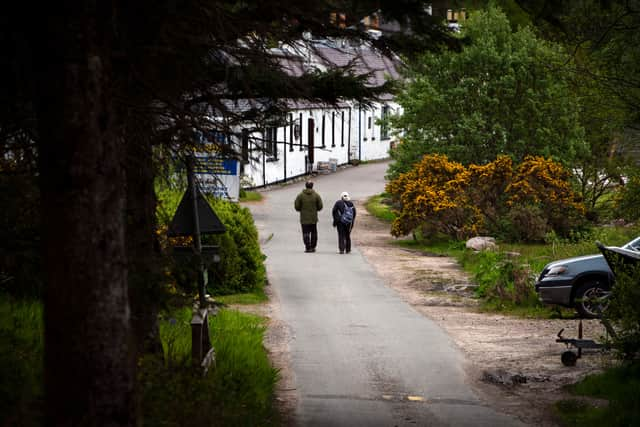
Today, they are remembered on regular anniversaries and a memorial cairn sits impressively above the shore at Inverie, the main settlement.
Meanwhile, as part of the 25th anniversary celebrations, Community Land Scotland, which represents and promotes community buyouts, is making a film to document the Knoydart community’s story.
Archive curator Iain Craig said: “Happy anniversary to the Knoydart community. We have worked with the community to document their reflections on 25 years of achievement, challenges and hard work. It's been a real privilege to do so and I hope the film gives the community the opportunity to reflect on all they have done together.”
Comments
Want to join the conversation? Please or to comment on this article.