



When crossing the Scottish border, we’re greeted with a sign that reads “Fàilte gu Alba” and to the average driver it may mean nothing but others will know it’s Scottish Gaelic for “Welcome to Scotland”. No different to “Fáilte go hÉirinn” signs in Irish or “Croeso i Gymru” equivalents for Welsh at their borders, immediately we’re made aware that we’ve entered a nation of rich Celtic culture; yet this heritage has been minoritised.
As written by Paul Kavanagh in Scotland’s Language Myths: “A minoritised language is a language which was once the language of the majority of a given country or large geographical region, but due to political and other factors became socially marginalised.” The Gaelic-speaking tradition predates even the reign of medieval Scottish Kings following Irish Gaelic’s arrival to Scotland around 500 AD.
Sadly, since then historical events like the Battle of Culloden and the ensuing Highland Clearances, education acts that banned Gaelic in schools, and the emergence of English-speaking dominance in society have seen Scots Gaelic wilt away. Of course, this plight is not exclusive to Gaels as many minority languages worldwide are in the same battle to exist in their own heartlands.
Bilingualism is the rule and not the exception in many countries, so why should Scotland differ? However, the next argument tends to be “well, be bilingual with a useful language!” That’s where our Scotsman readers come in. With over 1.5 million learners signed onto Gaelic on Duolingo, popular TV shows like Outlander featuring Gaelic, and new businesses opening like the Gaelic Cafe in Stornoway (which will hopefully inspire others), there is clearly a drive to use the endangered tongue.
So, to help us articulate that best we created an engagement post that read “Scottish Gaelic is worth learning because…” and our Scotsman readers offered hundreds of insightful answers that we have condensed into this well-meaning list of twenty-one reasons to learn Gaelic.

9. Gaelic is worth learning because… It’s a living language
A common answer to our engagement of why Scottish Gaelic is worth learning was that it didn’t require justification because it’s a living language, plain and simple. For example, the reason that Latin is considered a “dead” language is because it is no longer a native one. Scottish Gaelic, however, is still one of three officially recognised native languages in Scotland. Just as many advocate speakers of Catalan doing so in its heartland in Spain, the sentiment persists for Gaelic in Scotland even if it is not the dominant tongue of Britain. The language has drastically dropped over the last two centuries, but it is still native to here. | Victor Image via WannaPik

10. Gaelic is worth learning because… It almost died
The BBC confirmed that in “2018, along with about half of the world’s estimated 6,000 languages, Scottish Gaelic is considered at risk of dying out” and it is on “Unesco’s list of imperilled languages” where it is classified as “definitely endangered”. Then, in 2020, UHI researchers announced that “Scotland’s Gaelic speaking communities will ‘die out’ within 10 years unless a radical new approach is found in the heartlands”. Basically, while there are many encouraging signs of renewed interest in Gaelic it is very much at risk of being lost so anyone who doesn’t want to see it die should be a part of it. | natrot on Canva Pro

11. Gaelic is worth learning because… It promotes lingual diversity
Diversity and inclusion is at the forefront of national conversations. However, the concept is seldom applied to our lingual diversity and, perhaps, has been used against Scottish languages’ best interests. For example, last year The Institute of Chartered Accountants of Scotland (ICAS) urged members not to use Scots words in their “inclusive language guide” which was met with backlash. The SEAMEO organisation tells us that in regions like the Philippines “the average Filipino speaks three to four languages” including their native tongue like Tagalog plus English etc. Why can’t Scotland do the same? | Warchi on Canva Pro
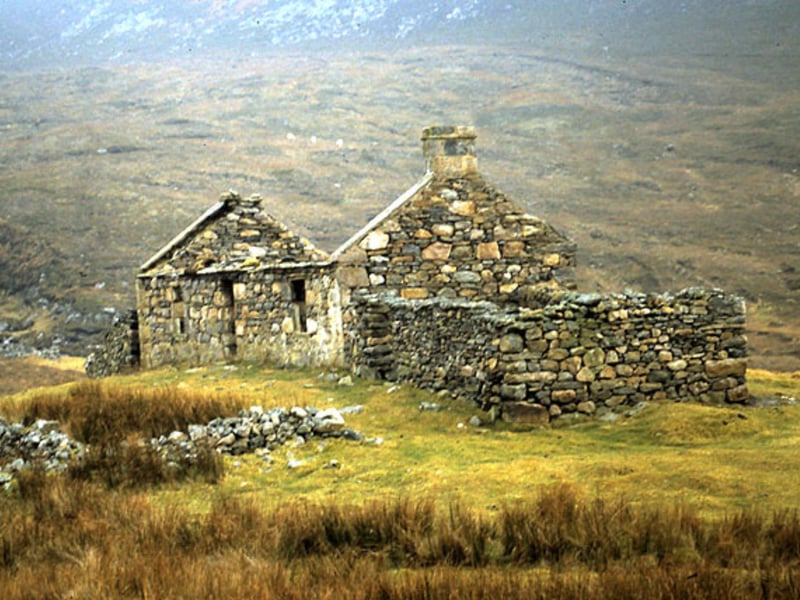
12. Gaelic is worth learning because… The sense of redeeming historical wrongs
It is widely accepted that Gaelic has been persecuted for centuries. Relatively modern historical examples include school bans like the 1872 Education Act which the BBC said “introduced compulsory schooling for children across Scotland, but excluded the teaching of Gaelic.” Others look to events like the Highland Clearances which History Extra described as the “damaging process of removing peasant families and communities from land across Scotland from the mid-18th to mid-19th centuries.” For some, learning Gaelic is an homage to the Scottish people who experienced this trauma. | Evelyn Simak on Geograph